Kinoko no Yama Hokkaido Milk (Meiji): good, but expensive for what it is
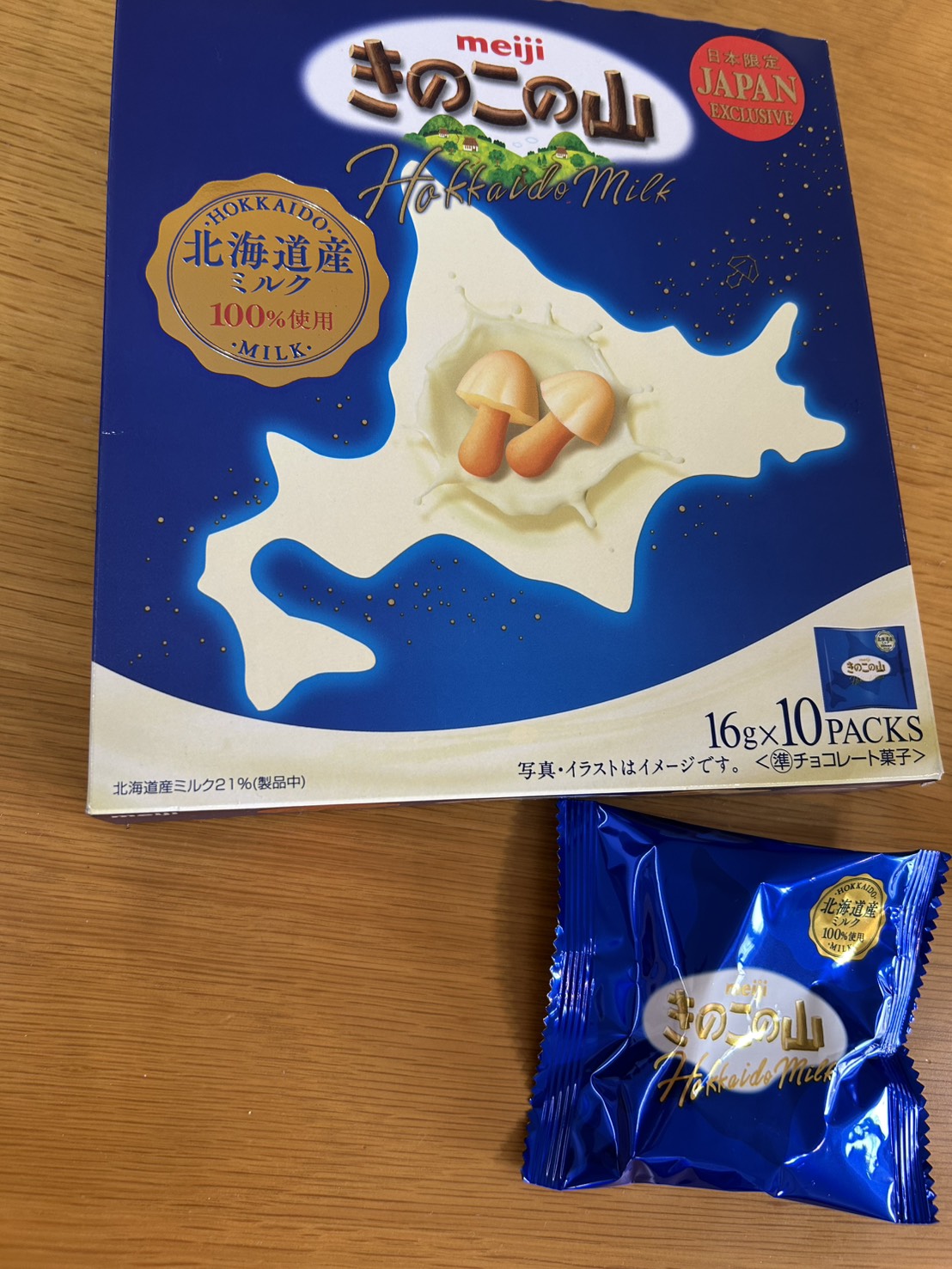
I spotted it in a Seven-Eleven near Tokyo Tower. The blue box with the Hokkaido map stood out, the red “Japan Exclusive” seal confirmed you weren’t finding this outside Japan, and the promise of 100% Hokkaido milk justified the premium price tag. At ¥1,600 before tax, this was clearly not an ordinary kinoko.
What is Kinoko no Yama
きのこの山 (Kinoko no Yama, “mushroom mountain”) is one of Japan’s most iconic snacks, made by Meiji since 1975. The concept is simple: a biscuit stick in the shape of a mushroom, covered in chocolate. In Japan there’s even an unofficial rivalry between Kinoko no Yama fans and fans of たけのこの里 (Takenoko no Sato, the bamboo-shoot-shaped cousin), with periodic votes on which is better.
This Hokkaido Milk special edition uses white chocolate made exclusively with Hokkaido milk, rather than the milk chocolate of the original. The result is a product with the same format but a completely different flavour profile.
The format
160g box divided into 10 individual 16g packets. Each packet contains 6 pieces.
As an omiyage for the office or to share among several people, the individual packet format works well. As a personal snack, 6 pieces doesn’t go very far.
The taste
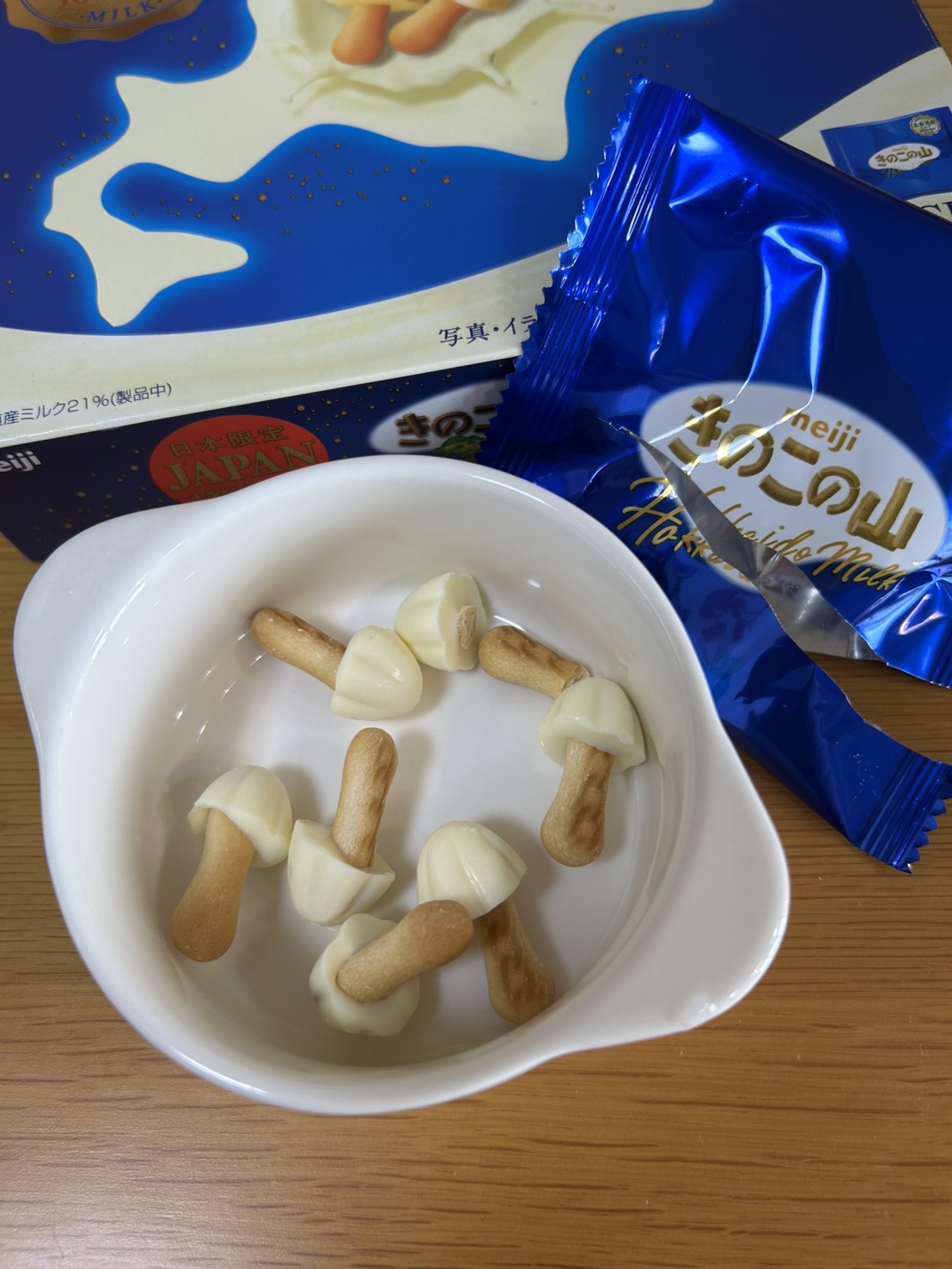
The Hokkaido milk makes a real difference. The white chocolate is noticeably sweeter than the milk chocolate in the standard kinoko, with a more pronounced dairy note and slightly creamier texture. The crunchy biscuit stick is still there and still works well with the chocolate.
It’s good. The problem is that the difference from the ¥200 konbini version doesn’t justify multiplying the price by eight.
Taste: 6/10
The price
¥1,600 before tax, around ¥1,760 with consumption tax. For 10 packets of 6 pieces each.
For context: standard Kinoko no Yama costs ¥200-250 in any konbini, or less still at one of the supermarkets if you’re stocking up rather than grabbing one on the go. This edition costs seven or eight times more and has less net content per box.
The box looks good, Hokkaido origin carries real weight in Japanese quality culture, and the “Japan Exclusive” label adds novelty value. That can justify paying more in a gift context. As a snack for yourself, it’s hard to defend.
Price: 2/10
Is it worth it as an omiyage?
Depends who you’re giving it to.
For someone who knows the original Kinoko no Yama and appreciates what Hokkaido origin means for quality: they’ll probably be pleased. The box has presence and the product is genuinely a step up within its category.
For someone who has never tried a kinoko: the entry price is high to discover whether they’ll even like it. Better to start with the standard version and, if it lands, upgrade from there.
As omiyage: 5/10, only if the recipient already knows what Kinoko no Yama is.
Bought at: Seven-Eleven, Tokyo Tower area Price: ¥1,600 + tax (approx. ¥1,760) Availability: konbinis, souvenir shops and department stores in Japan Edition: Japan Exclusive, not available outside Japan
Related reading
If you found this useful, these guides go well with it:
About the author
Editorial entity
Yen & Zen is written by a Spanish-Japanese couple based in Kanagawa Prefecture, in the Tokyo metropolitan area. We have been in Japan since 2010. The site is a hobby project covering practical calculators and articles about life and travel in Japan, with verified figures and citations to official sources. We are not lawyers, accountants, or licensed advisors; articles here are based on observation, personal experience, and published official rules — not on professional consultation.