Hanabi: Japan's summer fireworks festivals
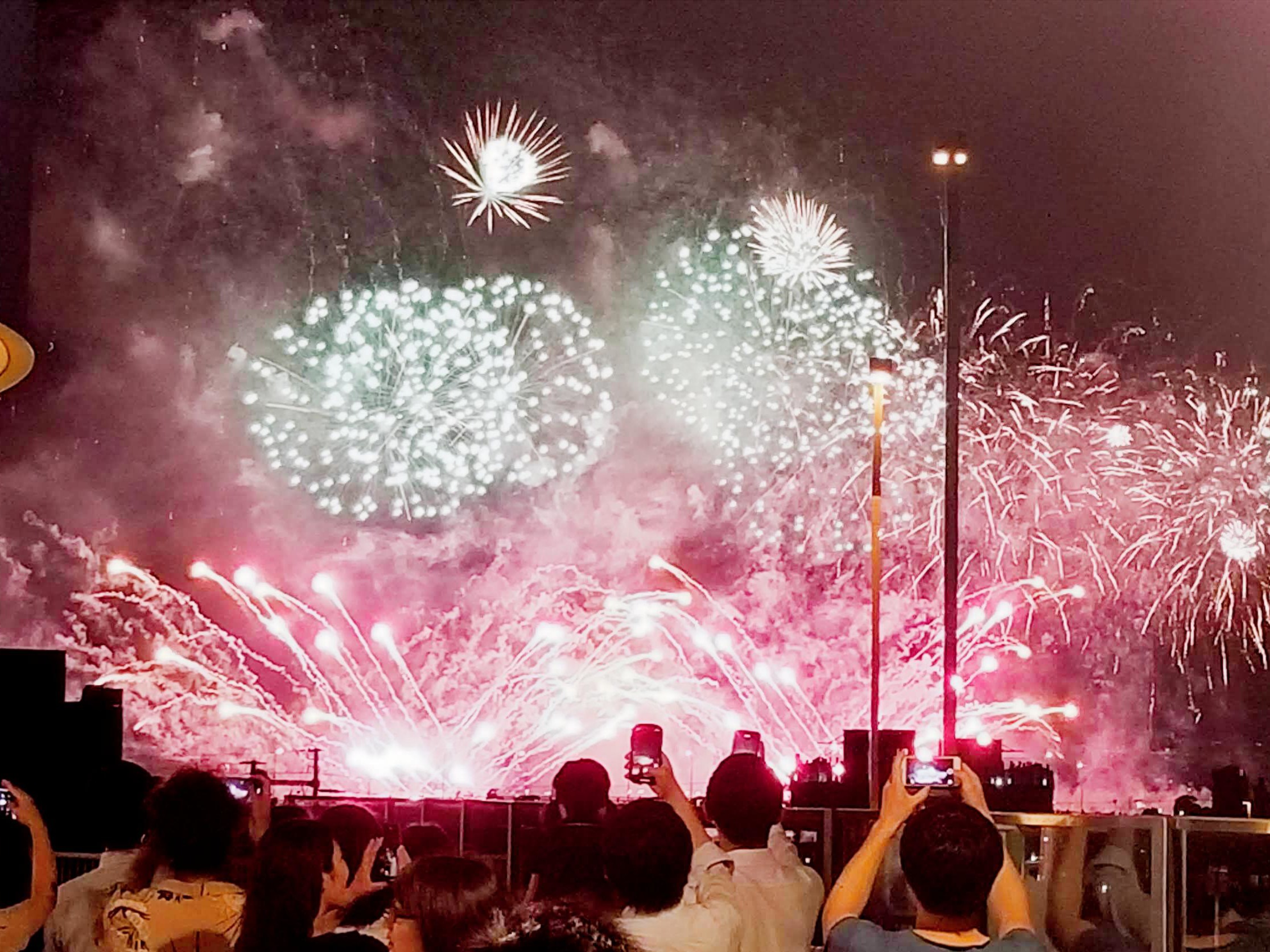
Japan’s summer fireworks are in a category of their own. Not because the Japanese invented fireworks, but because of how they’ve turned them into an essential part of summer: the ritual of going in yukata, securing a good spot weeks in advance, the August humidity, the sound that reverberates in your chest. I’ve been going to various festivals in the Yokohama and Tokyo area for years and I still find something new every time.
Why Japanese hanabi are different
The difference isn’t just scale but technique. Japanese fireworks (花火, hanabi, literally “fire flowers”) have a century-old craft tradition. Master pyrotechnicians (煙火師, hanabishi) pass down their techniques from generation to generation, and the most important festivals function as exhibitions of technical skill, not just visual spectacle.
Fireworks are classified by size (from 2 to 30 sun, where one sun is roughly 3 centimetres of shell diameter) and by burst type. The largest can reach 800 metres in diameter on detonation. The most elaborate designs include geometric shapes, animals and characters that hold their form in the air for fractions of a second.
There are national competitions where pyrotechnic teams compete formally: the Omagari contest (大曲の花火) in Akita is the most prestigious in the country.
The most important festivals
Sumida River Fireworks (隅田川花火大会): one of the most historic, held in Tokyo over the Sumida River since the eighteenth century. Usually in July. Launches more than 20,000 shells in two hours. The area fills with people weeks in advance looking for spots with good views.
Nagaoka Fireworks (長岡花火): in Niigata, early August. One of the country’s three great festivals. The “Phoenix Fireworks” launched at the climax are among the largest in the world, with an opening of almost 2 kilometres.
Omagari National Fireworks Competition (全国花火競技大会): in Akita, late August. Not an entertainment festival but a technical competition. The country’s best pyrotechnicians compete with pieces designed specifically for the contest. If you want to understand what’s behind Japanese pyrotechnics, this is the visit.
Miyajima Water Fireworks (宮島水中花火大会): in Hiroshima, August. Launched from the sea in front of Miyajima Island, with the Itsukushima torii as a backdrop. Especially photogenic.
Kanagawa Shimbun Fireworks (神奈川新聞花火大会): in Yokohama, summer. The main festival in the area where I live. Yokohama Bay with the illuminated port as a backdrop.
How to watch hanabi well
Popular festivals in Tokyo and Yokohama draw crowds of 500,000 to a million people. Getting a good spot requires planning.
Viewing options:
Many festivals sell paid seats (有料席, yūryōseki) with guaranteed views and more space. They cost between ¥2,000 and ¥8,000 per person but the difference in comfort is enormous. They sell out within hours when bookings open.
Free spots can be excellent if you arrive early enough and know the area. Bridges over the Sumida River have direct views; the rooftops of some commercial buildings too (some require advance booking). In Yokohama, the Minato Mirai waterfront has good angles.
Getting there and leaving: public transport in the hours after the festival can be chaotic. If you’re going to Tokyo’s main summer festival, allow an hour or more to get out by metro. Some regulars prefer to stay in the area for dinner and wait for the bulk of the crowd to disperse.
Yukata and atmosphere
Hanabi festivals are one of the few times of year when many people (not just tourists) go out in yukata. It’s perfectly normal and doesn’t require being Japanese: renting or buying a yukata and wearing it to the fireworks is something people of all backgrounds do.
The atmosphere at the festivals is among the most relaxed in Japan. The food stalls (yatai), the shared heat, the sound of the explosions overhead. It’s a very characteristic Japanese summer experience.
Hanabi in Yokohama
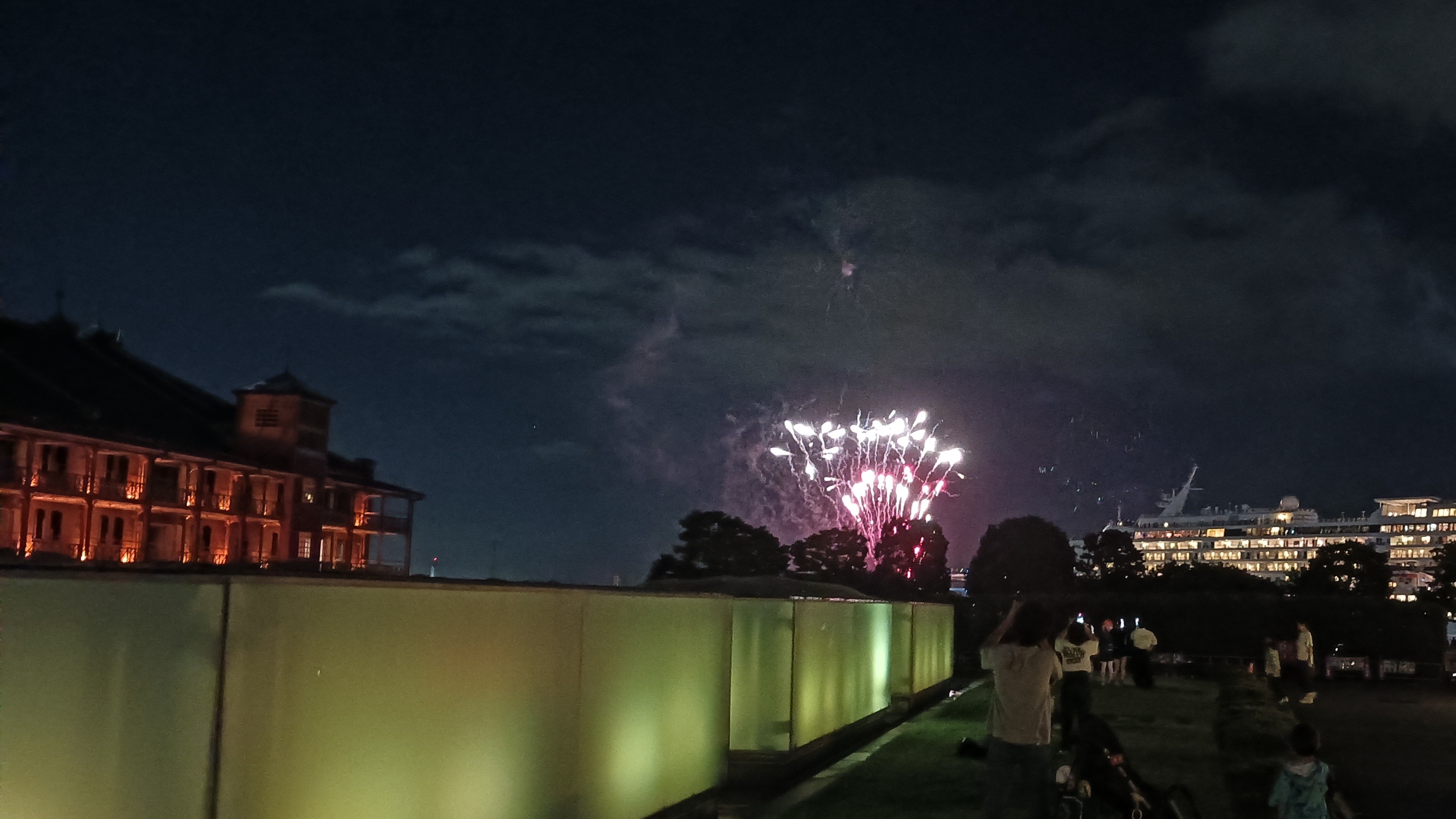
Living in Yokohama has the advantage that the bay festivals are accessible without having to cross Tokyo. The Minato Mirai promenade, the Aka Renga (the port’s historic red brick warehouses) and the piers near Osanbashi have water views where the fireworks reflect off the bay. In September there’s also the Sparkling Twilight, a smaller festival with good views of the historic port (see our Yokohama guide for more on the area). Yokohama’s other big fireworks night is June 2, the port opening anniversary, when around 3,000 shells go up over the bay.
Rough calendar
Hanabi are concentrated between mid-July and late August, overlapping with Tanabata season in early July. Some smaller festivals continue into September. Spring and autumn events exist but are less common and smaller in scale.
There’s no centralised website listing all festivals; dates are published by each organiser. Walkerplus and individual city municipal websites are the most reliable sources for confirming exact dates and locations each year.
FAQ
Can you photograph them well with a phone? Depends on the phone and camera mode. Fireworks are fast, bright objects against a dark sky: most modern phones have a Pro or manual mode where you can increase the exposure time (1-3 seconds) and lower the ISO. Without that, results tend to be overexposed or blurry. A small tripod helps a lot.
Is there an entry fee for the festivals? Street festivals are free to attend. Paid seats are optional. You only pay for what you buy at the food stalls.
What happens if it rains? Major festivals usually have a rain reserve date (雨天順延, uten jun’en). If it rains on the scheduled day, it’s postponed to the following day. It’s worth checking the festival’s official Twitter/X account the afternoon before.
Is it dangerous to be close to the launch area? Festivals are well organised with established safety zones around the launch points. The practical risk for spectators is zero as long as you stay in the designated areas.
If you have the chance to be in Japan in July or August, look for the nearest festival. You don’t need to go to the Sumida on your first visit: any local hanabi has more to offer than you’d expect.
Related reading
If you found this useful, these guides go well with it:
About the author
Editorial entity
Yen & Zen is written by a Spanish-Japanese couple based in Kanagawa Prefecture, in the Tokyo metropolitan area. We have been in Japan since 2010. The site is a hobby project covering practical calculators and articles about life and travel in Japan, with verified figures and citations to official sources. We are not lawyers, accountants, or licensed advisors; articles here are based on observation, personal experience, and published official rules — not on professional consultation.