Nikko from Tokyo: temples, waterfalls and Japan's classic school trip
I went to Nikko a few years ago with my wife, her sister and her sister’s husband. We took a Hato Bus from Tokyo, one of those guided tours that bundles transport, temple visit, waterfalls and lake into a single day. Not the most flexible way to travel, but for four people who wanted to see Nikko without dealing with logistics it worked well.
This summer my eldest son is going to Nikko on his school trip. It’s a classic in Japan: Nikko has been one of the go-to destinations for primary and secondary school excursions for decades. The reason is obvious when you arrive: lots of history, a manageable distance from Tokyo, and enough variety (nature, architecture, waterfalls) to keep students interested.
Why Nikko
Nikko is about 140 kilometres north of Tokyo, in Tochigi Prefecture. But it’s not just any city: it contains one of Japan’s most elaborate complexes of shrines and temples, designated a UNESCO World Heritage Site in 1999.
The centrepiece is Tōshōgū (東照宮), the mausoleum of shogun Tokugawa Ieyasu, the founder of the Tokugawa shogunate. Built in the early seventeenth century and expanded by his grandson Iemitsu, it is one of the most ornate and baroque examples of Japanese architecture, a complete departure from the austerity usually associated with the Japanese aesthetic. Red and gold columns, carved reliefs covering every surface, details everywhere you look. It’s striking, not to everyone’s taste, but impossible to forget.
Nearby is Rinnō-ji (輪王寺), a Buddhist temple from the eighth century that completes Nikko’s religious complex. And climbing the mountain road toward Lake Chūzenji you reach Kegon Falls, one of Japan’s three great waterfalls.
Tōshōgū shrine
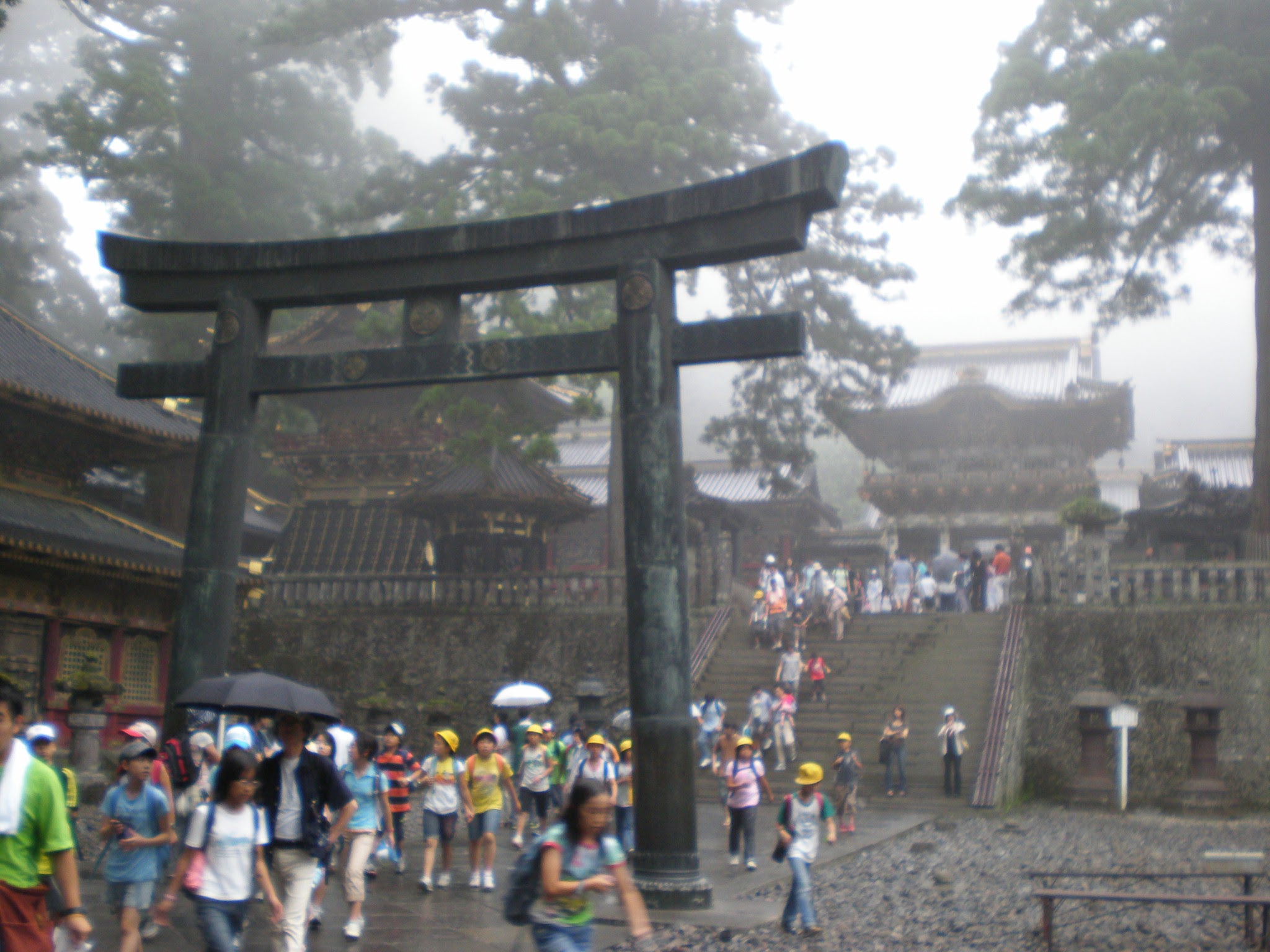
The main approach starts at a large stone torii and climbs through a path lined with centuries-old Japanese cedars. That stretch alone sets the tone: the trees are 30-40 metres tall, the air is damp and mist frequently hangs low between the branches.
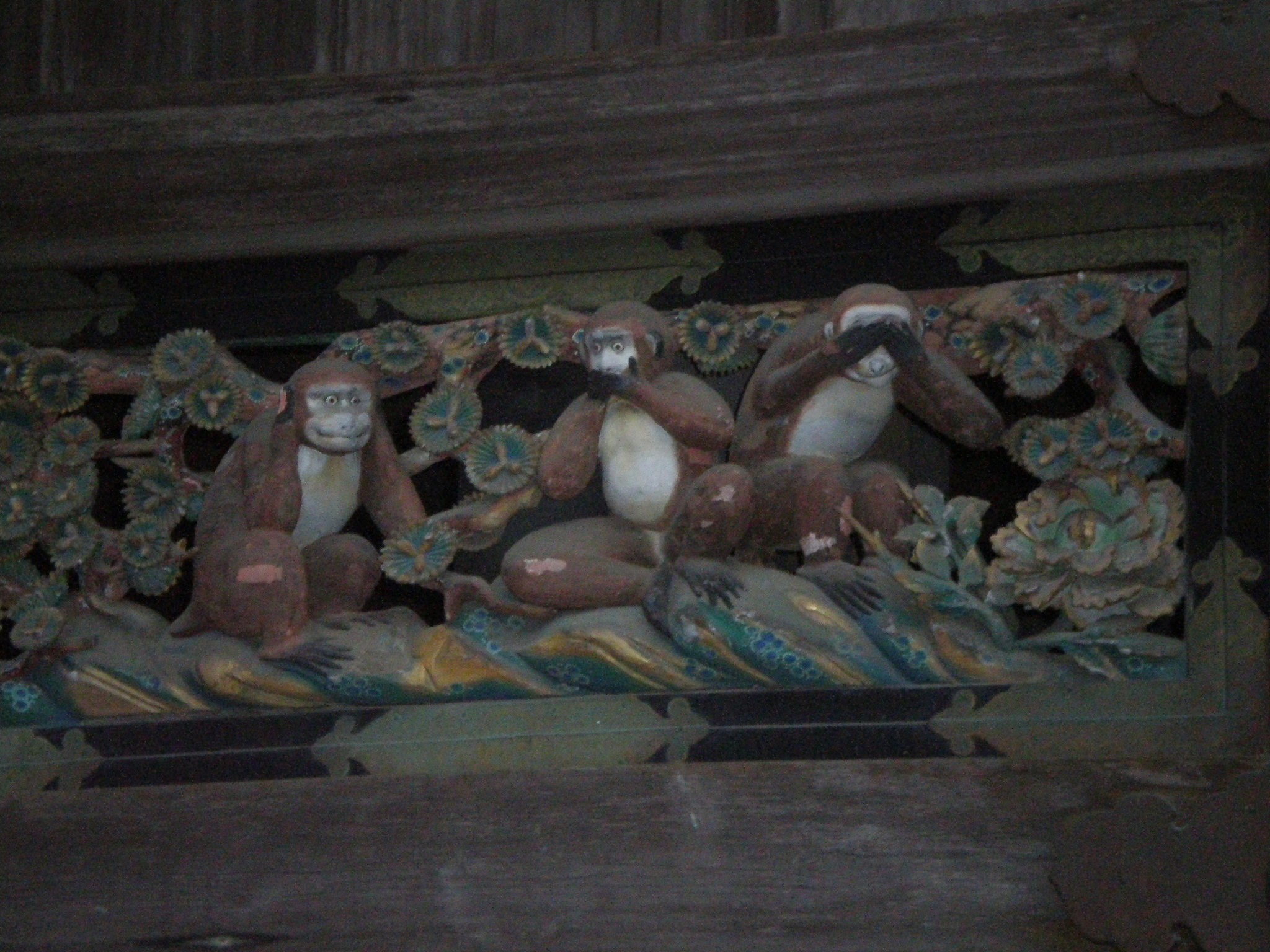
The most famous carvings at Tōshōgū are the three wise monkeys (三猿, sanzaru) above the sacred stable: “hear no evil, see no evil, speak no evil.” These are the originals, even though the image has since been reproduced thousands of times. The carving that struck me most was the sleeping cat (眠り猫, nemuri neko) above one of the complex’s gates: a small, almost hidden figure that has nonetheless become famous in its own right.
The complex has several separately ticketed areas. General access to Tōshōgū costs ¥1,300 per adult; entering the inner mausoleum (where Ieyasu is interred) costs an additional ¥520. To see the full complex, budget around ¥2,000-2,500 per person.
Kegon Falls and Lake Chūzenji
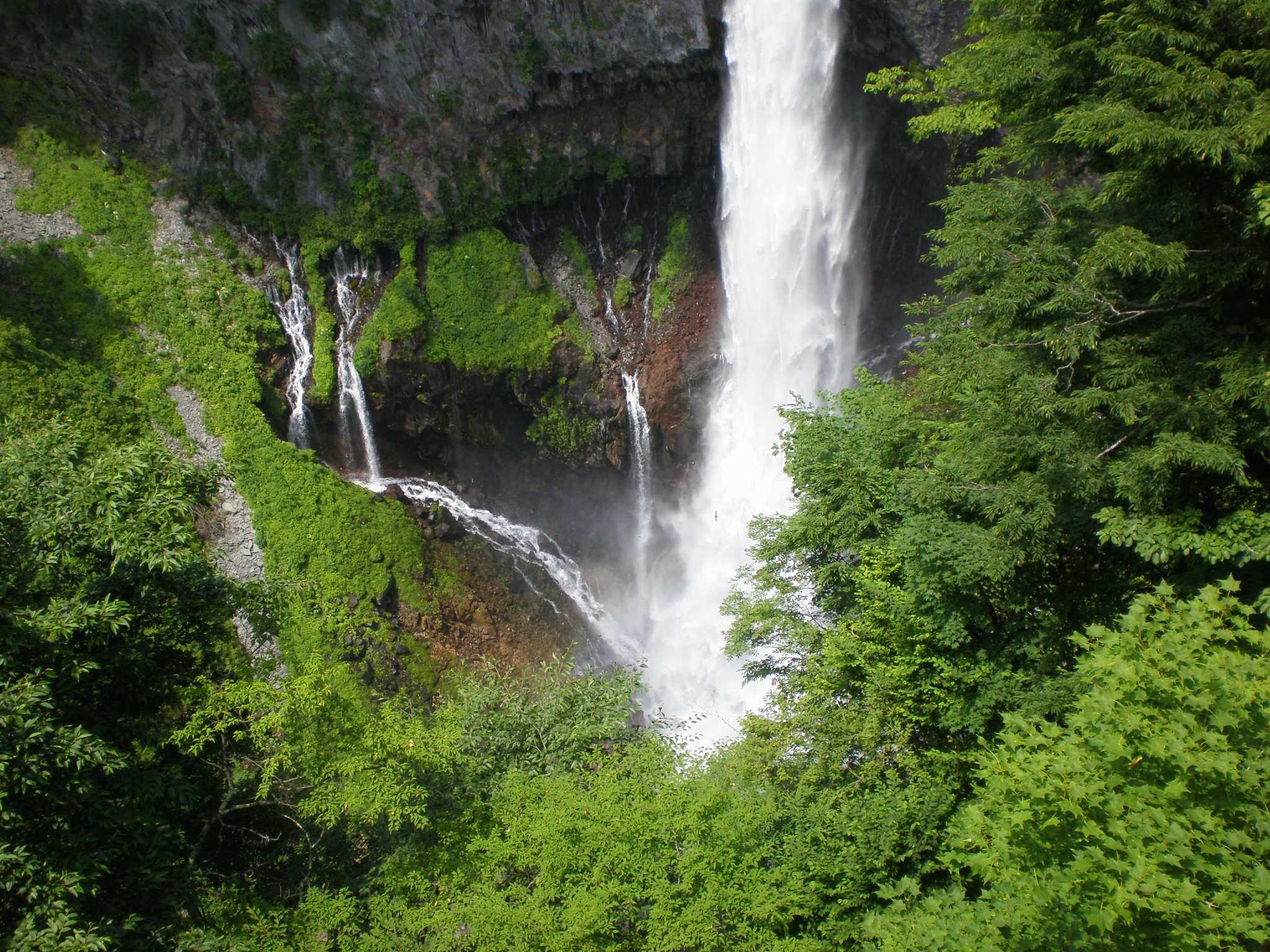
From the Tōshōgū area you need to drive or take a bus up about 10 kilometres of mountain road (the Irohazaka, known for its 48 curves) to reach Lake Chūzenji, at 1,269 metres above sea level. At the lake’s edge you’ll find Kegon Falls (華厳滝), a 97-metre vertical drop that ranks among the country’s most impressive.
There’s a free viewing platform at the surface, but paying ¥570 to take the lift down to the lower platform, right at the base of the falls, makes a real difference. Worth it.
Lake Chūzenji itself is also worth the stop: 12 kilometres in circumference, surrounded by forest, with Mount Nantai as a backdrop. In autumn the combination of colours is one of the most photographed scenes in the Kantō region.
School trips: a recurring scene
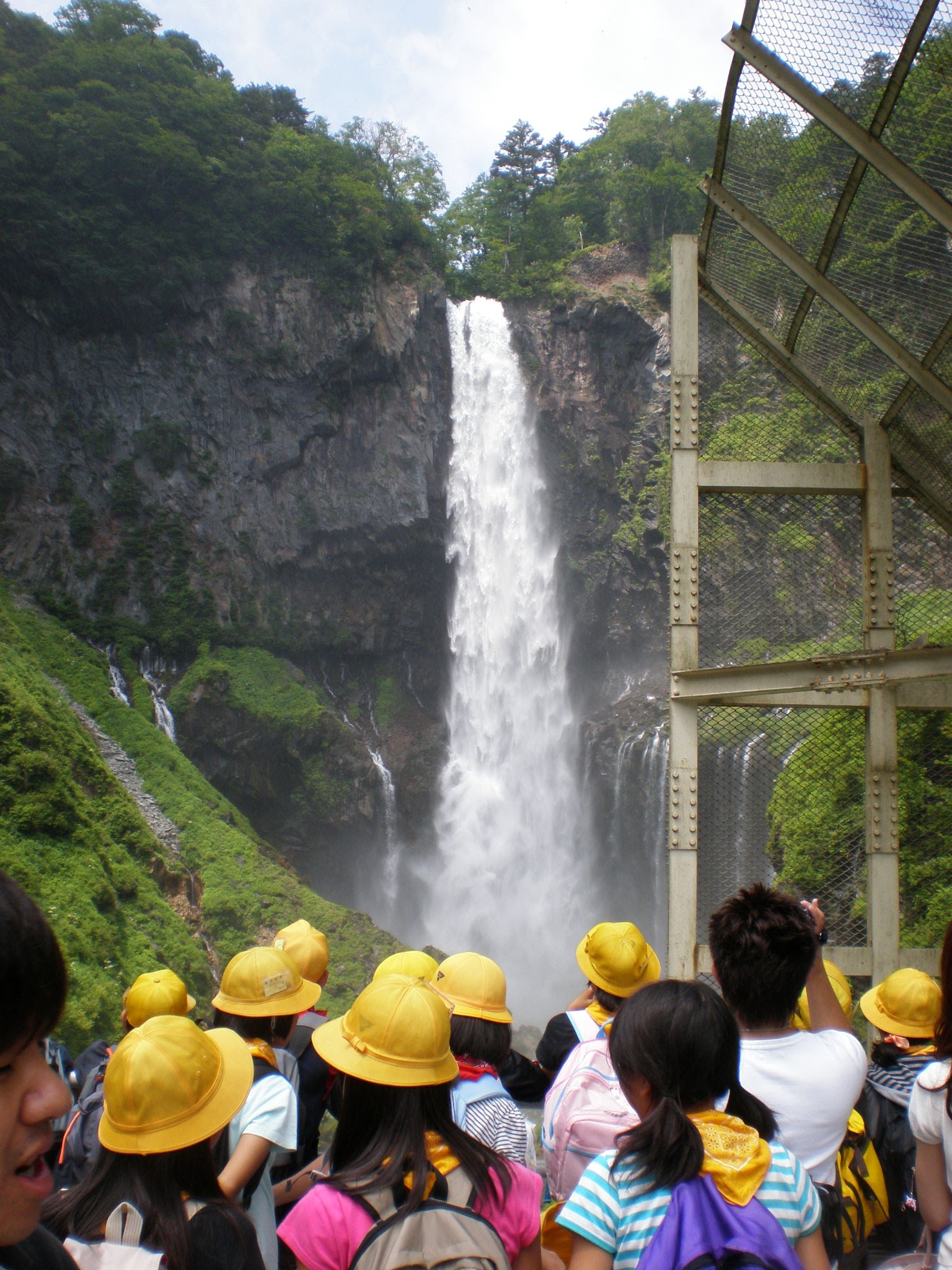
If you visit during the school calendar (spring and early summer, or autumn) you’ll almost certainly run into groups of uniformed students. It’s part of Nikko’s identity. It doesn’t spoil the visit, but it’s worth knowing the main sites can get busy at certain times.
My son is going with his class this month. It’s one of those places Japanese children know because they’ve been at least once on a school trip. When I went with my wife it was a grown-up tourist destination; for my son it will be his own first memory of the place.
How to get there
By train (most flexible option):
From Asakusa Station (Tokyo) on the Tōbu Nikkō Line to Nikkō Station. There are express services (around ¥1,370, roughly 2 hours) and the limited express Spacia (¥2,700-3,000, around 1h45). The Tōbu Nikko Pass includes return train plus local buses in Nikko. It’s the most economical option if you also want to reach Lake Chūzenji.
You can also reach Nikkō via JR from Shinjuku (changing at Utsunomiya), though the journey is similar in time and slightly more expensive.
Organised tour:
Hato Bus runs full-day tours to Nikko from Tokyo (departing from the Hamamatsuchō area). These include transport, an English-language guide, entry fees and local transfers. That’s what we did and the organisation was solid: no logistical stress, everything sorted. Prices are around ¥15,000-18,000 per person.
By car:
Possible, but the road up to Lake Chūzenji has traffic restrictions during peak season (alternating one-way system on the Irohazaka). In summer or autumn, the bus may be more practical than driving.
When to go
Spring (April-May): good temperatures, cherry blossom in the lower areas. Moderate crowds. Nikko blooms later than Tokyo, typically mid-to-late April, so it’s worth checking our cherry blossom timing calculator if that’s part of your plan.
Summer (July-August): cooler than Tokyo thanks to Lake Chūzenji’s altitude, useful to know if you’re following our guide to Japanese summer travel. Peak season for school trips. The Tanabata festival, held in Hiratsuka and other Kantō cities in early July, can be combined with a Nikko visit in the same summer trip.
Autumn (October-November): the busiest and most spectacular time. The forest colours around the lake and along the Tōshōgū approach are the best I’ve seen in the Kantō.
Winter (December-February): few visitors, possibility of snow, peaceful atmosphere. Some bus services to the lake reduce frequency.
FAQ
How much time do you need? To see Tōshōgū and Kegon Falls, count on a full day. If you also want to explore around the lake or go hiking in the area, two days is more comfortable.
Is Nikko expensive? Entry to the Tōshōgū complex is the main cost, between ¥1,300 and ¥2,500 per person depending on which areas you enter. Transport from Tokyo with the Nikko Pass is reasonable. Overall it’s a fair price for what you get.
Do you need to book in advance? Tōshōgū doesn’t require advance booking. Hato Bus tours do, especially in autumn, when they sell out weeks ahead.
Is the inner mausoleum worth the extra entry? The inner mausoleum (¥520 extra) is a small room and the visit is brief. If you’re interested in the Edo period and Tokugawa Ieyasu, yes. If you’re short on time, you can skip it.
Nikko works well as part of a longer getaway from Tokyo, using Nikkō town as a base to explore the lake area and do some hiking. It pairs well with Hakone if you want to compare Tokyo’s two classic day-trip mountains, or with an overnight ryokan stay for a slower pace. If you’re only going for the day, prioritise Tōshōgū and Kegon Falls. They’re what stands up best against the expectations.
Prices as of 2026. Check entry fees and opening hours on the official Tōshōgū website before your visit.
Related reading
If you found this useful, these guides go well with it:
Related calculators
About the author
Editorial entity
Yen & Zen is written by a Spanish-Japanese couple based in Kanagawa Prefecture, in the Tokyo metropolitan area. We have been in Japan since 2010. The site is a hobby project covering practical calculators and articles about life and travel in Japan, with verified figures and citations to official sources. We are not lawyers, accountants, or licensed advisors; articles here are based on observation, personal experience, and published official rules — not on professional consultation.