Kaiten-zushi: how conveyor belt sushi works in Japan
Kaiten-zushi (回転寿司, literally “rotating sushi”) is one of the most practical inventions in Japanese food culture. The idea is simple: plates of sushi pass in front of you on a conveyor belt, you take what you want, and the plates are counted at the end. What sounds basic has evolved into a full industry with high-turnover kitchen technology, robotic prep, and touchscreen ordering.
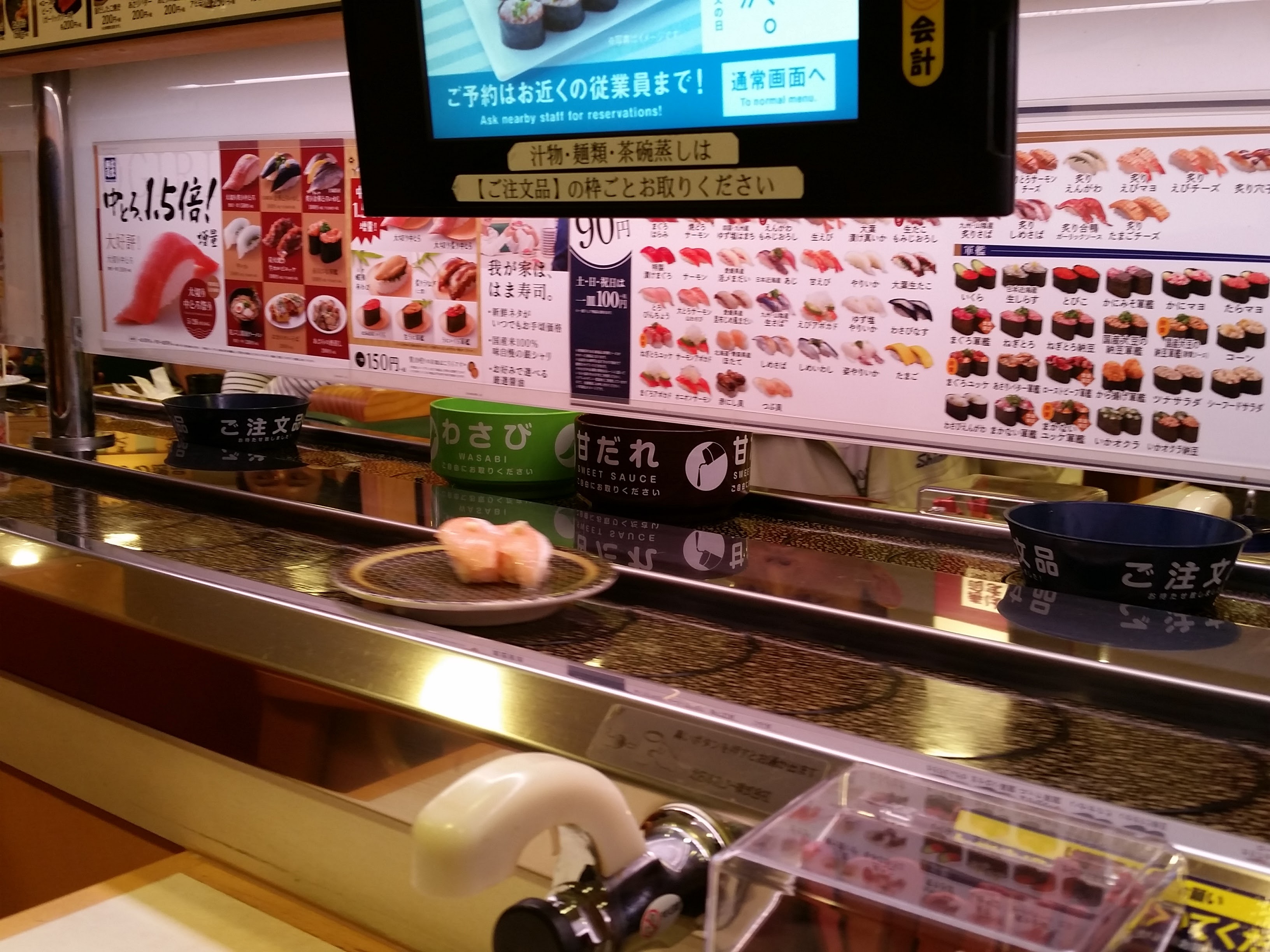
How it works
When you walk in, a staff member asks how many people and seats you at the counter or a table alongside the belt. In front of you there’s a touchscreen (or a paper menu at more traditional spots) for ordering specific pieces that arrive on a separate express lane.
The main belt runs continuously with a rotating selection of basics: tuna nigiri, salmon, prawn, tamago (egg omelette), and various rolls. You can grab directly from the belt, or use the screen to order something specific or seasonal.
When you’re done, call the staff or press a button for them to count your plates. Pricing is per plate: at the main chains each plate (two pieces) costs ¥110–180, with premium plates at ¥330 or more.
Ordering from the screen
The touchscreens usually have an English option or photo icons. If you order from the screen, your food arrives on a separate express lane — at more modern chains like Sushiro or Kura Sushi, a miniature train brings it directly to you. Once you take the plate, the train returns automatically to the kitchen.
The green tea
At the counter there’s usually a hot water tap and powdered green tea (matcha). You make it yourself. It’s free and unlimited.
The main chains
Sushiro (スシロー) is Japan’s largest kaiten-zushi chain by customer volume. It has its own app for joining a virtual queue before you arrive, avoiding a wait outside. The fish quality is surprisingly good for the price.
Kura Sushi (くら寿司) is notable for its gamification: every five plates you can spin a wheel on the screen for a small toy prize. Very popular with children — a reliable option if you’re travelling Japan with kids. They also have a cup system where you drop the empty plate in a slot and a machine counts it automatically.
Hamazushi (はま寿司) is the most budget-friendly of the big three, with slightly lower prices. Good value.
Genki Sushi (元気寿司) introduced the miniature train delivery system and has locations in several airports and tourist areas.
How it differs from a sushi restaurant
Kaiten-zushi is not high-end sushi — that’s clear upfront. The fish is usually frozen and thawed, the selection is limited, and the atmosphere is loud and fast. But for what it is — affordable sushi, no reservation needed, at any time of day — it works well. A full meal comes to around ¥1,000–1,500 per person, similar in price to a bowl of ramen at a sit-down shop.
If you want proper sushi, look for a sushi-ya where the chef works in front of you — see our sushi guide for more on that side of things. If you want a quick, fun, no-fuss meal, kaiten-zushi is the answer.
When to go
Avoid Sunday lunchtimes: queues at popular chains can reach 45–60 minutes. Weekday afternoons (2–5 pm) are the quietest slot. Many chains let you join the waitlist from their app before you arrive.
Related reading
If you found this useful, these guides go well with it:
Related calculators
About the author
Editorial entity
Yen & Zen is written by a Spanish-Japanese couple based in Kanagawa Prefecture, in the Tokyo metropolitan area. We have been in Japan since 2010. The site is a hobby project covering practical calculators and articles about life and travel in Japan, with verified figures and citations to official sources. We are not lawyers, accountants, or licensed advisors; articles here are based on observation, personal experience, and published official rules — not on professional consultation.