Udon and soba: Japan's essential noodle guide
If you already know ramen, it’s time to meet the other two noodles you’ll find in every corner of Japan: udon and soba. They’re cheaper, less trendy, and honestly what most people actually eat day to day.
Udon: thick wheat noodles
Udon (うどん) is a thick, white noodle made from wheat flour. The texture is soft and chewy — almost silky when well made. The broth is usually light, built on dashi (a stock of bonito flakes and kombu seaweed) with soy sauce, though the flavour profile changes a lot depending on the region.
Kagawa Prefecture on the island of Shikoku is the undisputed capital of udon. Its Sanuki udon (讃岐うどん) has a firm, precisely cut noodle that stands apart from the softer versions you find in Tokyo or Osaka. Kagawa has more udon restaurants per capita than anywhere else in the world, and locals eat it several times a week.
Types of udon you’ll see on menus
- Kake udon (かけうどん) — noodles in hot broth, nothing else. The simplest and cheapest option.
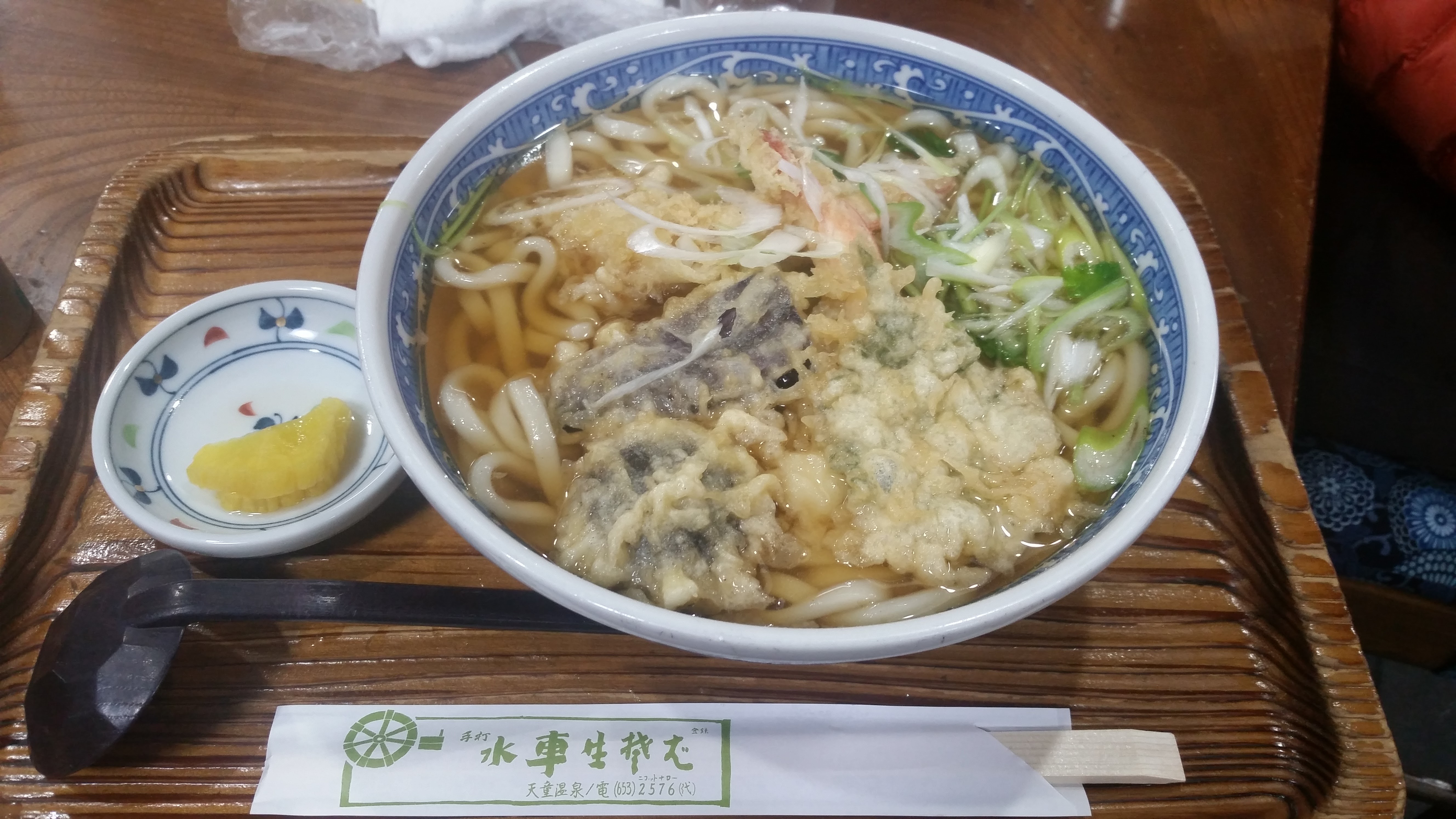
- Tempura udon — topped with prawn or vegetable tempura. The broth slowly softens the coating.
- Kitsune udon (きつねうどん) — with sweet simmered fried tofu (aburaage) on top. Very popular in Osaka.
- Tsukimi udon (月見うどん) — a raw egg cracked on top that cooks in the hot broth. “Tsukimi” means “moon viewing”, referring to the yolk.
- Yaki udon (焼きうどん) — stir-fried in a pan with vegetables and meat. No broth.
- Zaru udon (ざるうどん) — served cold, with a dipping sauce (tsuyu) on the side. Popular in summer.
Udon chains
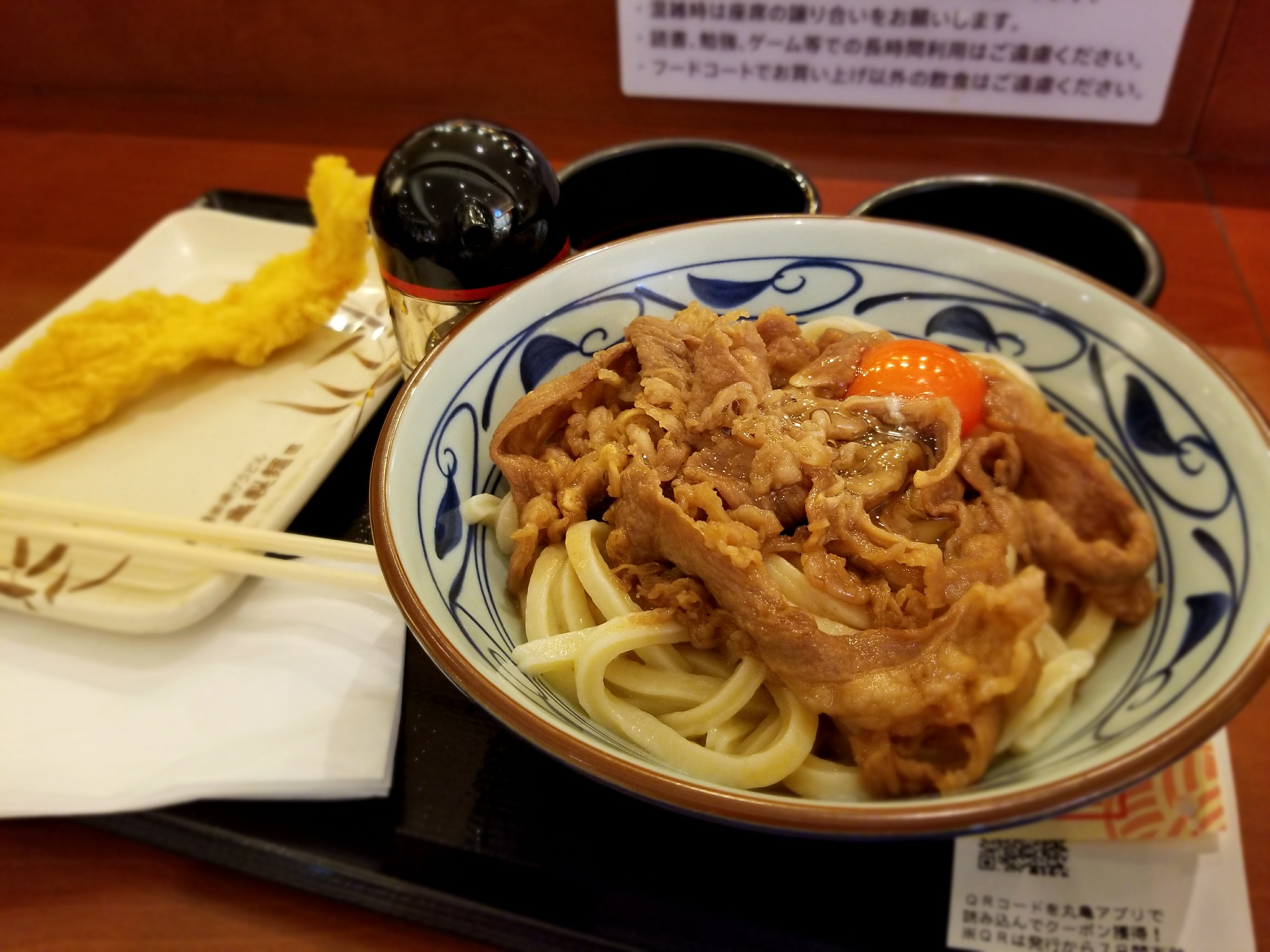
The two chains you’ll see all over Japan are Marugame Seimen (丸亀製麺) and Hanamaru Udon (はなまるうどん). They work like a cafeteria line: pick up a tray, choose your udon size (small, regular, or large — sometimes the same price), then add tempura or other toppings that are priced separately.
A basic udon at a chain costs around ¥300–400. With tempura and a drink you’ll rarely spend more than ¥700. It’s one of the best value meals in Japan. Some locations also serve curry udon, a comfort-food crossover covered in our Japanese curry guide.
Soba: buckwheat noodles
Soba (そば) is a thin noodle made from buckwheat flour, sometimes mixed with regular wheat flour. The colour ranges from light grey to dark brown depending on the buckwheat content. The most prized are juu-wari soba (十割そば), made from 100% buckwheat — harder to produce and with a more intense, nutty flavour.
Nagano, Shimane, and Iwate are prefectures known for their soba traditions, but artisan soba restaurants exist throughout the country. In Tokyo, entire neighbourhoods specialise in it, and a bowl at a good shop can cost ¥1,500 or more.
Types of soba
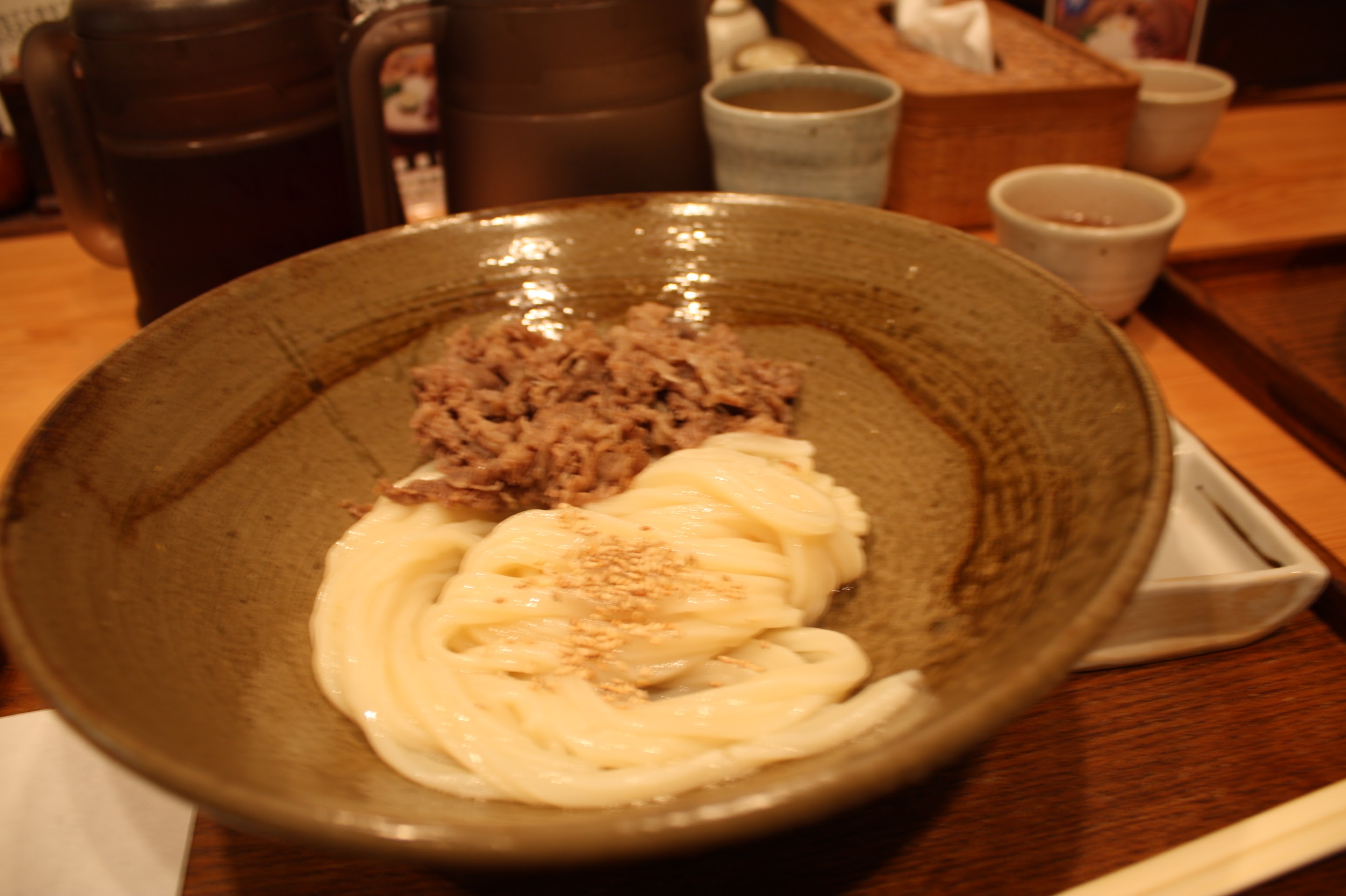
- Mori soba / Zaru soba (もりそば / ざるそば) — cold, served on a bamboo tray. You dip each mouthful in tsuyu before eating. Zaru has shredded nori on top.
- Kake soba (かけそば) — in hot broth, the most basic version.
- Tempura soba — same idea as tempura udon.
- Toshikoshi soba (年越しそば) — eaten on New Year’s Eve. The long noodle symbolises longevity, and eating it is meant to cut ties with the old year.
- Wanko soba (わんこそば) — a specialty of Iwate: tiny bowls are poured one after another without stopping, until you place the lid on the bowl yourself. Locals turn it into a competition.
The tsuyu and how to dip
Tsuyu is a concentrated mix of dashi, mirin, and soy sauce, served in a small cup alongside cold soba. The classic technique is to dip only the lower half of the noodle — that way you don’t overwhelm the buckwheat flavour with too much sauce. At the end, many restaurants bring sobayu (蕎麦湯), the water the soba was cooked in, so you can mix it with the leftover tsuyu and drink it.
What you need to know before you eat
Slurping is fine. Loudly slurping your noodles is completely normal in Japan — udon, soba, ramen, all of them. It’s not rude; it’s said to help you appreciate the flavour. You don’t need to force it, but don’t worry if it happens.
Order by size. At udon chains you usually choose between small (小), medium (中), and large (大), sometimes at the same price. If you’re not sure, just point at what the person next to you has.
Where to find them. Specialist restaurants, department store food courts (depato), train station stands (eki-soba is a classic — a bowl eaten standing up while waiting for the train), and convenience stores in instant form.
Rough prices. Chains: ¥300–600. Regular restaurants: ¥700–1,200. Artisan soba specialists: ¥1,200–2,000+.
Both are dishes real people eat every day, at any time of day. If you spot a Marugame Seimen next to the station, walk in. And if you see a soba restaurant with a sign that says 十割, that’s worth trying too.
Related reading
If you found this useful, these guides go well with it:
Related calculators
About the author
Editorial entity
Yen & Zen is written by a Spanish-Japanese couple based in Kanagawa Prefecture, in the Tokyo metropolitan area. We have been in Japan since 2010. The site is a hobby project covering practical calculators and articles about life and travel in Japan, with verified figures and citations to official sources. We are not lawyers, accountants, or licensed advisors; articles here are based on observation, personal experience, and published official rules — not on professional consultation.