Sushi in Japan: types, how to order and what to expect
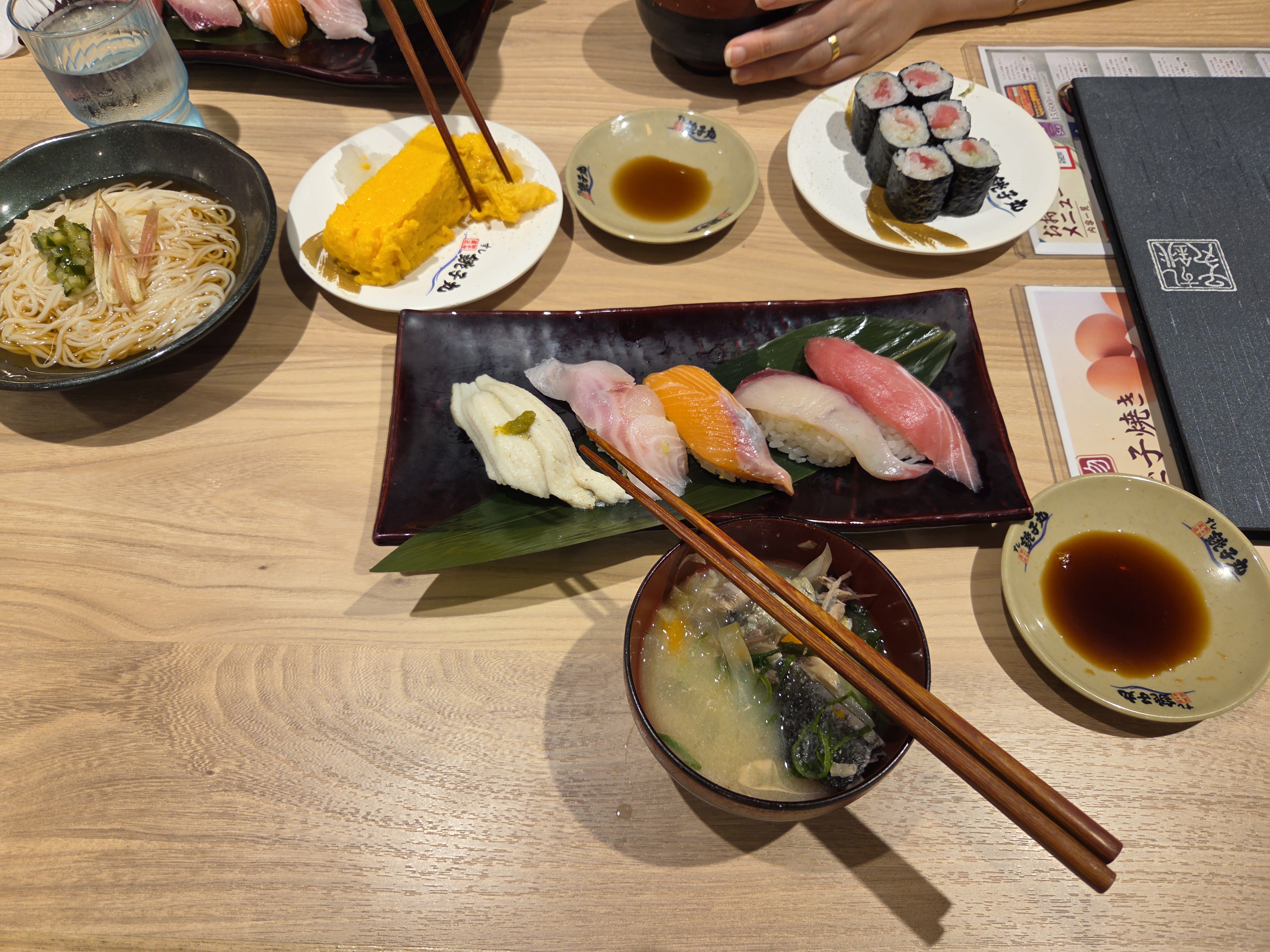
The sushi you eat in Japan and the sushi you eat elsewhere share a name and not much else. In Japan there’s no creamy sauce on top, there’s no avocado in everything, and the rice has a texture and flavour you don’t find outside the country.
But before getting into what’s inside, it’s worth understanding the available formats — because where you eat sushi in Japan completely changes the experience.
The three main formats
Kaiten-zushi (回転寿司): the conveyor belt
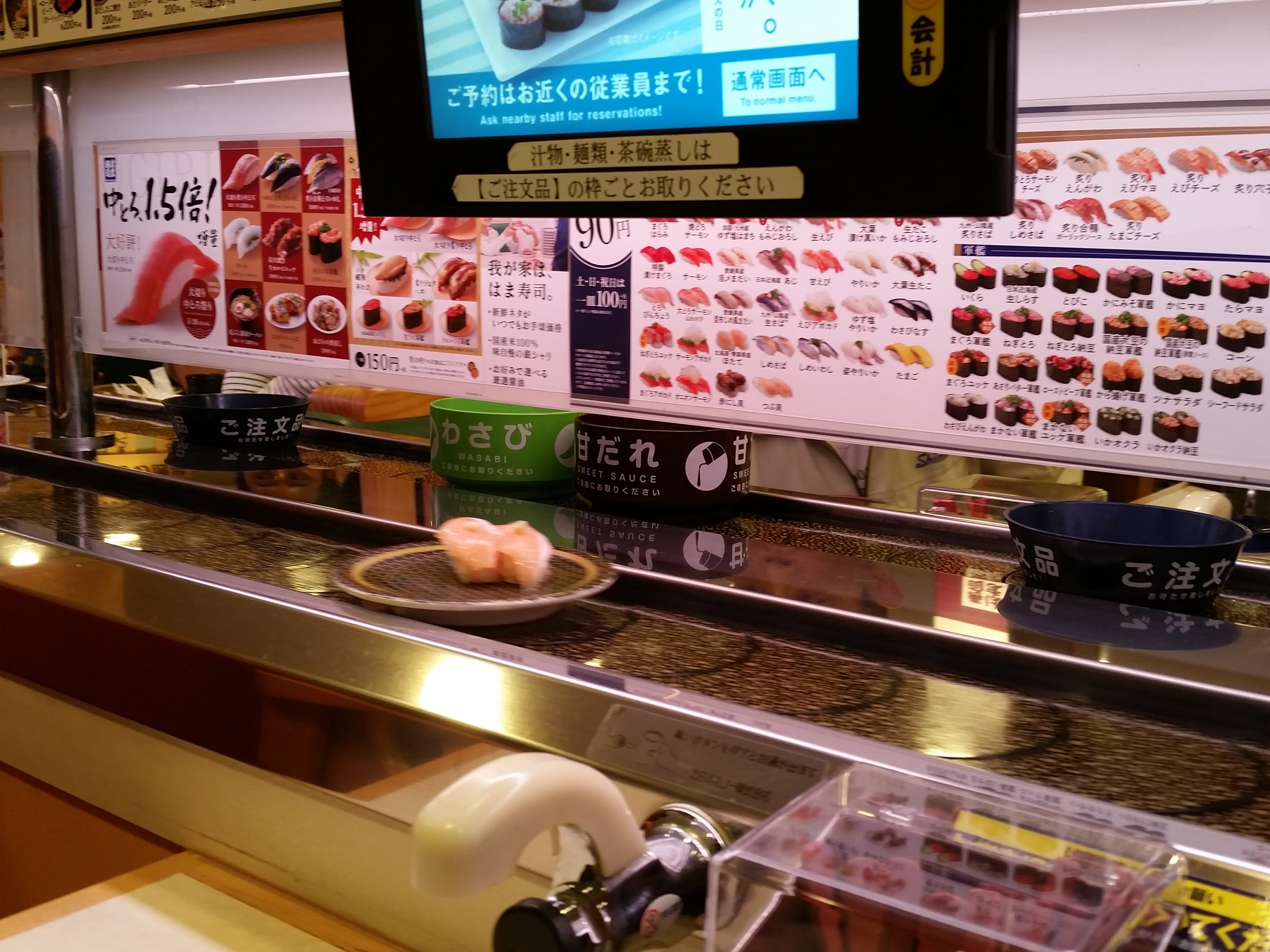
Kaiten-zushi is conveyor belt sushi. Plates pass in front of you and you take whatever you want. It’s the most accessible, most affordable format and the most suitable for a first visit: you don’t need to speak Japanese, you can see exactly what you’re ordering before you take it, and the price is clear.
Price is usually indicated by plate colour, from around ¥110–130 for the cheapest to ¥500–600 for premium plates. At the end, the server counts your plates.
The most well-known chains: Sushiro, Kura Sushi, Hama Sushi and Kurazushi. Most have touchscreen ordering in English. You can also order specific pieces via the screen and they arrive directly on an express lane above the main belt.
Counter sushi: the classic experience

At a traditional sushi restaurant you sit at the counter facing the itamae (the master) who prepares each piece in front of you. You can order from a fixed menu or piece by piece.
The Japanese required here is higher. More affordable places usually have photo menus. More specialised ones assume you know what you’re ordering.
Price: from ¥2,000–3,000 for lunch at a neighbourhood spot to ¥5,000–10,000 or more at a proper Tokyo sushi restaurant.
Omakase (おまかせ): “leave it to the chef”
Omakase means “I’ll leave it up to you.” No menu. The chef decides what to serve based on the day’s fish and their own judgement. It’s the most expensive format: it can start at ¥10,000 per person and reach ¥30,000–50,000 at high-end restaurants.
Requires a reservation — months in advance at well-known places. You don’t need to speak Japanese, but you do need to accept that the pace and menu belong entirely to the chef.
The types of sushi you’ll encounter
Nigiri (握り)
An oblong ball of rice with a piece of fish (or other ingredient) pressed on top. The most iconic format and the hardest to do well: the rice must have exactly the right temperature, texture and compression.
Eaten in one or two bites. Whether you use chopsticks or fingers is up to you; both are correct.
Maki (巻き)
Rice and fish rolled in seaweed (nori). Thin rolls (hosomaki, single ingredient) and thick rolls (futomaki, multiple ingredients). Temaki is a hand-rolled seaweed cone meant to be eaten immediately.
Standard maki in Japan is far simpler than the elaborate Western sushi rolls. A tekka maki (tuna) or kappa maki (cucumber) is what you’ll most commonly find.
Sashimi (刺身)
Raw fish without rice. Technically not sushi, but served at the same restaurants, and just as often at an izakaya. If the fish is good, sashimi shows it more clearly than any other format.
Gunkan (軍艦)
A ball of rice wrapped with a strip of seaweed to form a cup, filled with ingredients that wouldn’t stay on top of rice on their own: salmon roe (ikura), sea urchin (uni), corn.
Temari and other variants
Temari-zushi is a round, ball-shaped rice portion with the ingredient pressed on top. More decorative; common in bento boxes and careful presentation restaurants.
The ingredients: what each name means
The most common you’ll see at any restaurant:
| Japanese | English |
|---|---|
| マグロ maguro | Tuna (bluefin) |
| サーモン sāmon | Salmon |
| ハマチ hamachi | Yellowtail / Amberjack |
| エビ ebi | Cooked prawn |
| タコ tako | Octopus |
| イカ ika | Squid |
| アナゴ anago | Saltwater eel (grilled, with sweet sauce) |
| ウナギ unagi | Freshwater eel (grilled, with sauce) |
| イクラ ikura | Salmon roe |
| ウニ uni | Sea urchin |
| タマゴ tamago | Sweet rolled egg omelette |
| カニ kani | Crab |
Wasabi and ginger

Wasabi: at a quality counter restaurant, the wasabi is already applied by the itamae between the rice and the fish. You don’t add more. At kaiten-zushi you can add your own. Real Japanese wasabi (from the wasabia japonica root) is much milder and more aromatic than the green paste served outside Japan, which is usually dyed horseradish.
Pickled ginger (gari): a palate cleanser between different pieces, not an accompaniment for each piece. It doesn’t go on top of sushi.
Soy sauce: on nigiri, you dip the fish, not the rice. Dipping the rice causes it to fall apart and the flavour becomes unbalanced. Many pieces already have sauce or seasoning applied by the chef — those don’t need soy sauce added.
How to order without speaking Japanese
At kaiten-zushi the touchscreen solves everything: choose by photo, pay by card or cash, no problem. For more on getting by without the language, see our guide to eating in Japan without speaking Japanese.
At counter restaurants with a menu, pointing works. If there are photos, point at them. If not, the classic approach is to ask for omakase at a price point — say the number of yen you want to spend — and the chef decides.
A few useful phrases:
- Kore wa nan desu ka? (これは何ですか?) — What is this?
- Kore wo kudasai (これをください) — This one, please
- Oishii! (おいしい!) — It’s delicious!
- Okaikei kudasai (お会計ください) — The bill, please
FAQ
Is sushi in Japan always expensive? No. Kaiten-zushi is cheap: you can eat well for ¥1,000–1,500 per person. Neighbourhood counter restaurants are ¥2,000–4,000. Only high-end omakase is expensive. If you just want something quick, konbini sushi is edible if unremarkable.
Is Japanese salmon different? Yes. Salmon in Japan is usually high quality, often Norwegian imported but handled carefully. The fat content and texture differ from what’s served in Western sushi restaurants.
What is uni and is it worth trying? Uni (sea urchin) is divisive: it has a very intense, slightly oceanic and creamy flavour. The best Hokkaido uni is considered among the finest in the world. If you haven’t tried it before or are sensitive to strong marine flavours, start with one piece.
Can I order without raw fish? Yes. Tamago (egg omelette), kani (crab, often cooked), ebi (cooked prawn), anago and unagi (grilled eels) are not raw. At kaiten-zushi there are also rolls with cooked ingredients.
Should sushi be eaten with chopsticks or fingers? Both are correct for nigiri. In Japan, eating sushi with your fingers is perfectly acceptable, especially at a counter.
Sushi in Japan is not a luxury reserved for special occasions: it’s a type of food with formats for every budget and every level of experience. Kaiten-zushi is just as Japanese as a twelve-course omakase — the same democratic spread you’ll find in a bowl of ramen.
Reference prices as of 2026. Availability varies by city and season.
Related reading
If you found this useful, these guides go well with it:
Related calculators
About the author
Editorial entity
Yen & Zen is written by a Spanish-Japanese couple based in Kanagawa Prefecture, in the Tokyo metropolitan area. We have been in Japan since 2010. The site is a hobby project covering practical calculators and articles about life and travel in Japan, with verified figures and citations to official sources. We are not lawyers, accountants, or licensed advisors; articles here are based on observation, personal experience, and published official rules — not on professional consultation.