Yakiniku: Japanese grilled meat explained
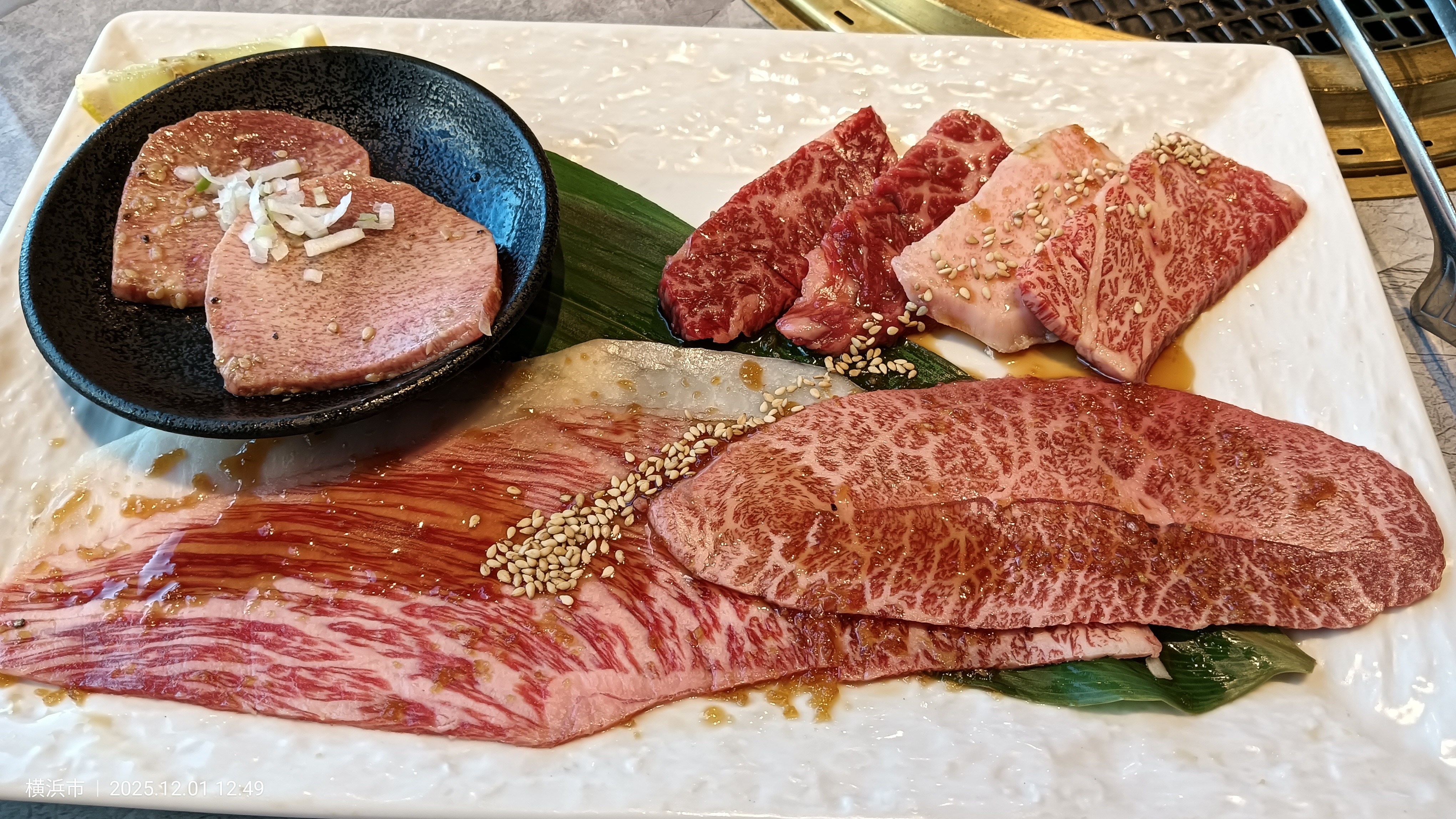
Yakiniku (焼肉, literally “grilled meat”) is one of the most satisfying dining experiences in Japan and one of the easiest to enjoy without speaking Japanese. They bring you the raw meat, you cook it on the grill at your table, you eat it. There is not much more to understand.
But within that simplicity there are quite a few details worth knowing: which cuts to order, what separates a neighbourhood restaurant from a wagyu specialist, what horumon is and why some tables have charcoal grills and others electric ones.
How a yakiniku restaurant works
Each table has a built-in grill in the centre with an extraction hood. When you sit down they will light the grill, charcoal or electric depending on the restaurant. You order meat by the plate, they bring it raw and you cook it yourself.
Cooking time varies by cut. Thin tongue slices and leaner cuts are done in a minute or less. Kalbi and more heavily marbled wagyu need a little longer for the fat to render. The general rule: when the colour changes on top, time to flip; when the pink is gone, it is ready.
Accompaniments are rice, miso soup, salad and dipping sauces. Tare (たれ), the dipping sauce usually made from soy sauce with garlic and sesame, comes in a small bowl on the side. Shio (salt and lemon) is the lighter alternative.
The main cuts
Tan (タン, tongue): the most popular cut to start with. Served in very thin slices seasoned with salt and spring onion. Firm but tender texture, clean flavour. It is the cut most people order on a first visit.
Kalbi (カルビ, short rib): rib meat with interleaved fat. More flavourful than sirloin, less expensive than top-grade wagyu. The reference cut at most yakiniku restaurants.
Harami (ハラミ, skirt steak): technically the diaphragm muscle, but treated as red meat. Intense flavour with some chew. Many consider it the best balance of price and taste.
Rosu (ロース, sirloin): leaner cut, tender texture. Common in lunch sets.
Toro kalbi (トロカルビ): the most heavily marbled version of kalbi, with pronounced white veins of fat. Among the more expensive cuts on a standard restaurant menu.
Wagyu
Wagyu (和牛) literally means “Japanese cow” and refers to specific breeds raised in Japan under conditions that produce very high intramuscular fat infiltration. Not all wagyu is the same: grades run from A3 to A5, with A5 being the highest, and prices rise significantly with grade.
A wagyu A5 yakiniku meal can cost double or triple a standard beef restaurant. The difference on the palate is real: the fat melts almost before you chew, the flavour is very intense. It is not an everyday experience, but it is one that is difficult to replicate outside Japan.
In Yokohama and Tokyo there are restaurants specialising in wagyu from different regions: Kobe, Matsusaka, Omi, Hida. The price range is wide.
Horumon: the other side of yakiniku
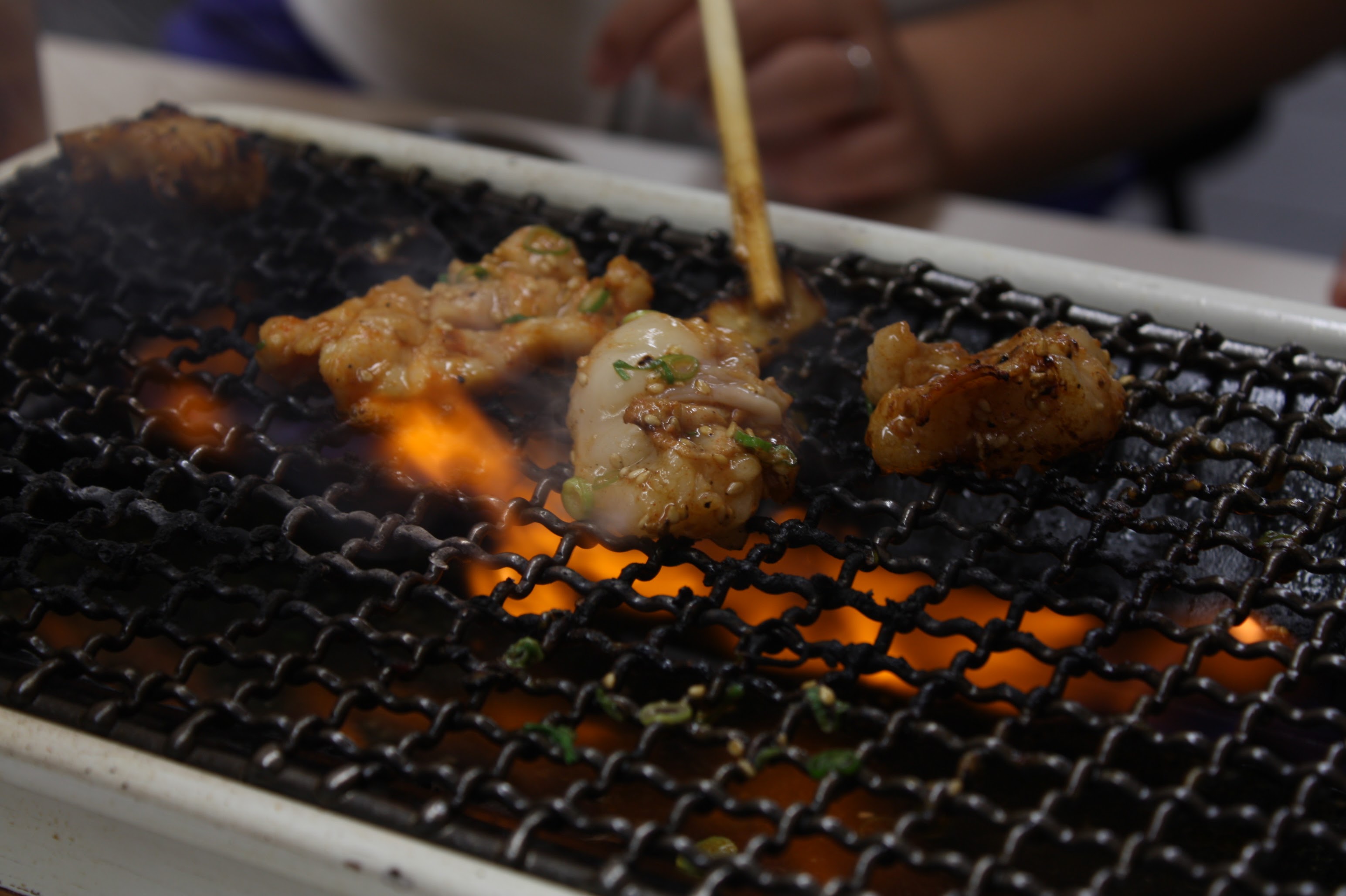
Horumon (ホルモン) is offal: intestines, stomach, heart, kidneys. In Japanese, folk etymology suggests the name comes from “houru mono” (捨てるもの, “the thing that is thrown away”), though that is disputed. What is certain is that horumon is the side of yakiniku most deeply rooted in Osaka and in the culture of popular izakaya.
The texture is very different from lean meat: chewy, fattier, more intense and sometimes mineral in flavour. It is not for everyone, but if you enjoy tripe or offal in other cuisines, Japanese horumon is worth trying.
The most approachable cuts to start with: shimacho (large intestine, quite fatty) and marinated gyutan. The most intense: senmai (the book tripe of beef stomach). In Osaka, restaurants specialising in horumon often have charcoal grills and an atmosphere closer to a tavern than a conventional yakiniku restaurant.
Types of restaurant
Neighbourhood yakiniku (焼肉屋): the most common type. Reasonably priced menus (¥2,000 to ¥4,000 per person), decent-quality meat, electric or charcoal grill, lively atmosphere. Works well for groups and families.
Wagyu specialist: more expensive, more attentive service, meat served in one or two-piece plates rather than by the plateful. Price per person can range from ¥5,000 to ¥15,000 or more. Yokohama has several good ones.
Tabehoudai (食べ放題, all you can eat): fixed-price, time-limited format (usually 90 or 120 minutes). The meat quality is not the same as à la carte, but it is the most economical option for groups with large appetites. Very popular with students and families with children.
With children
Yakiniku works well with children for a few reasons: there is no fixed menu, everyone orders what they want, and the table-cooking dynamic has an element of play that keeps them engaged. Most restaurants have high chairs.
With young children, the easiest cuts to eat are the leaner and more tender ones (sirloin, thin tongue). Tabehoudai is the most practical option for families with several children. Our guide to family restaurants covers other options for eating out with kids.
What to order on a first visit
A reasonable sequence for a first visit:
- Tan shio (tongue with salt): to start, clean and easy.
- Kalbi or harami: the core of the meal, to get into the rhythm of the grill.
- Wagyu (budget allowing): one or two pieces to try the difference.
- Rice and miso soup alongside.
- Horumon: if curious, save it for the end.
How much does it cost
Neighbourhood yakiniku: ¥2,500 to ¥4,000 per person with a drink. Quality wagyu yakiniku: ¥6,000 to ¥15,000 per person. Tabehoudai: ¥2,000 to ¥3,500 per person depending on restaurant and duration.
Reference prices 2025-2026. Wagyu prices vary considerably by grade and cut.
Related reading
If you found this useful, these guides go well with it:
Related calculators
About the author
Editorial entity
Yen & Zen is written by a Spanish-Japanese couple based in Kanagawa Prefecture, in the Tokyo metropolitan area. We have been in Japan since 2010. The site is a hobby project covering practical calculators and articles about life and travel in Japan, with verified figures and citations to official sources. We are not lawyers, accountants, or licensed advisors; articles here are based on observation, personal experience, and published official rules — not on professional consultation.