Japanese curry: what it is, types, and where to eat it
Curry arrived in Japan in the late 19th century via the British Navy, who had adopted it from India. Japanese sailors cooked it on board, adapted it to local taste, and within a hundred years it had become one of the most popular dishes in the country. Today curry (カレー, karē) is in convenience stores, company canteens, school lunch menus, and speciality restaurants with queues out the door. It’s not exotic — it’s everyday food.
How it differs from Indian curry
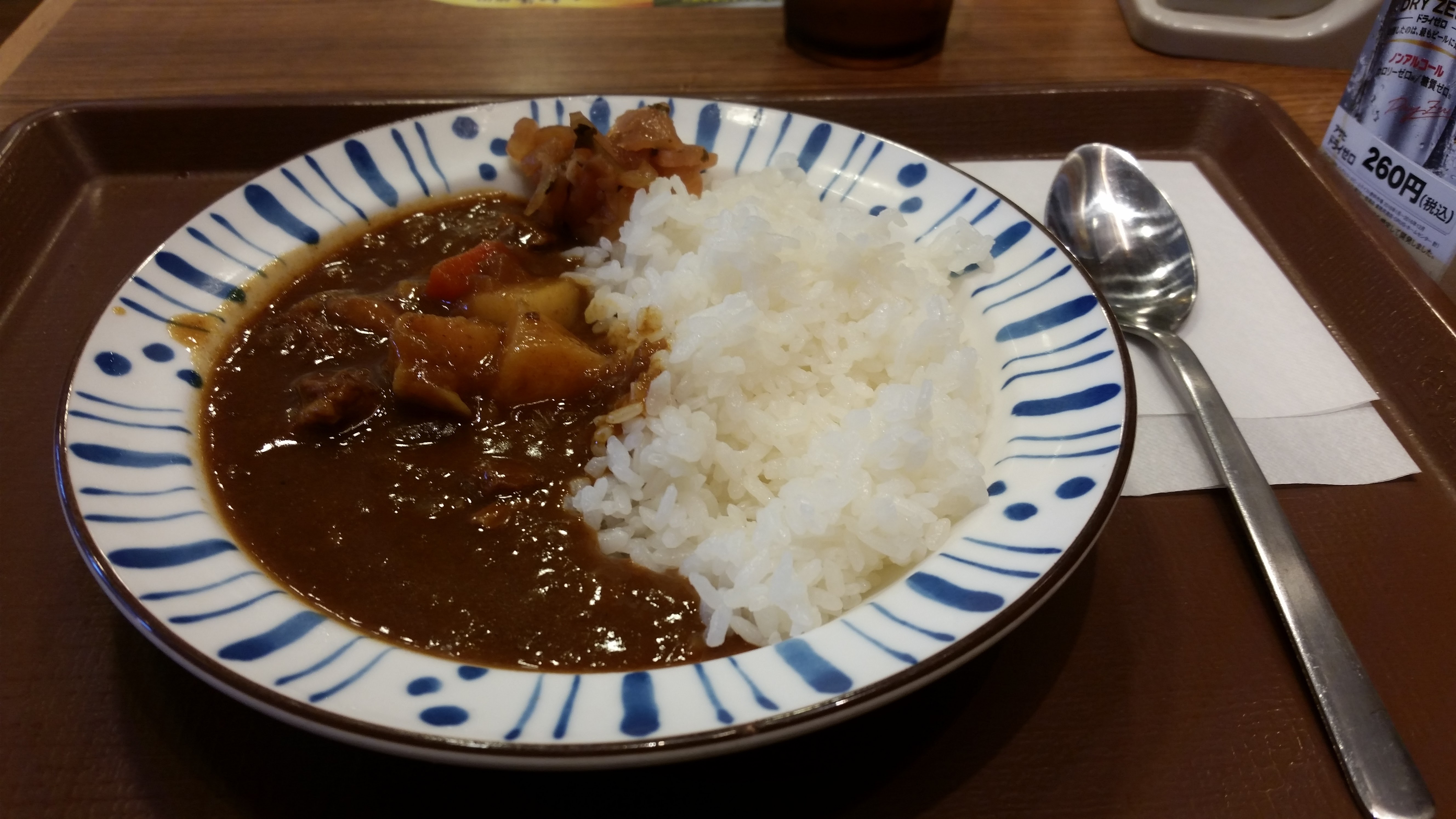
The main differences are texture and flavour profile. Japanese curry has a thick, dark sauce — almost like a velouté — with a taste that blends sweetness, umami, and gentle spice. It isn’t spicy by default; heat level is a separate choice. The base is usually slow-caramelised onion, carrot, potato, and meat (typically pork or chicken), cooked down with a block curry roux.
Those roux blocks (カレールー) are the secret: brands like S&B and House sell them in supermarkets worldwide. In Japan they’re used at home as routinely as a stock cube. The result is always recognisable: dark brown, thick, lightly sweet, with an aroma of mellow spices.
Types of Japanese curry
Curry rice (カレーライス)
The classic. Short-grain Japanese rice on one side of the plate, curry sauce on the other. Often served with fukujinzuke (red pickled vegetables) or rakkyo (pickled small onions) on the side. Simple, cheap, and comforting.
Katsu curry (カツカレー)
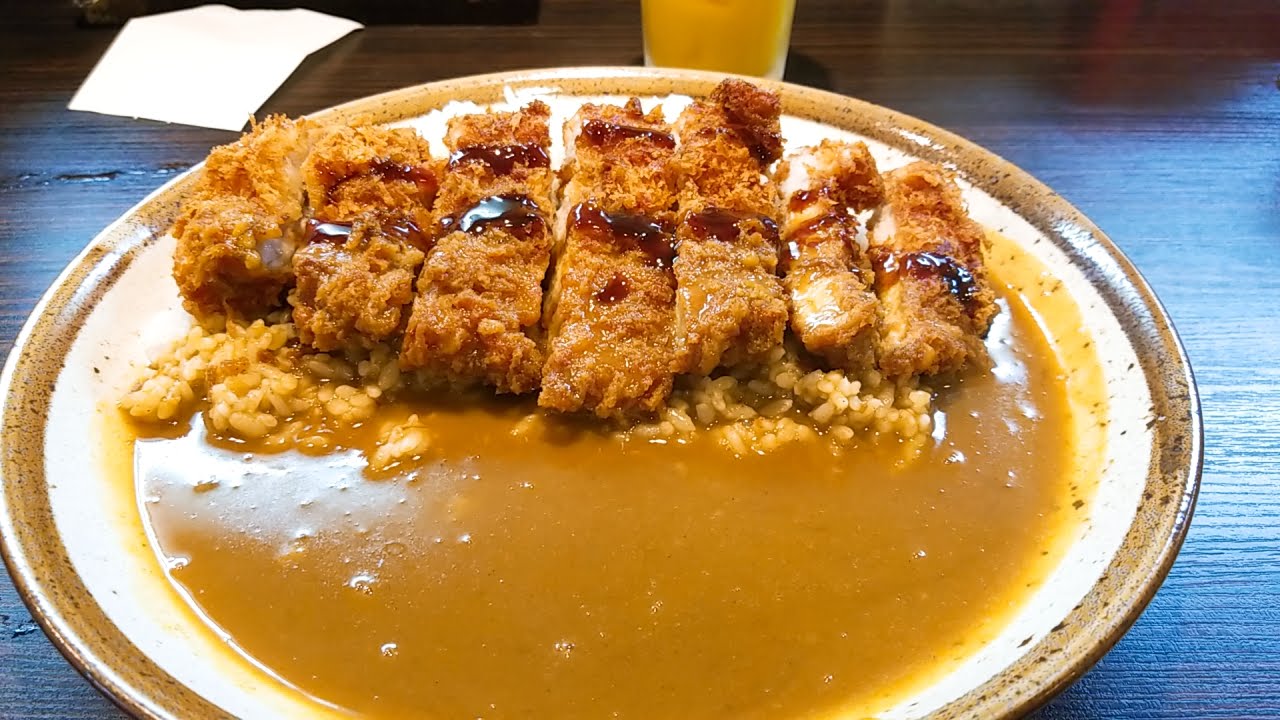
Curry rice topped with a breaded pork cutlet (tonkatsu). It’s the most internationally recognised version and one of the most ordered in Japan. The contrast between the crispy coating and the thick sauce is exactly what makes it work.
Soup curry (スープカレー)
A speciality of Hokkaido, specifically Sapporo. Instead of the thick sauce, here the curry is a more liquid, aromatic broth filled with whole vegetables (pepper, aubergine, carrot, potato) and protein on top. Visually striking, and if you’re heading north in winter, it’s mandatory.
Curry udon (カレーうどん)
Udon noodles in curry sauce. Milder than curry rice, with the udon absorbing part of the sauce. Common at udon chains like Marugame Seimen. If you want to go deeper on the noodle itself, our udon and soba guide covers it in full.
Dry curry (ドライカレー)
A “dry” version where spiced minced meat is stir-fried with rice, similar to a curry fried rice. Less liquid than curry rice, more intense in spice.
Spice level
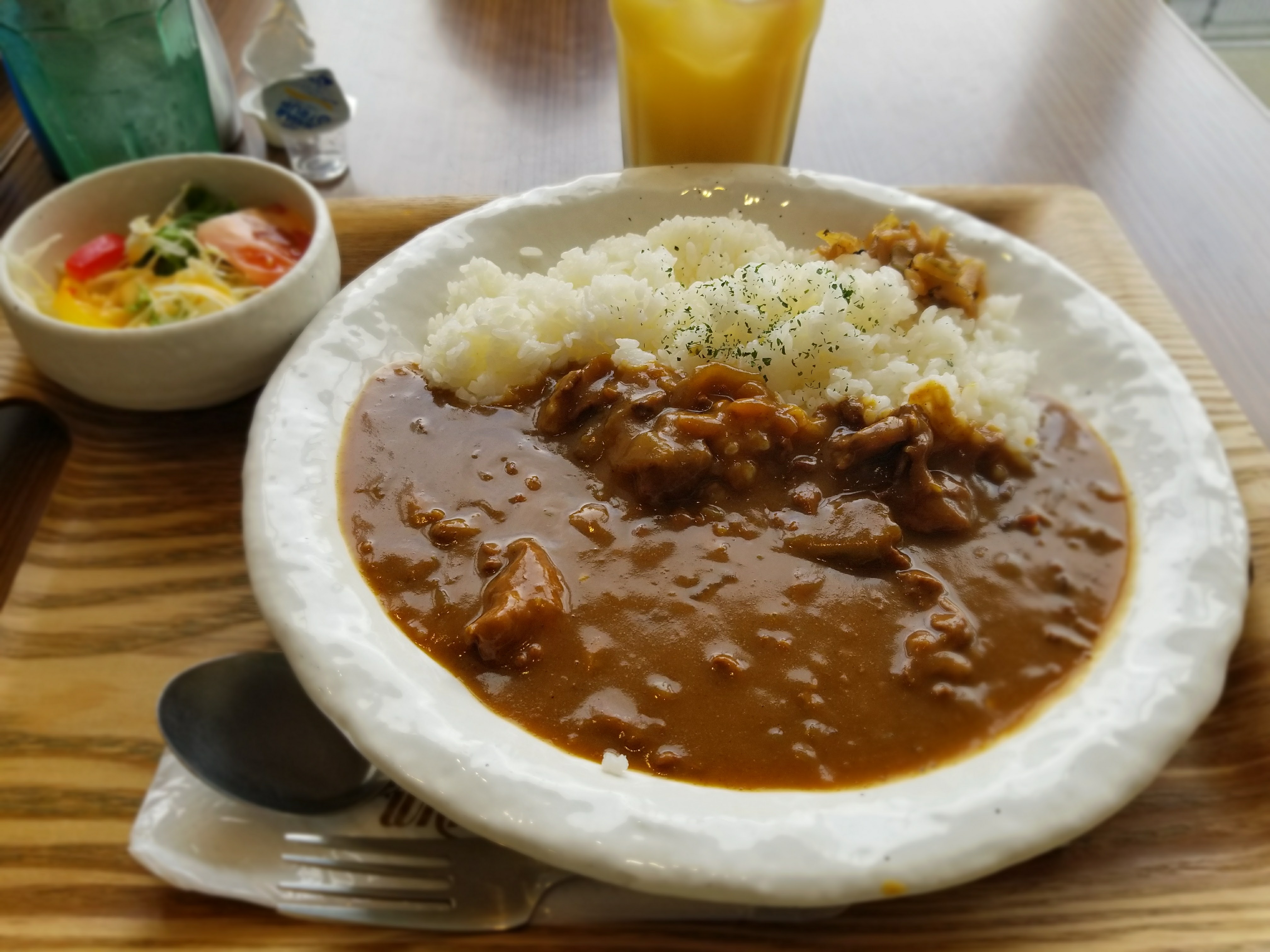
Many chains and restaurants ask for your spice level when you order. The default is level 1 or “normal”, which has virtually no heat. From level 5 you start to feel it, and some chains like CoCo Ichibanya go up to level 10 or beyond. If you say nothing, you’ll get the mildest version.
Curry chains
CoCo Ichibanya (ココイチ) is the world’s largest curry chain, with more than 1,200 locations in Japan alone. The system is built around customisation: you choose the rice quantity (from 200 g to 1,400 g), spice level, protein, and extra toppings. The base price is around ¥700–900 and goes up from there.
Other popular chains: Go!Go!Curry (Kanazawa style, very dark and thick sauce), Matsunoya (combination with tonkatsu).
Regional curry: Kanazawa
Kanazawa has its own curry style — darker, denser, and more intense than the standard. It always comes with tonkatsu on top and shredded cabbage on the side, and the rice fills most of the plate with no visible gap between rice and sauce. If you visit Kanazawa, look for Curry no Goten or local spots that advertise Kanazawa-style.
Convenience stores and home cooking
Convenience stores carry retort-pouch curry (レトルトカレー) of surprisingly good quality. Muji’s curry pouches are considered among the best in the country. At home, House Vermont Curry and S&B Golden Curry blocks are the top sellers — both come in mild, medium, and hot.
Japanese curry is one of those dishes that can seem too simple at first, but once you’ve had it you understand why people eat it every week. Spend any time in Japan and you’ll end up with a favourite chain.
Related reading
If you found this useful, these guides go well with it:
Related calculators
About the author
Editorial entity
Yen & Zen is written by a Spanish-Japanese couple based in Kanagawa Prefecture, in the Tokyo metropolitan area. We have been in Japan since 2010. The site is a hobby project covering practical calculators and articles about life and travel in Japan, with verified figures and citations to official sources. We are not lawyers, accountants, or licensed advisors; articles here are based on observation, personal experience, and published official rules — not on professional consultation.