Shinjuku Gyoen: the garden that changes with every season
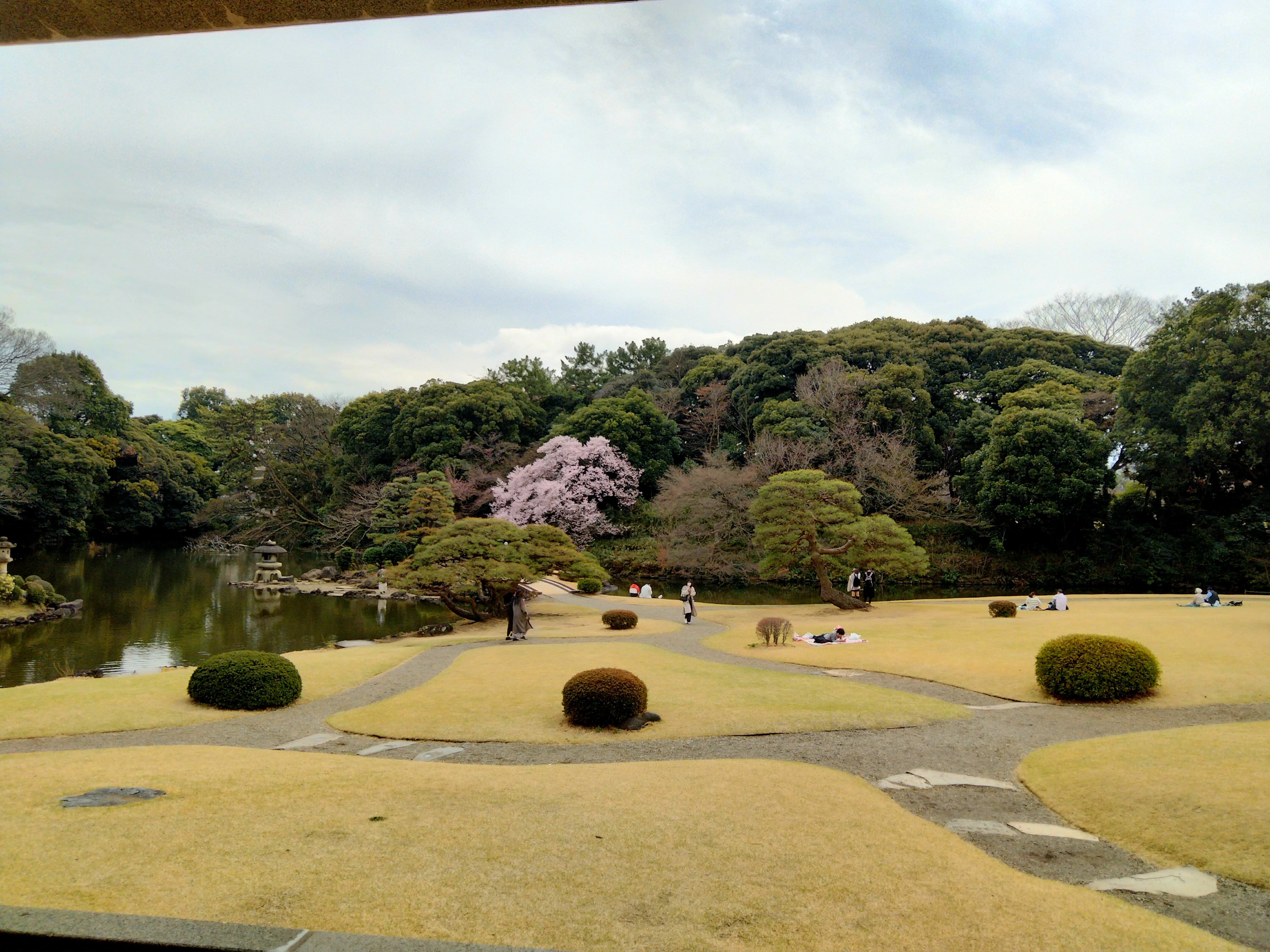
There’s a paradox about Shinjuku Gyoen: it’s one of Tokyo’s largest parks, a short train ride from the crowds of Shibuya, it’s right in the middle of the city, and it somehow manages to be quiet. Outside the cherry blossom peak, you can spend an hour in the Japanese garden without hearing the city traffic or seeing more than a dozen other people around you.
I went for the first time in spring, when the cherry trees still had some blossom left. I’ve been back in different seasons and each visit feels like the same place under completely different light.
What Shinjuku Gyoen is
Shinjuku Gyoen (新宿御苑) is a 58-hectare national garden in the Shinjuku district. It was an imperial garden until after the Second World War, when it passed to the Ministry of the Environment and opened to the general public. The combination of that history — a space designed for use by the imperial family, not for mass tourism — and its scale explains why it has a different quality from most urban parks in Tokyo.
Within the grounds, three completely different garden styles coexist in aesthetics and atmosphere.
The three sections
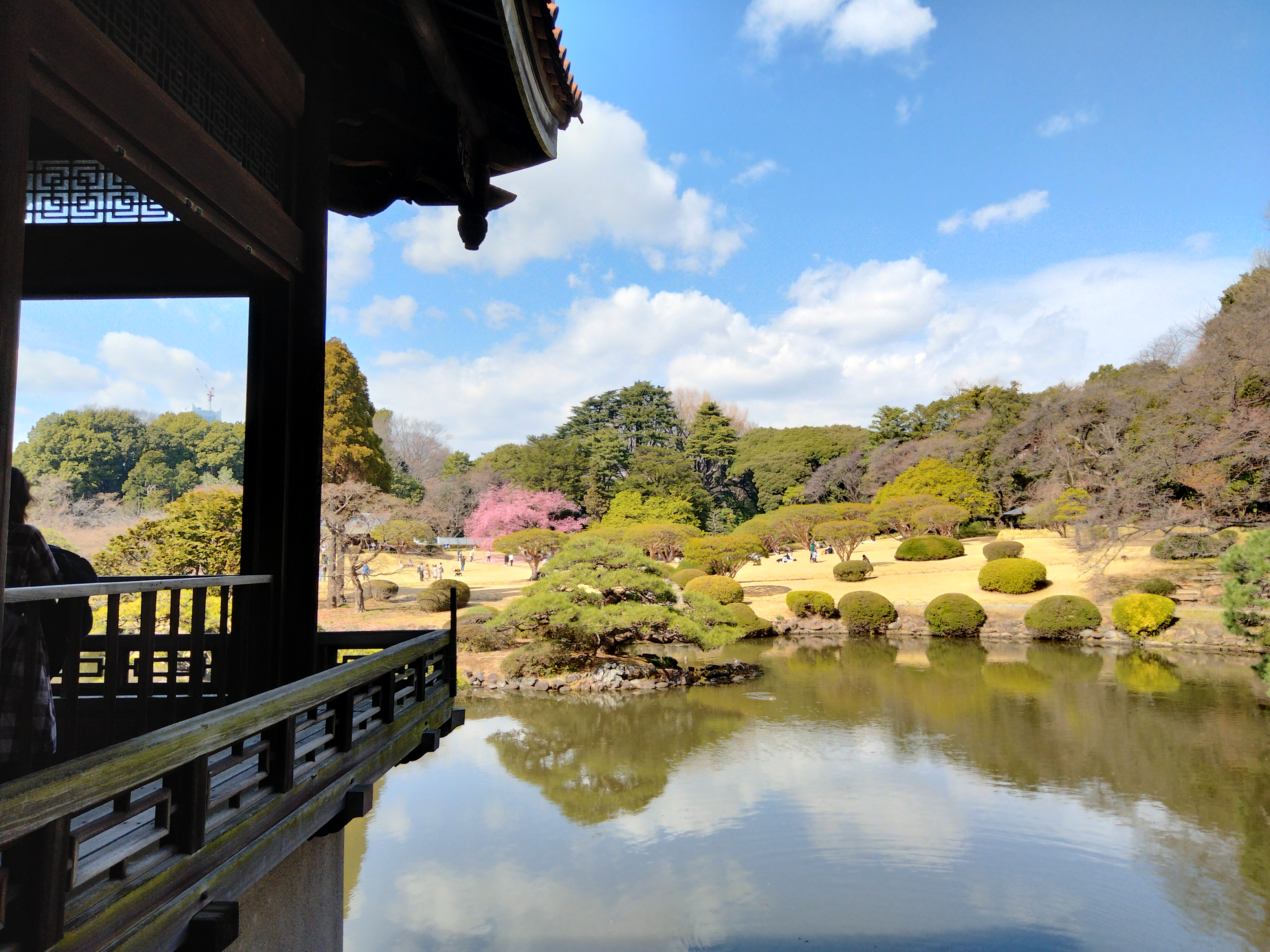
Japanese-style garden: the most distinctive part of the park. Central pond, pine trees shaped over generations, stone lanterns, a small traditional tea pavilion. The pace here is different from the rest of the park: people walk more slowly, talk less. In autumn, Japanese maples (momiji) turn the pond’s reflection orange and red. In any season, it’s the most photogenic corner.
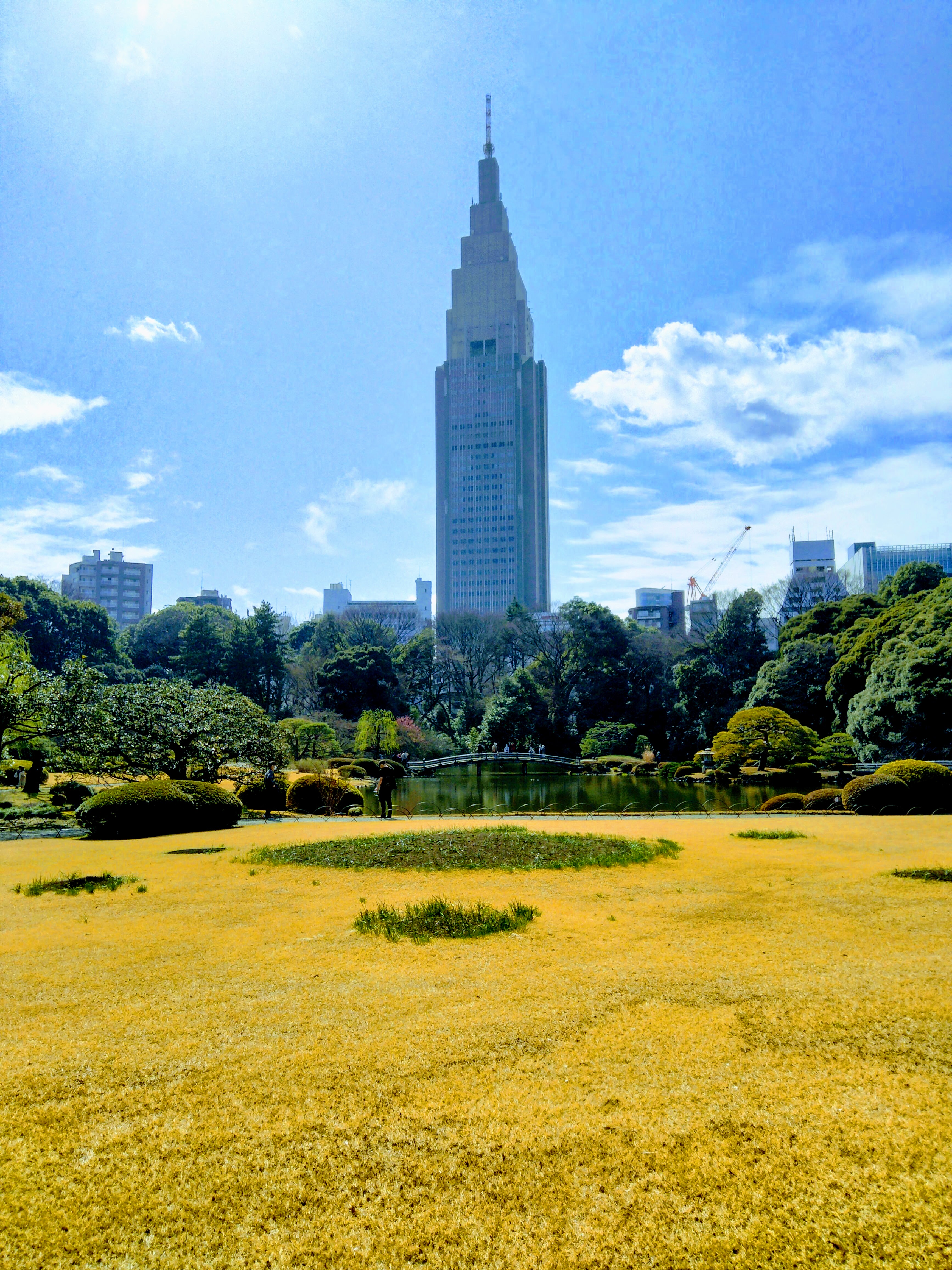
English-style garden: wide grass lawns with large, majestic trees. This is the most open section and the one people use to spread a blanket, read, or simply lie down. The park’s most photographed cherry trees are here. In summer, the shade from the plane trees and oaks makes it bearable even in the heat.
French formal garden: geometric flowerbeds, trimmed hedges, symmetry. It’s the smallest section and the one fewest people explore in detail, but the contrast with the other two is interesting. It looks more like a miniature Versailles than anything typically Japanese.
The greenhouse
The greenhouse (温室) is a stop most people skip — and shouldn’t. It has a collection of tropical and subtropical plants including orchids, giant ferns, carnivorous plants and a selection of bromeliads you wouldn’t see outside a specialist botanical garden. The temperature inside is obviously high, but it’s an interesting experience, especially in winter when the contrast with the cold outside is at its most dramatic.
Greenhouse entry is included in the general park admission.
The rules that set Shinjuku Gyoen apart
Two rules make Shinjuku Gyoen fundamentally different from Yoyogi or Ueno:
No alcohol. In Yoyogi Park or under the cherry trees at Ueno, beer and sake parties are part of the scene. In Shinjuku Gyoen, alcohol is not permitted. This changes completely who comes and with what mindset: the hanami atmosphere here is quieter, more family-oriented, less festive.
No pets. Keeps the garden free of the additional element of disorder that dogs bring to open spaces.
The result is a park used differently: groups of friends eating bento on the grass, families with children, people reading alone. No loud music, no beer buckets.
Seasons
Shinjuku Gyoen has something to offer in every season, but the most distinctive moments are:
Spring (late March - early April): cherry blossom season. Shinjuku Gyoen has more than 1,000 cherry trees across around 65 different varieties, which extends the flowering period by several days compared to locations with a single variety. Late-blooming varieties (like ichiyo and fugenzo) are still going when the more common ones have already finished. By far the most crowded season, especially on weekends.
Summer (July - August): the English-style section’s large trees offer real shade. The Japanese garden has irises in June and lotuses in July. The park isn’t busy in summer and the experience is much more relaxed than in spring — if you want the noise and colour instead, that’s what hanabi season is for.
Autumn (November): the maples in the Japanese garden. Less crowded than cherry blossom season but equally beautiful, with warmer colours and lower light that makes for better photos.
Winter: the quietest time in the park by far. Plum trees (ume) blossom in late January and early February, before the cherry trees, in an atmosphere almost completely free of tourists.
Practical information
Entry: ¥500 for adults, ¥250 for children under 15. Free for children under 6.
Opening hours: 9:00 to 16:00 (last entry 15:30) from November to February; 9:00 to 18:00 (last entry 17:30) from March to October. Closed on Mondays (or Tuesday if Monday is a public holiday).
Getting there: the most convenient metro exit is Shinjuku-Gyoenmae on the Marunouchi Line. From exit 1 it’s about a 5-minute walk to the main gate. You can also enter via the Sendagaya gate (southeast side) from Sendagaya Station on the Chuo Line.
Actual size: the park covers 58 hectares. If you walk slowly and visit all three sections plus the greenhouse, allow at least 2 hours. For a relaxed visit with time to sit on the grass, half a day is a better plan.
How to combine it with the rest of Shinjuku
Shinjuku Gyoen is 10-15 minutes’ walk from the east exit of Shinjuku Station. The park can be either the start or the end point of a day in the neighbourhood.
A common combination: morning in the park, lunch in the Takashimaya Times Square area (south of the station), afternoon in the shopping district or in Kabukicho if you want to see Shinjuku’s more nocturnal side. For a completely different, older side of the city, Asakusa is a straightforward train ride away.
Shinjuku-dori, the street connecting the station to the park entrance, has several cafés and restaurants where you can stop before or after.
FAQ
Do you need to book in advance? No reservation needed in normal seasons. At the cherry blossom peak (late March - early April), the park can reach its visitor capacity and there may be queues at the gate. Arriving before 9:00 on peak-season weekends is the best strategy.
Can you eat inside the park? Yes, as long as it’s not alcohol. There are picnic areas, especially on the English-style lawn. There’s a small kiosk inside the grounds but the selection is limited; better to bring food from outside.
Is it worth visiting in summer? Yes. It doesn’t have the visual spectacle of spring, but in July-August it’s a genuine heat refuge thanks to the shade from the large trees. The lotuses in the Japanese garden in July have their own appeal.
Is it suitable for children? Very much so. The open space of the English garden is ideal for children to run around. No alcohol and no pets means the atmosphere stays family-friendly. The only challenge is that the park is large and small children may tire before seeing all of it.
Shinjuku Gyoen is worth keeping in mind outside of cherry blossom season. Any time you need two hours of quiet in the middle of Tokyo, the Japanese garden here delivers it fairly reliably.
Hours and prices as of 2026. During cherry blossom season (late March - early April), access may be capped on weekends.
Related calculators
About the author
Editorial entity
Yen & Zen is written by a Spanish-Japanese couple based in Kanagawa Prefecture, in the Tokyo metropolitan area. We have been in Japan since 2010. The site is a hobby project covering practical calculators and articles about life and travel in Japan, with verified figures and citations to official sources. We are not lawyers, accountants, or licensed advisors; articles here are based on observation, personal experience, and published official rules — not on professional consultation.