Kamakura day trip from Tokyo and Yokohama: the guide your hotel won't give you
Kamakura appears on almost every Japan itinerary, and almost always in the same way: a quick afternoon stop between Tokyo and somewhere else, a visit to the Great Buddha, maybe a photo at Hase-dera, then back on the train. The problem isn’t the city, it’s how people visit it.
Kamakura deserves more. It’s Japan’s first medieval capital, the city where samurai built the power that would define the country for centuries, and it has a density of temples, forest trails, and quiet corners that almost no tourist gets to see. I live nearby, in Yokohama, and I’ve been enough times to have a clear view of what’s worth doing and what isn’t.
This guide is for people who want to do the trip properly.
How to get there
From Tokyo: The JR Yokosuka Line connects Tokyo Station to Kamakura in about 55 minutes (¥940 IC). It’s the most direct option. You can also take the Shonan-Shinjuku Line from Shinjuku or Shibuya to Ōfuna and transfer, similar journey time. An IC card (Suica or ICOCA) covers both options without needing a separate ticket.
From Yokohama: The same JR Yokosuka Line from Yokohama Station, about 25 minutes (¥360 IC). It’s one of the easiest day trips you can make from Yokohama, less than half an hour and you’re in a different world.
Does the JR Pass cover it? Yes, the Yokosuka Line is JR. If you have a JR Pass, the journey from Tokyo or Yokohama is covered. Our JR Pass calculator can help you decide if it makes sense for your overall itinerary.
Stations: Kamakura has two relevant stations. The main one is Kamakura Station (鎌倉駅), where most tourism is centered. But there’s another that few visitors use: Kita-Kamakura (北鎌倉), one stop before Kamakura heading from Tokyo, which is the starting point of the route I recommend most.
The Kita-Kamakura walking route: what most tourists miss
Most visitors get off at Kamakura Station and head straight to the Great Buddha or Tsurugaoka Hachimangū. That’s understandable, they’re the most famous spots. But there’s another way to see Kamakura that, in my view, gives a much more honest picture of the city: getting off at Kita-Kamakura and walking south into town, passing through the forest temples before reaching the more crowded sites.
The walk from Kita-Kamakura to Kamakura city takes between 90 minutes and two hours depending on your stops. The path runs through bamboo groves and cedar forests, climbs and descends dirt slopes, and has a quiet that’s hard to find at the busier spots.
The temples along the way:
Engaku-ji (円覚寺). Right at the exit of Kita-Kamakura Station, literally 30 seconds on foot. One of the five great Zen temples of Kamakura, with vast grounds and a historic bell at the top of the hill. Worth going in even for 20 minutes.
Tōkei-ji (東慶寺). Five minutes from Engaku-ji. Historically known as the “divorce temple”, it was one of the few places where women could seek refuge to dissolve a marriage during the Edo period. Small, peaceful, with a well-tended garden.
Meigetsu-in (明月院). The famous blue hydrangea temple. If you’re visiting in June, stopping here is non-negotiable, but arrive before 9am to avoid the queues. For the rest of the year it’s still beautiful and far less crowded.
From Meigetsu-in, the path continues south through residential streets and fields into Kamakura city. This stretch is the least-known and the quietest part of the whole route.
Zeniarai Benten and Sasuke Inari: the two places I recommend most
If there are two places in Kamakura that almost never appear in English travel blogs and that I consider unmissable, it’s these two.
Zeniarai Benten (銭洗弁財天宇賀福神社)
To reach Zeniarai Benten you pass through a tunnel cut into the rock. The shrine is hidden in a small valley surrounded by sheer stone walls, invisible from outside until you step through. Inside, a natural cave holds a sacred spring where tradition holds that money washed in the water will multiply. The candles, the incense, the sound of water, people concentrating as they wash banknotes in small bamboo baskets, it’s one of the most distinctive scenes I’ve encountered in Japan.
Free admission, open daily 8:00–16:30. The bamboo basket, candle and incense for the ritual cost ¥100. Bring cash, there are no card machines at the shrine.
The location is slightly off the main tourist track, about 20-25 minutes on foot from Kamakura Station along narrow paths that climb the hillside. There’s no direct public transport. Signs along the way will guide you.
Sasuke Inari (佐助稲荷神社)
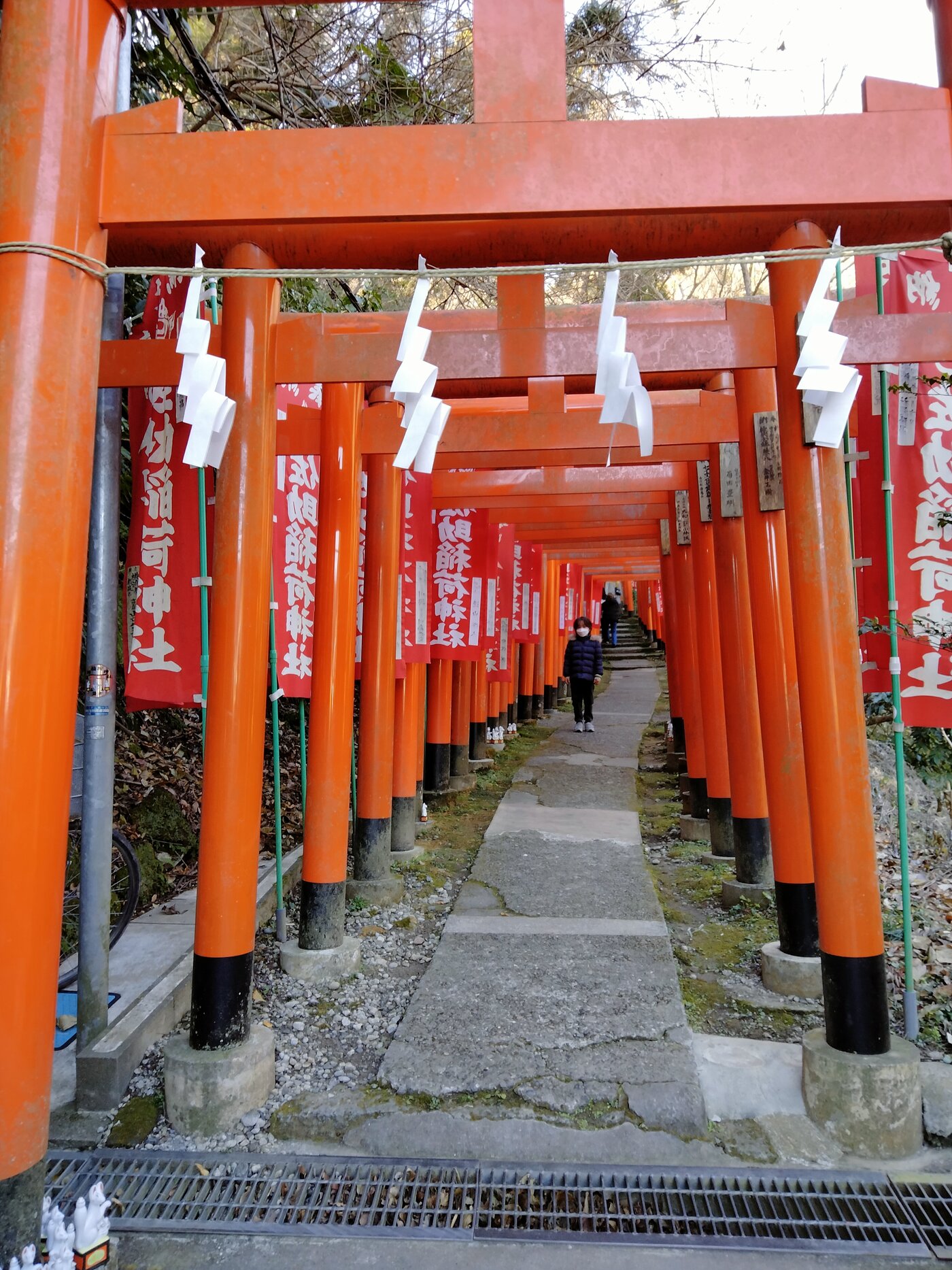
Seven minutes on foot from Zeniarai Benten, Sasuke Inari is exactly what it looks like in photos: a path through rows of orange torii gates climbing into the forest, with stone fox guardians and a dense, settled silence. It’s known as the “Success Inari,” named after the legend that Minamoto no Yoritomo prayed here before founding the shogunate. Open grounds, free admission.
What the photos don’t convey is how small and contained it is, it doesn’t have the scale of Fushimi Inari in Kyoto, which in this case is an advantage. You can walk the whole thing in 20 minutes and there’s almost always very little crowd. Photographers who arrive early will have the torii essentially to themselves.
The Great Buddha (鎌倉大仏)
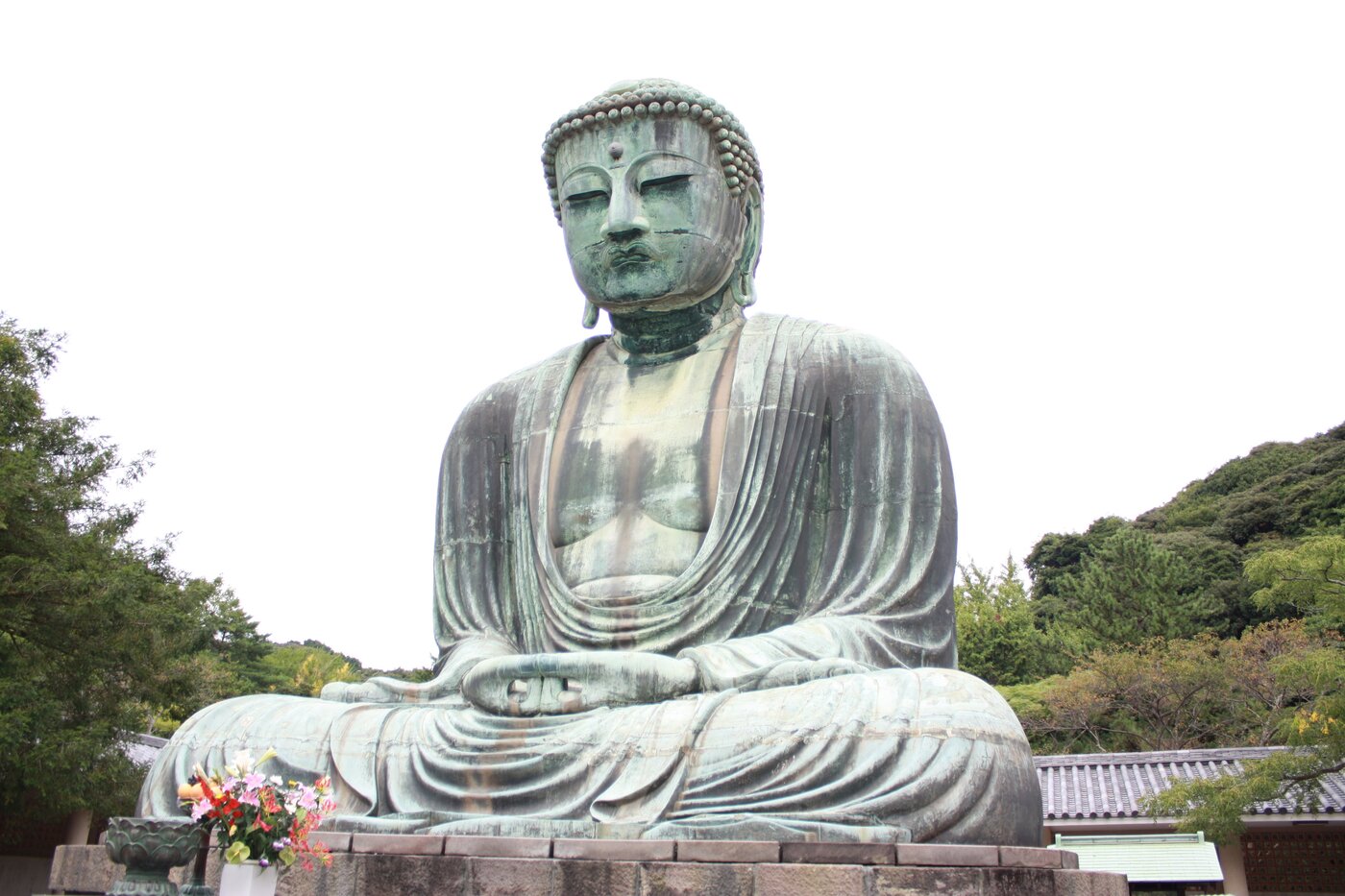
The Great Buddha of Kamakura (高徳院) stands 13.35 meters tall and has been in place since the 13th century. It’s impressive in scale, you don’t fully understand it until you’re standing in front of it. The statue was housed inside a building for centuries; the temple that sheltered it was destroyed by a tsunami in 1498 and never rebuilt. The Buddha has been exposed to the elements ever since.
What many people don’t know: you can go inside the statue. Two small windows in the sides allow you to see the bronze interior structure from within. Entrance to the grounds is ¥300 for adults; entering the statue costs an additional ¥20.
In high season the Great Buddha has high foot traffic. If you want a photo without a crowd in the foreground, arrive before 9am or wait until mid-afternoon when tour groups have moved on.
Dressing as a samurai: the experience worth doing
Near the Great Buddha, in the Hase neighborhood, there’s a place where you can dress in historical costumes from the Kamakura period. Not tourist kimono, armor, warrior dress, and costumes of actual historical figures like Yoshitsune and Benkei, with 13 different characters to choose from.
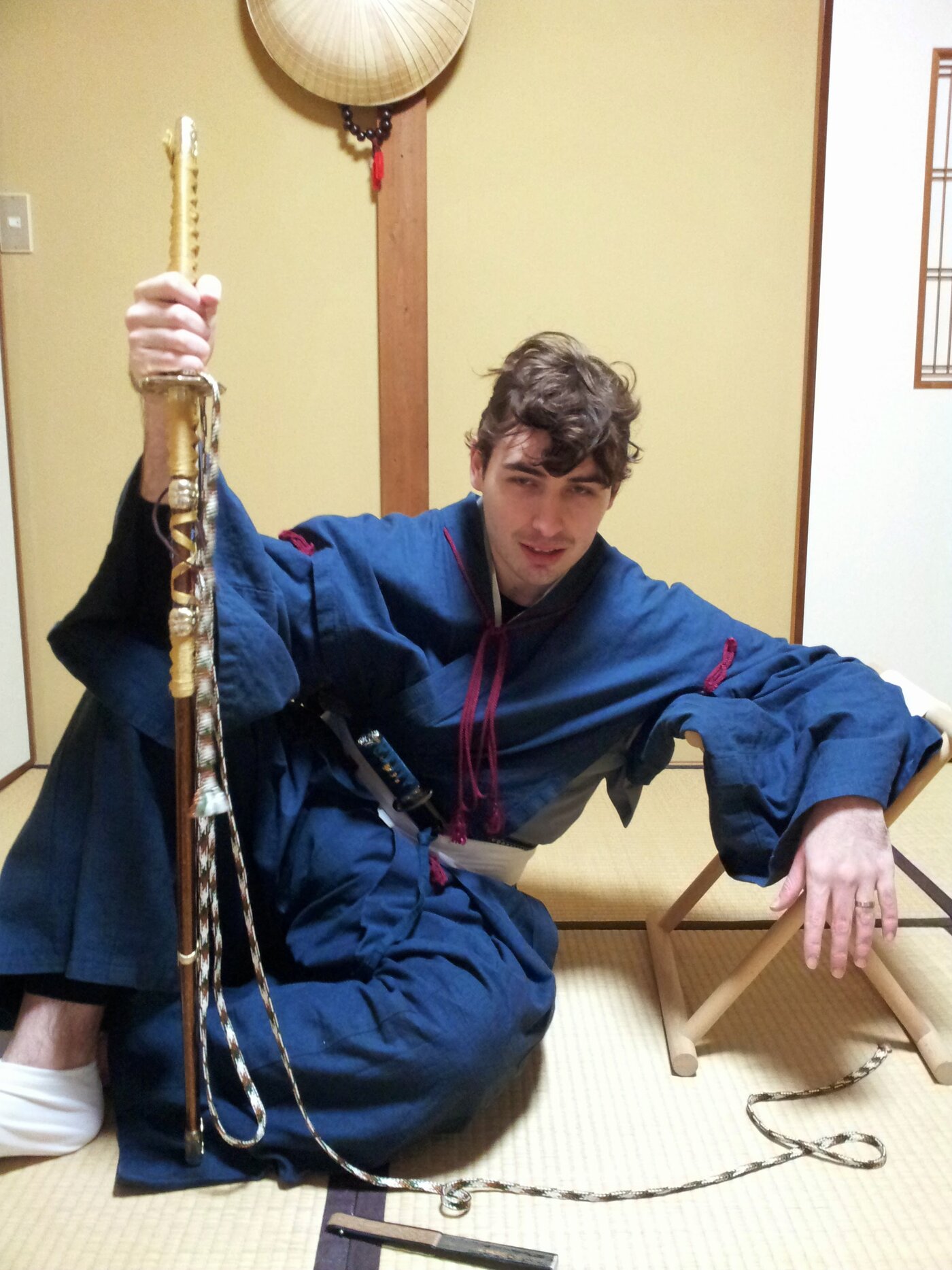
The first time I went was with Japanese friends who suggested it almost as if it were the most natural thing in the world. I went from mild skepticism, “are we really doing this?”, to recognizing it as one of the most distinctive experiences I’d had in Kamakura. Dressing in the armor of a medieval warrior within sight of the Great Buddha that those same warriors might have venerated gives you a way into the city that a guidebook can’t provide.
There are several places in the Hase area offering this service, search “鎌倉時代 衣装体験” to find those currently operating when you visit. Prices vary by costume type.
The Starbucks on Onari-machi
Before anyone closes this tab: I’m not recommending going to Starbucks in Japan. Generally, if you’re here as a tourist there are far more interesting places to get coffee.
But the Starbucks on Onari-machi (小町通り) street in Kamakura is different. It occupies a traditional 20th-century Japanese wooden building with tatami floors, washi paper windows, and an interior garden. From outside it doesn’t look like a Starbucks; from inside, it barely does either. The coffee is the same as always, but the container is genuinely attractive and worth stepping into even just to see the space.
The reason I mention it is precisely the contrast: it’s an example of how Kamakura preserves its aesthetic even when the usual chains try to move in. Or of how the usual chains sometimes have to adapt to the place.
大崎公園: the Fuji views I still have on my list
I have to be honest: I haven’t been to 大崎公園 (Osaki Koen) yet. It’s in the hills to the west of Kamakura and people who’ve been say that on clear days the views of Mount Fuji are exceptional, and that most tourists never make it there.
I include it because it’s the kind of spot I want to visit next time I go. Autumn and winter give the best odds of clear skies.
When to go
June. Hydrangeas at Meigetsu-in and Hase-dera. The most photogenic season but also the most crowded. Weekdays and early mornings are key. We have a full guide to hydrangea season in Japan if you want to plan around it.
November. The momiji (autumn foliage) is spectacular at several temples. Engaku-ji and Zuisenji have the best reputation in the area.
January and February. No crowds. Cold but manageable. Clear skies give the best odds of seeing Fuji from 大崎公園.
Avoid: Golden Week (late April–early May), Obon (mid-August), and any weekend in June if you can’t get there early. Kamakura in peak season on a weekend is a different city.
Common mistakes
Arriving late. The most famous spots (Meigetsu-in, Hase-dera, the Great Buddha) are full by 10am in high season. Leaving Tokyo or Yokohama by 8am makes a real difference.
Not carrying cash. Many temples and shrines only accept cash for entry fees, offerings, and amulet shops. There’s a 7-Eleven ATM near Kamakura Station.
Trying to do everything in half a day. The Kita-Kamakura route + Zeniarai Benten + Sasuke Inari + the Great Buddha is a full day if done at a reasonable pace. Half a day only covers one or two spots properly.
Not checking closing times. Some temples close at 16:00 or 16:30, which means if you arrive at 15:30 in high season you may not get in, or will have to rush.
FAQ
Better than Nara or Kyoto for temples? They’re different experiences. Kamakura has more of a real-city character than Kyoto’s tourist circuits, and its temples are Zen rather than the more architecturally elaborate Kansai style. If you want formal beauty and scale, Kyoto wins. If you want atmosphere and forest trails without the crowds, Kamakura holds its own. If you’re staying in Tokyo, Nikko is another well-regarded alternative day trip.
Can you combine it with Enoshima in one day? Technically yes. Enoshima is 30 minutes on the Enoden from Kamakura. But doing both well requires a full day for each. If you have to choose, dedicate the whole day to one.
With kids? Very manageable. The Great Buddha, the torii at Sasuke Inari, and the historical costume experience are all engaging for children. Avoid the full Kita-Kamakura walking route with strollers, there are slopes and dirt paths.
How much money do I need? Transport from Tokyo: ¥940 each way. Entry fees: ¥300 Great Buddha, ¥400 Hase-dera, Zeniarai Benten and Sasuke Inari are free. Food and cafés: ¥1,500–3,000 depending on your plan. A well-organized full day costs ¥4,000–7,000 per person before extras. Use our Japan trip budget calculator to estimate the full trip cost.
Prices and hours updated May 2026. Check the official website of each temple before visiting, hours change in high season.
Related reading
If you found this useful, these guides go well with it:
About the author
Editorial entity
Yen & Zen is written by a Spanish-Japanese couple based in Kanagawa Prefecture, in the Tokyo metropolitan area. We have been in Japan since 2010. The site is a hobby project covering practical calculators and articles about life and travel in Japan, with verified figures and citations to official sources. We are not lawyers, accountants, or licensed advisors; articles here are based on observation, personal experience, and published official rules — not on professional consultation.