Beppu: the city where the ground boils
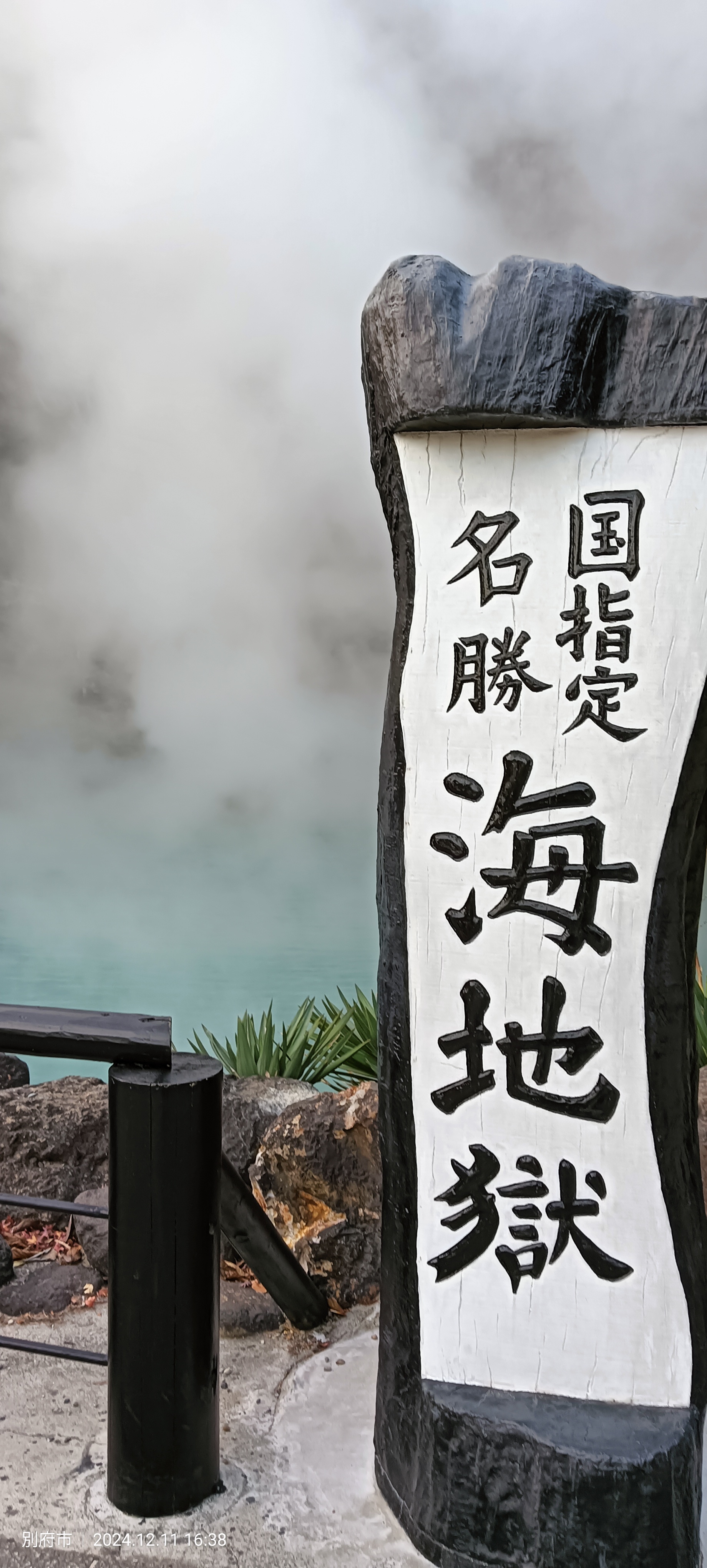
Beppu (別府) produces more thermal water than any other city in Japan, and possibly the world if you exclude Yellowstone. Steam rises from the drains, from gardens, from cracks in the asphalt. In winter, when temperatures drop, the city looks permanently on fire.
I went to Beppu for work in December 2024. I had one free day and spent all of it at the jigoku. I left convinced that Beppu deserves a dedicated trip, not just a passing stop.
Getting there
Beppu is in Oita Prefecture, in the northeast of Kyushu. From Fukuoka/Hakata, the Sonic limited express reaches Beppu in around 2 hours. From Nagasaki, the most efficient combination is the Kamome to Hakata then the Sonic: about three and a half hours total.
The JR Pass covers both legs.
You can tell what kind of city you have arrived in from the station itself: there is a public foot bath (ashiyu) just outside the exit, and steam rises from several points on the ground without anyone thinking it worth mentioning.
The jigoku: the reason Beppu exists
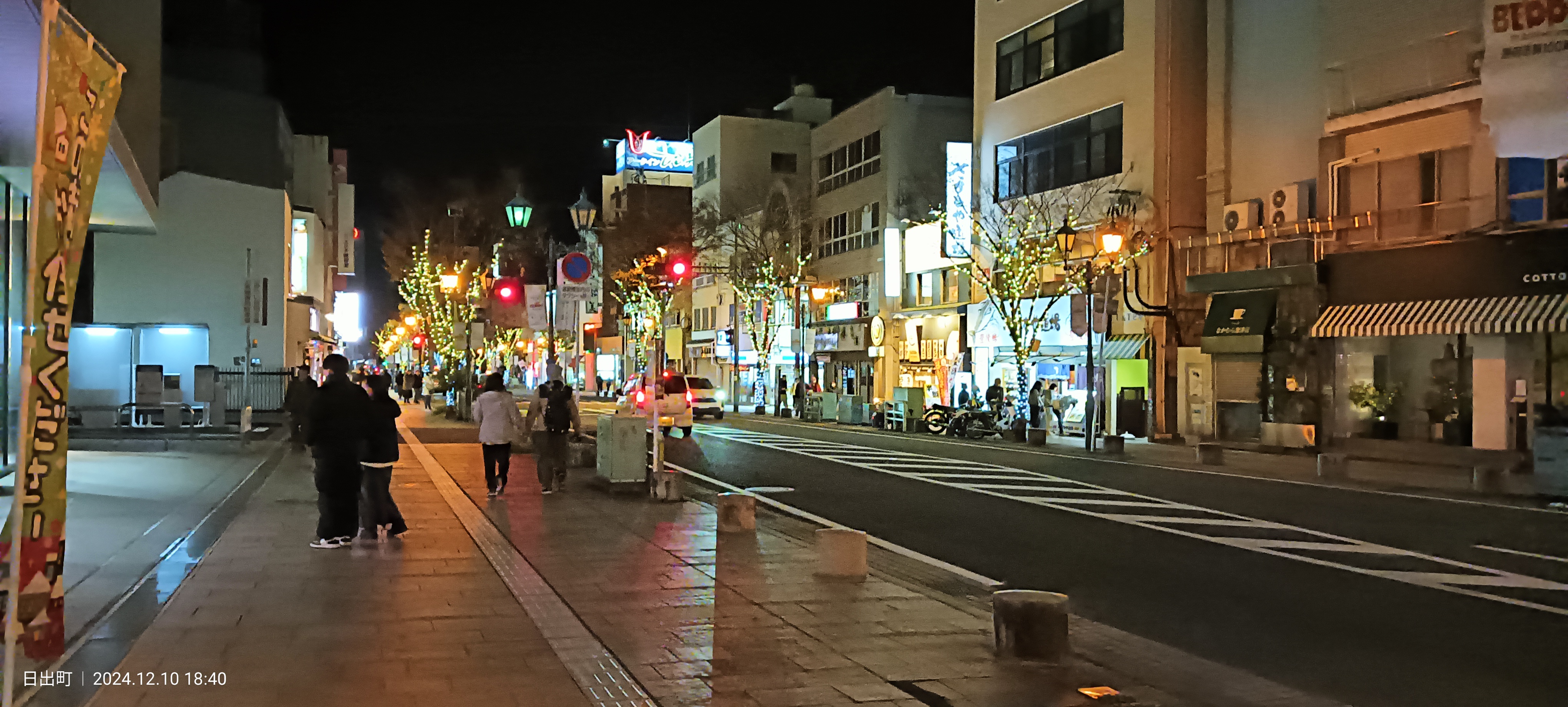
The jigoku (地獄, literally “hells”) are boiling springs that emerge from the ground at temperatures between 80 and 100°C. You cannot bathe in them: they are too hot. What you do is look at them, and some are extraordinarily photogenic.
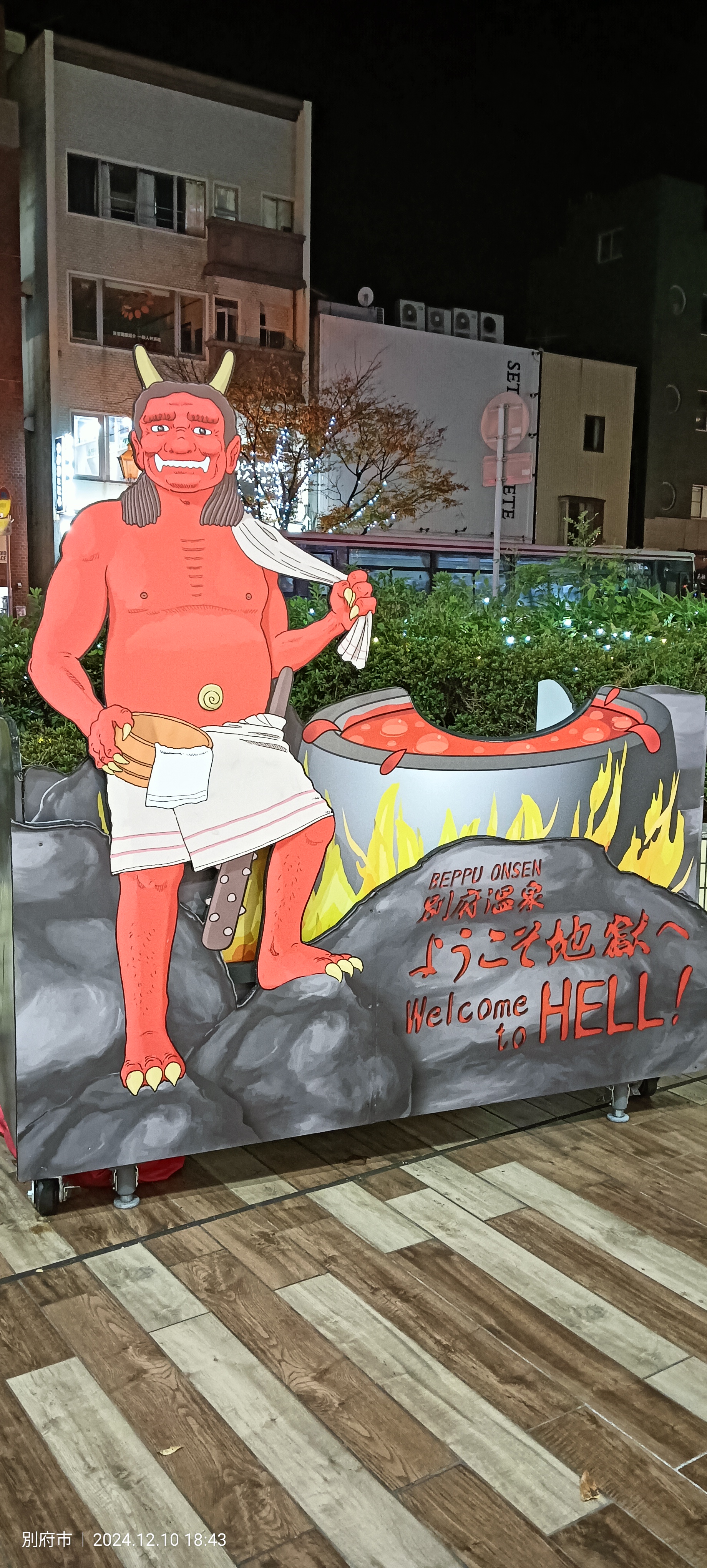
Beppu’s tourist marketing leans into this without embarrassment: there are red demon signs at the station, souvenir shops with the slogan ようこそ地獄へ (welcome to hell) and products featuring the oni (demon) character throughout the city. It is kitsch with full self-awareness.
There are 7 official jigoku divided into two areas. The most important are in the Kannawa district, about 10 minutes by bus from the station.
Umi Jigoku (海地獄): the blue hell
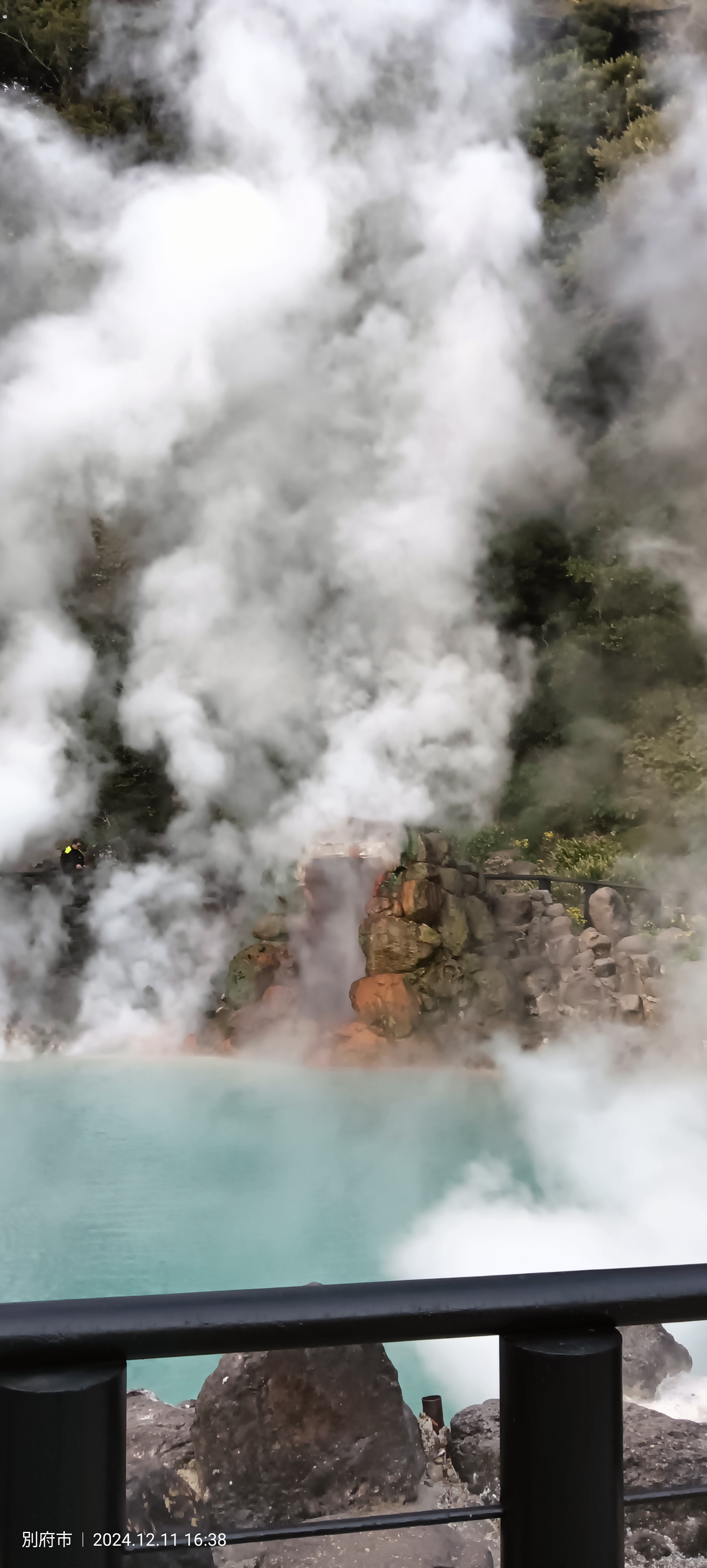
The most spectacular is Umi Jigoku (海地獄, “sea hell”). The water is an intense turquoise blue caused by dissolved iron sulphate, and the temperature is around 98°C. The name comes from the colour: from a distance it looks like the ocean.
Within the site there is a pond of tropical waterlilies that survive thanks to the heat from below ground.
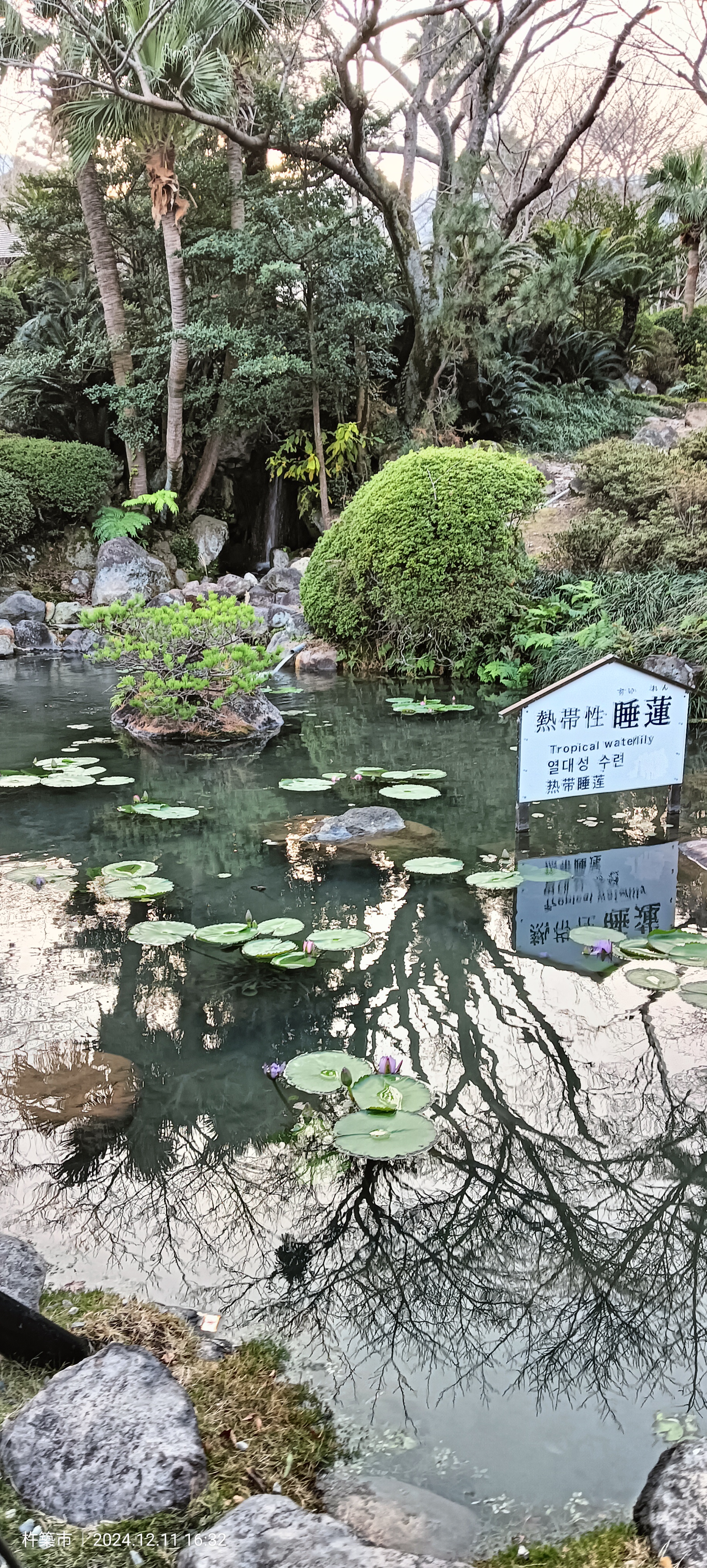
Umi Jigoku is the most visited of the seven and has the best-kept garden. It is worth starting here.
Chi-no-ike Jigoku (血の池地獄): the red hell
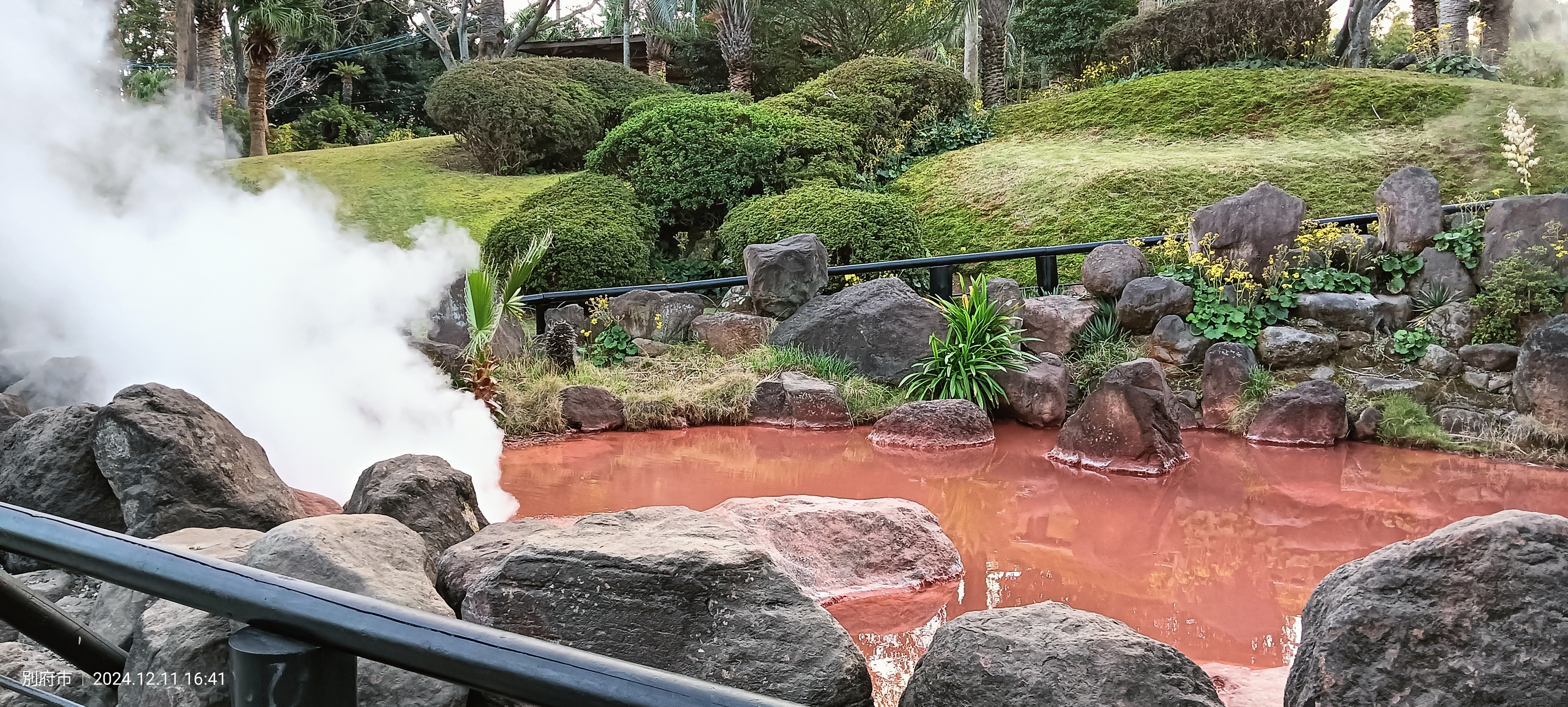
Chi-no-ike Jigoku (血の池地獄, “blood pond hell”) is the oldest documented jigoku in Japan, with over 1,300 years of recorded history. The red colour comes from iron oxide and nitric acid in the water. There are no special effects involved.
It is in the Chinoike area, about 5 minutes by bus from the Kannawa cluster. Water temperature exceeds 78°C.
The other five jigoku
The remaining five are all in Kannawa and each has its own character: Oniishibozu Jigoku has grey mud bubbles that emerge slowly like the shaved heads of monks; Kamado Jigoku has water in several shades and a tasting area with steam-cooked foods; Oniyama Jigoku has crocodiles (the thermal heating keeps them active year-round); Shiraike Jigoku has whitish water and the lowest temperature of the seven; and Tatsumaki Jigoku has a geyser that erupts approximately every 30 to 40 minutes.
The combined ticket for all 7 jigoku costs ¥2,200 for adults. Individual entry is ¥450 each. If you have half a day, the combined ticket is worth it.
Kannawa district: steam in the street
Kannawa (鉄輪) is the most atmospheric neighbourhood in Beppu. Steam rises from grates in the pavement, from pipes on walls and from rooftops. There is no tourist installation: it is simply what the place looks like. In winter, with cold temperatures and mist, the scene is almost unreal.
This is also where you find the Jigoku Mushi Kobo (地獄蒸し工房), a restaurant where you cook your own food using jigoku steam. You order a basket of vegetables, seafood or meat, place it in a steam box and in 10 to 15 minutes it is ready. The flavour that the thermal steam imparts is different from any other cooking method: softer, more mineral. Queues can be long on weekends.
Bathing in Beppu
What sets Beppu apart from other onsen cities is the sheer volume. There are more than 2,800 springs in the city, spread across eight onsen zones collectively called Beppu Hattō (別府八湯). Each zone has its own water with distinct properties.
For bathing, the most accessible option is one of the public onsen in the Beppu or Kannawa districts. These range from ¥100 at the municipal baths to several thousand yen at hotel facilities. Bathing at a public onsen in Beppu also gives you a chance to see how locals actually use it, not just tourists.
The station foot bath
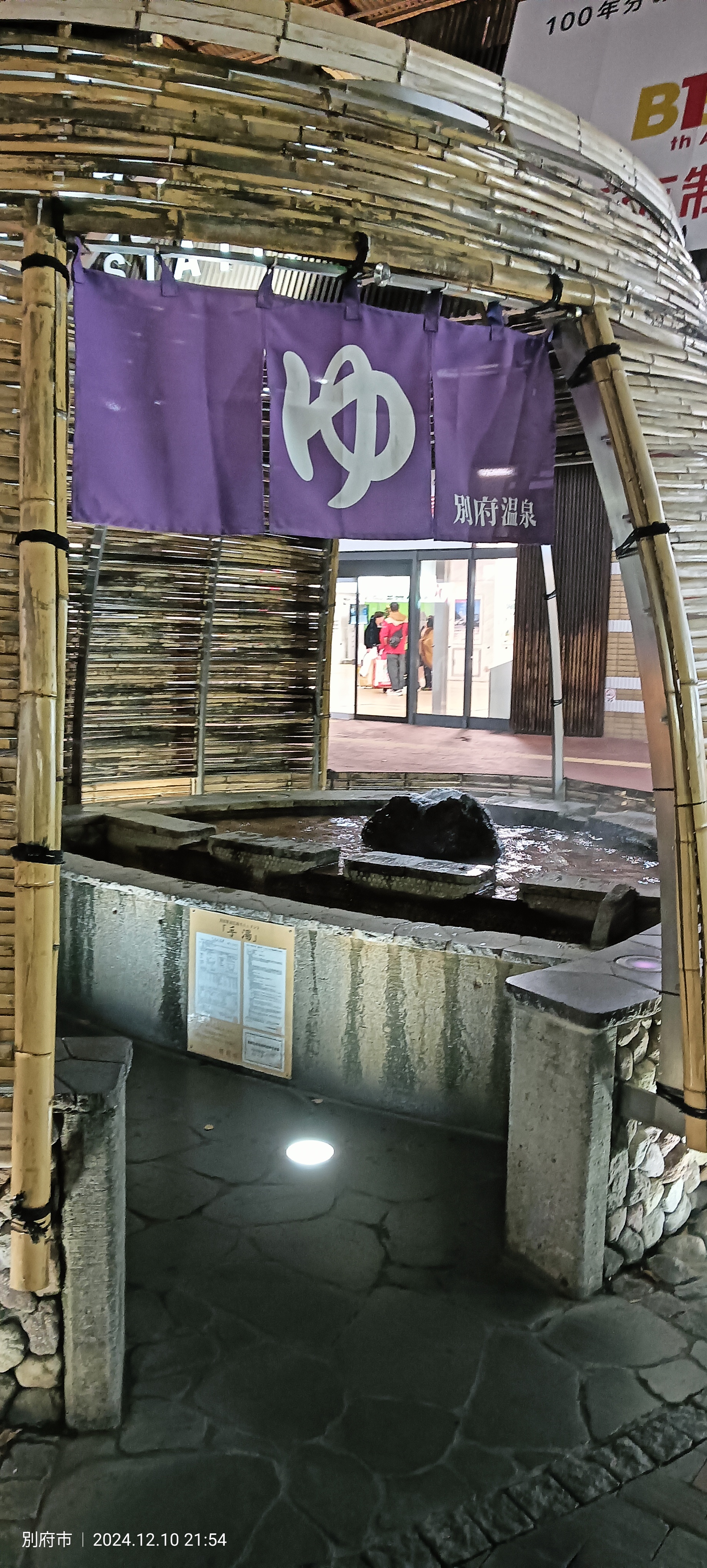
Just outside the station exit there is a free ashiyu (足湯): a public foot bath with thermal water. It is your first contact with Beppu’s water and a useful way to understand why the city has the reputation it does. The water is around 40°C, perfect for tired feet after travel. Use the towels provided or bring your own.
Getting around
The city has buses connecting the station with Kannawa and the Chinoike area. For the jigoku, the Kamenoi Bus runs specific routes designed for the hell tour. Taxis are also an option: the distances are short and fares are reasonable.
How much time do you need
One full day is enough for all 7 jigoku, the Kannawa district and a bath. Two days let you go at a more relaxed pace and add the municipal baths and jigoku mushi cooking.
Beppu fits naturally as a stop on a wider Kyushu itinerary, between Nagasaki and Fukuoka, or as a standalone trip from Oita Airport. It is not the kind of city you see in two hours: it has too much for that.
Prices based on December 2024 visit, verified 2026. Combined jigoku ticket prices may change; confirm at the entrance.
Related calculators
About the author
Editorial entity
Yen & Zen is written by a Spanish-Japanese couple based in Kanagawa Prefecture, in the Tokyo metropolitan area. We have been in Japan since 2010. The site is a hobby project covering practical calculators and articles about life and travel in Japan, with verified figures and citations to official sources. We are not lawyers, accountants, or licensed advisors; articles here are based on observation, personal experience, and published official rules — not on professional consultation.