Kanazawa: a practical guide to one of Japan's best-preserved historic cities
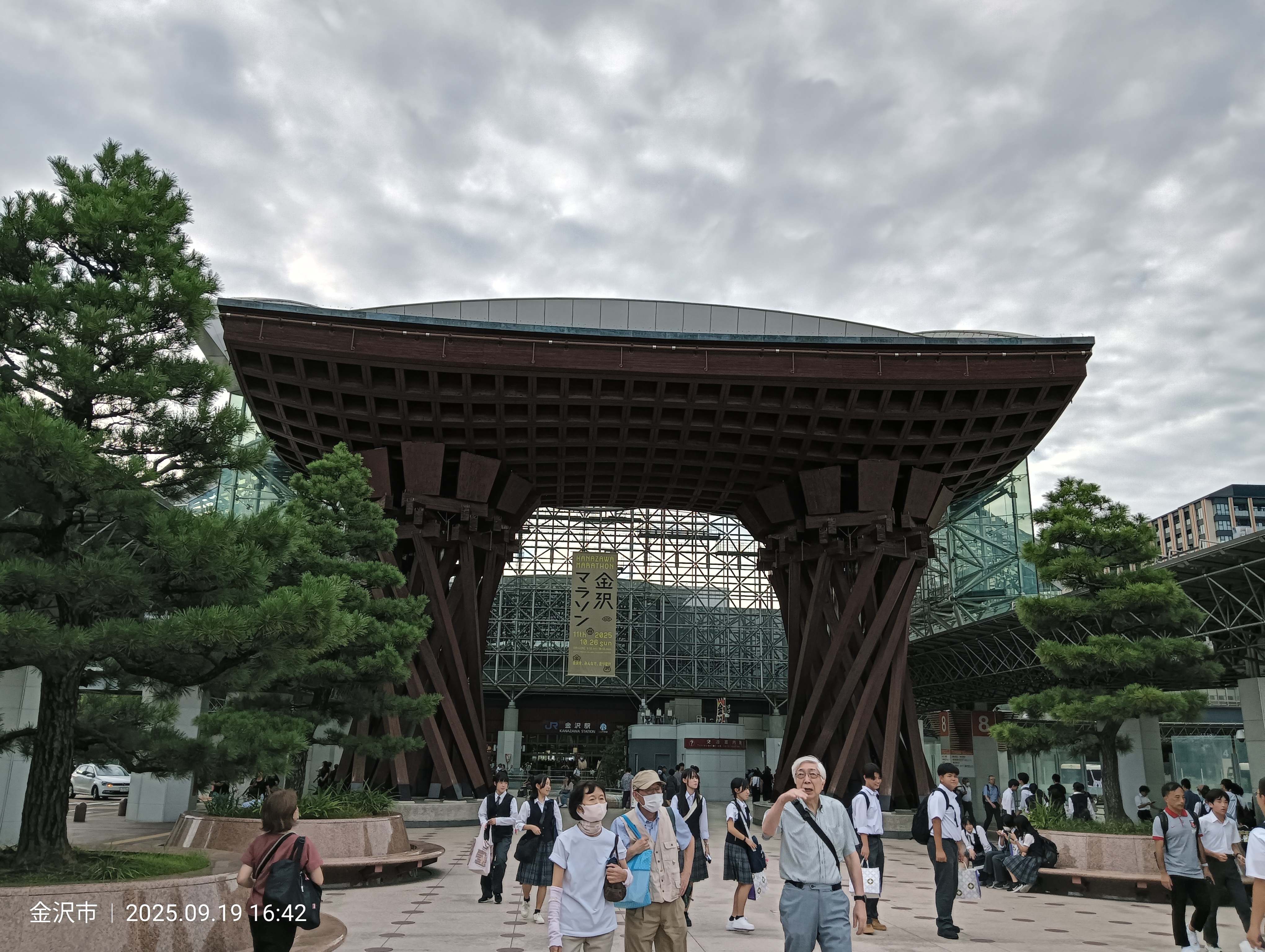
I went to Kanazawa for work. A day of meetings, a hotel next to the station, and a few free hours in the afternoon that I used to walk around the centre. Not the most carefully planned visit, but Kanazawa makes that kind of afternoon easy: the historic area is compact, the main sites are close together, and the city has the pace of a place that isn’t constantly overwhelmed by tourists.
Why Kanazawa is worth the detour
Kanazawa is the capital of Ishikawa Prefecture on the Sea of Japan coast. For centuries it was the domain of the Maeda clan, the most powerful in Japan after the Tokugawa, and that prosperity left behind a city of gardens, temples and historic neighbourhoods that survived intact. There were no air raids in the Second World War, which sets it apart from many Japanese cities that had to rebuild from scratch.
The result is a city where historic architecture coexists with an active cultural scene, world-class contemporary art museums and one of the best seafood markets in the country. It’s often called “the Kyoto of the north” or “little Kyoto”, though Kanazawa locals prefer not to be compared: the city has its own identity.
The station: first impression
Kanazawa Station (金沢駅) is, without exaggeration, one of the most striking stations in Japan. It has two main elements: the Tsuzumi-mon gate (鼓門), two pillars shaped like the hand drums used in Noh theatre supporting an asymmetric roof, and the Motenashi Dome (もてなしドーム), a giant glass umbrella structure covering the station plaza to protect visitors from the region’s characteristic wind and rain.
The logic, as locals explain it: Kanazawa is a rainy city, and the welcome umbrella is a gesture of hospitality turned into architecture. It appears in every travel guide, but arriving by train and seeing it in person is something else.
The castle and Kenroku-en
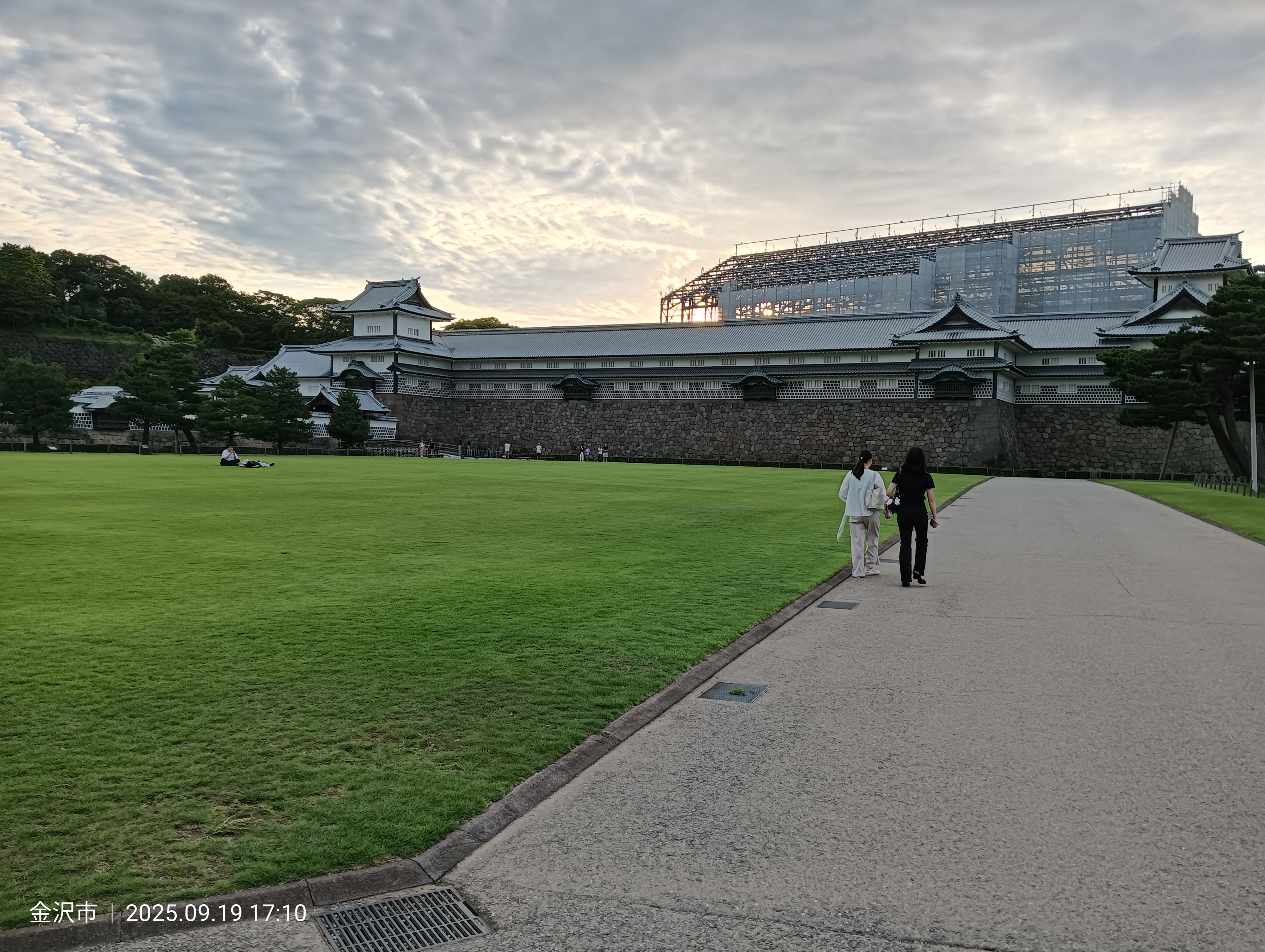
Kanazawa Castle (金沢城, Kanazawa-jo) was the seat of the Maeda clan for over two centuries. The original main tower burned down in 1881 and is currently being reconstructed, which explains the scaffolding visible over the roofline. But what has already been restored justifies the visit: the stone walls, the auxiliary towers (yagura), the Kahoku-mon gate with its detailed joinery, and the large inner grounds with their manicured lawn.
The afternoon I was there, couples in rented kimono were walking through the grounds. With the castle buildings in the background and the late afternoon light, it was hard to take a bad photo.
Kenroku-en (兼六園), considered one of Japan’s three great gardens alongside Korakuen in Okayama and Kairakuen in Mito, is right next to the castle. It’s a landscape-style garden with ponds, stone lanterns and centuries-old plum trees that fill with blossom in spring and turn golden in autumn. If you have the time, it’s worth the stop.
Castle inner grounds entry: ¥320. Kenroku-en: ¥320. The castle’s outer park is free.
Nagamachi: the samurai district
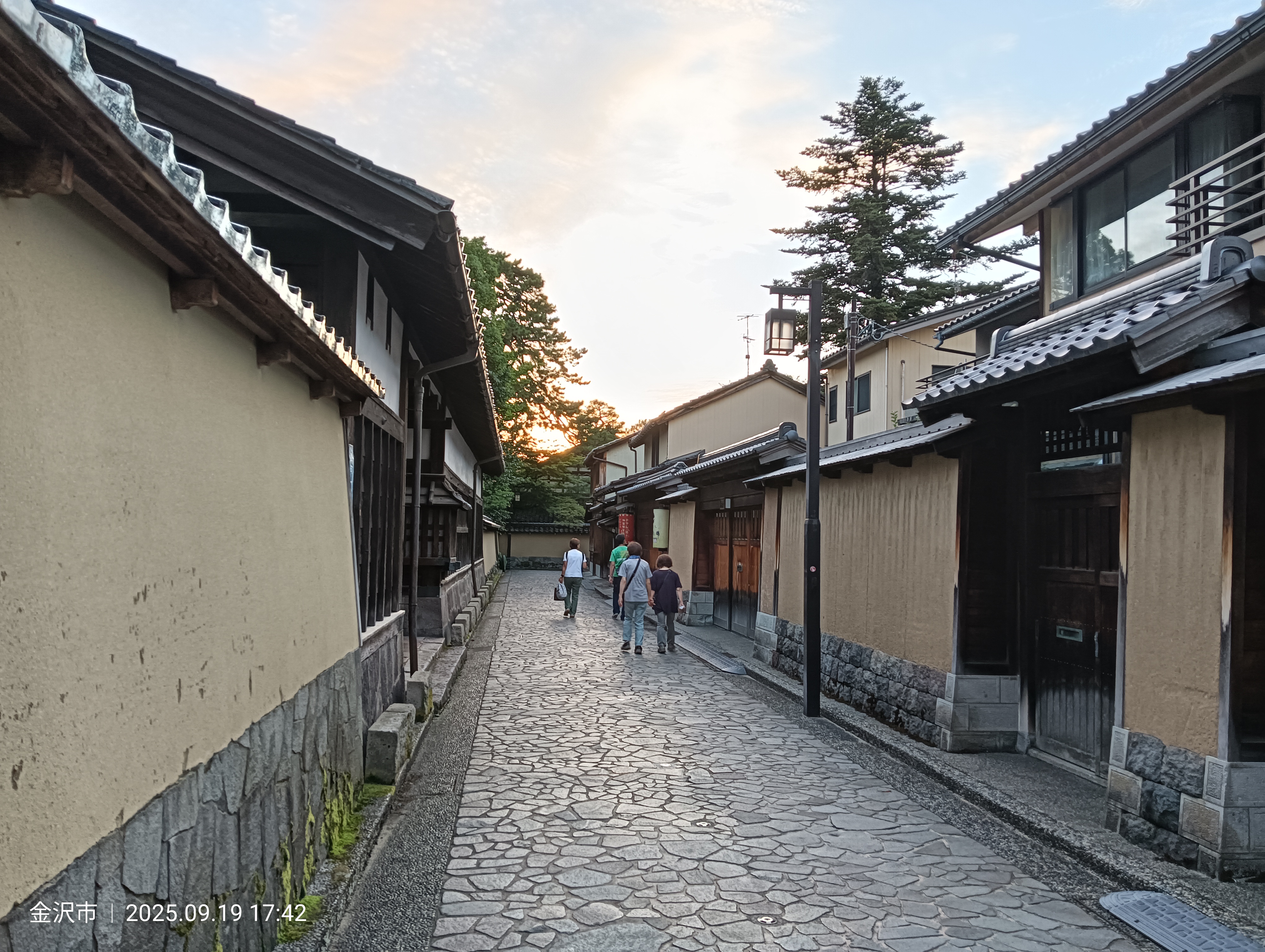
Nagamachi (長町武家屋敷跡) is the neighbourhood where the samurai in service of the Maeda clan lived. Unlike many “historic districts” in Japan that are reconstructions or tourist-facing recreations, Nagamachi retains its original structure: cobblestone streets, clay walls (土塀, doheí) topped with roof tiles to prevent erosion from rain, and water channels running alongside the houses.
Walking through Nagamachi at dusk doesn’t need much explanation. The golden light on the yellow walls, the uneven stones underfoot, the quiet. Some buildings are open to visitors as museums; the best known is the Nomura House (野村家), a restored samurai mansion with an interior garden and documents from the Edo period. Entry: ¥550.
The district is about 15 minutes’ walk from the castle.
The 21st Century Museum of Contemporary Art
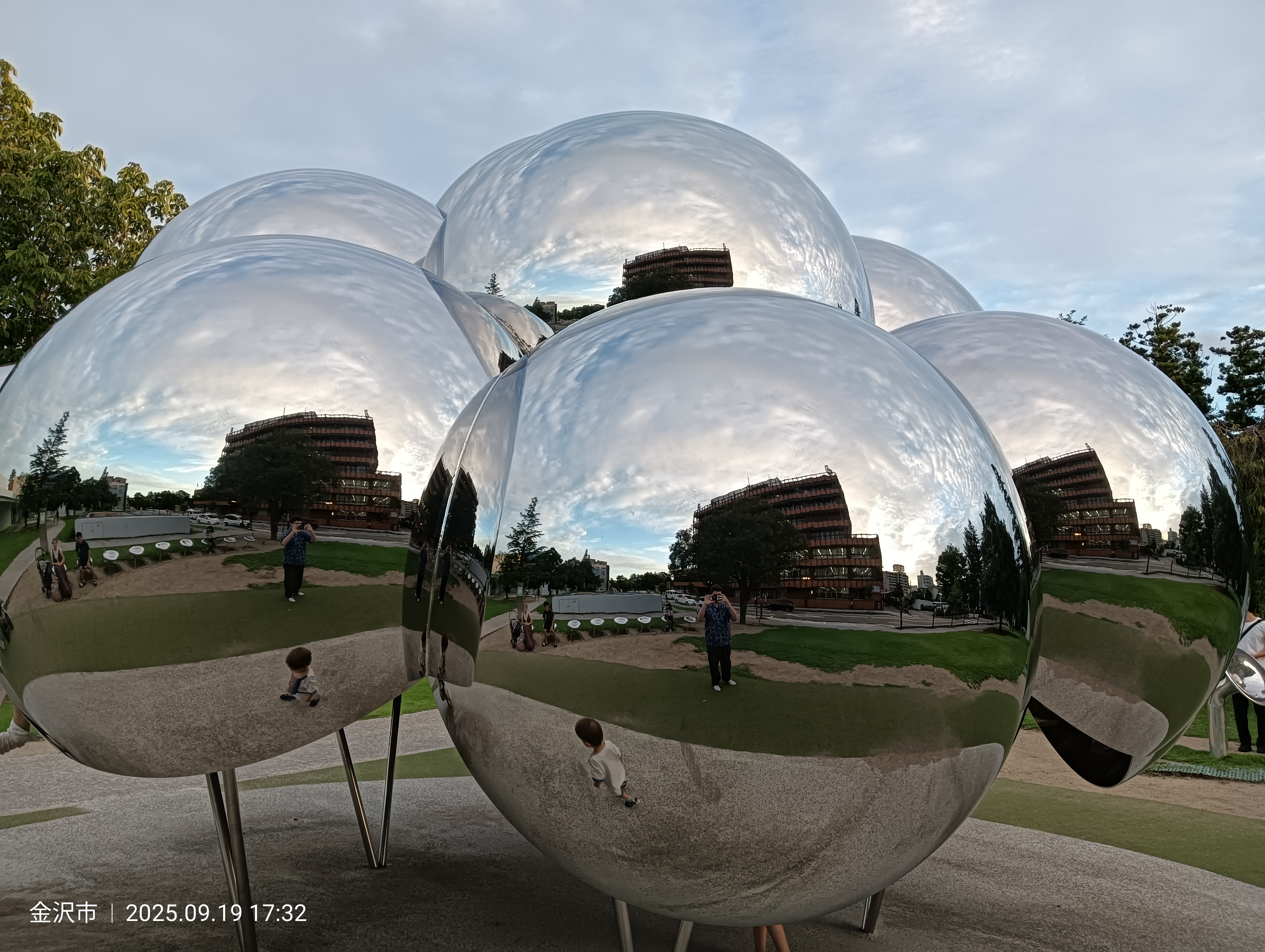
The 21st Century Museum of Contemporary Art (金沢21世紀美術館) is one of the reasons Kanazawa has its own cultural identity rather than just historical weight. The building, designed by SANAA (Kazuyo Sejima and Ryue Nishizawa), is a transparent glass cylinder with no main facade: you can enter from any point around the perimeter, and from inside you can see the city in every direction.
The most photographed exterior piece is the group of polished steel spheres by Florentijn Hofman, in which the surroundings reflect in distorted form. The most famous interior installation is Leandro Erlich’s “The Swimming Pool”: a pool with real water where visitors can look down from the exterior or up from a room below, creating the illusion that people are submerged inside.
Part of the museum is free (gardens and some permanent works); temporary exhibitions and certain installations cost extra (¥360-¥1,000 depending on the season).
Omicho Market
Omicho Market (近江町市場) has been Kanazawa’s main public market since the eighteenth century. It’s known as “the city’s kitchen”. It sells mainly fresh seafood from the Sea of Japan: Kano crab (in season from November to March), prawns, seasonal fish, oysters, as well as fruit, vegetables and local products.
It’s a working market, not just a tourist attraction, though visitor numbers have grown noticeably in recent years. Inside the market building there are restaurants where you can eat crab or sea urchin donburi at reasonable prices. It’s about ten minutes’ walk from the station.
Getting there
From Tokyo by Shinkansen: the Hokuriku line connects Tokyo and Kanazawa in around 2h30 on the Kagayaki service (the fastest, non-stop). The JR Pass covers the Hakutaka (more stops, around 3 hours) but not the Kagayaki. Without a pass, a one-way ticket costs around ¥14,120. If you’re travelling with bulky luggage, sending your suitcase ahead by takuhaibin from your Tokyo hotel to your Kanazawa hotel is a practical alternative to carrying it on the Shinkansen.
From Osaka or Kyoto: since the Hokuriku Shinkansen extension to Tsuruga opened in 2024, the journey from Osaka involves a transfer at Tsuruga. The most straightforward option is the Thunderbird limited express to Tsuruga, then Shinkansen to Kanazawa. Around 2 hours in total.
From Komatsu Airport (KMQ): the nearest airport is about 40 minutes by bus from the city centre. There are flights from Tokyo (Haneda and Narita), Osaka (Itami) and Sapporo.
Getting around
The historic centre is reasonably compact but there’s some distance between sites:
The Kanazawa Loop Bus connects the station to the main points of interest (Kenrokuen, Higashi Chaya, Nagamachi, museum). ¥200 per journey; day pass ¥600.
On foot, it’s about 15 minutes between the castle and Nagamachi, and about 10 minutes between Nagamachi and the 21st Century Museum. Manageable if you have time.
Taxis for short distances in the centre typically cost ¥700-900.
When to go
Kanazawa has a reputation for rain, especially in winter and spring. Summer is drier. Spring with Kenroku-en in blossom and autumn with the foliage are the most visited and most crowded seasons. Kanazawa blooms slightly later than Kyoto or Tokyo, typically in early April. Check your specific dates with our cherry blossom timing calculator.
Winter has the advantage of snow, which transforms Kenroku-en into something spectacular, and the Kano crab season at Omicho Market runs from November to March.
FAQ
How much time do you need to see Kanazawa? A full day covers the main sites at a reasonable pace. With two days you can slow down, add the Higashi Chaya district (Edo-period teahouses) and consider a day trip to Wajima, famous for its urushi lacquerware.
Does the JR Pass cover the train to Kanazawa? The Hakutaka yes, the Kagayaki no. With a JR Pass you add about 20-30 minutes to the journey, but the saving is significant if you already have the pass.
Is it worth stopping in Kanazawa on the way to Kyoto or Osaka? Yes, especially with two nights. The Tokyo → Kanazawa → Kyoto route makes geographic sense and adds a destination that most first-time Japan itineraries skip entirely.
How crowded is it? Much less than Kyoto or Nara. Tourist numbers have grown since the Shinkansen opened in 2015, but it remains manageable for most of the year.
Prices and information as of 2026. Tourism in Kanazawa has grown significantly since the Shinkansen extension; check Kenroku-en and museum capacity restrictions before visiting.
Related reading
If you found this useful, these guides go well with it:
Related calculators
- 円 Japan trip budget Daily costs by city and travel style, in USD, EUR, GBP, AUD, MXN.
- 桜 Cherry blossom timing by city Enter your travel dates and city. Find out if you'll catch the cherry blossom peak.
- 荷 Takuhaibin luggage forwarding cost Estimate the cost of forwarding your luggage between hotels and cities in Japan.
About the author
Editorial entity
Yen & Zen is written by a Spanish-Japanese couple based in Kanagawa Prefecture, in the Tokyo metropolitan area. We have been in Japan since 2010. The site is a hobby project covering practical calculators and articles about life and travel in Japan, with verified figures and citations to official sources. We are not lawyers, accountants, or licensed advisors; articles here are based on observation, personal experience, and published official rules — not on professional consultation.