Nagasaki: practical city guide
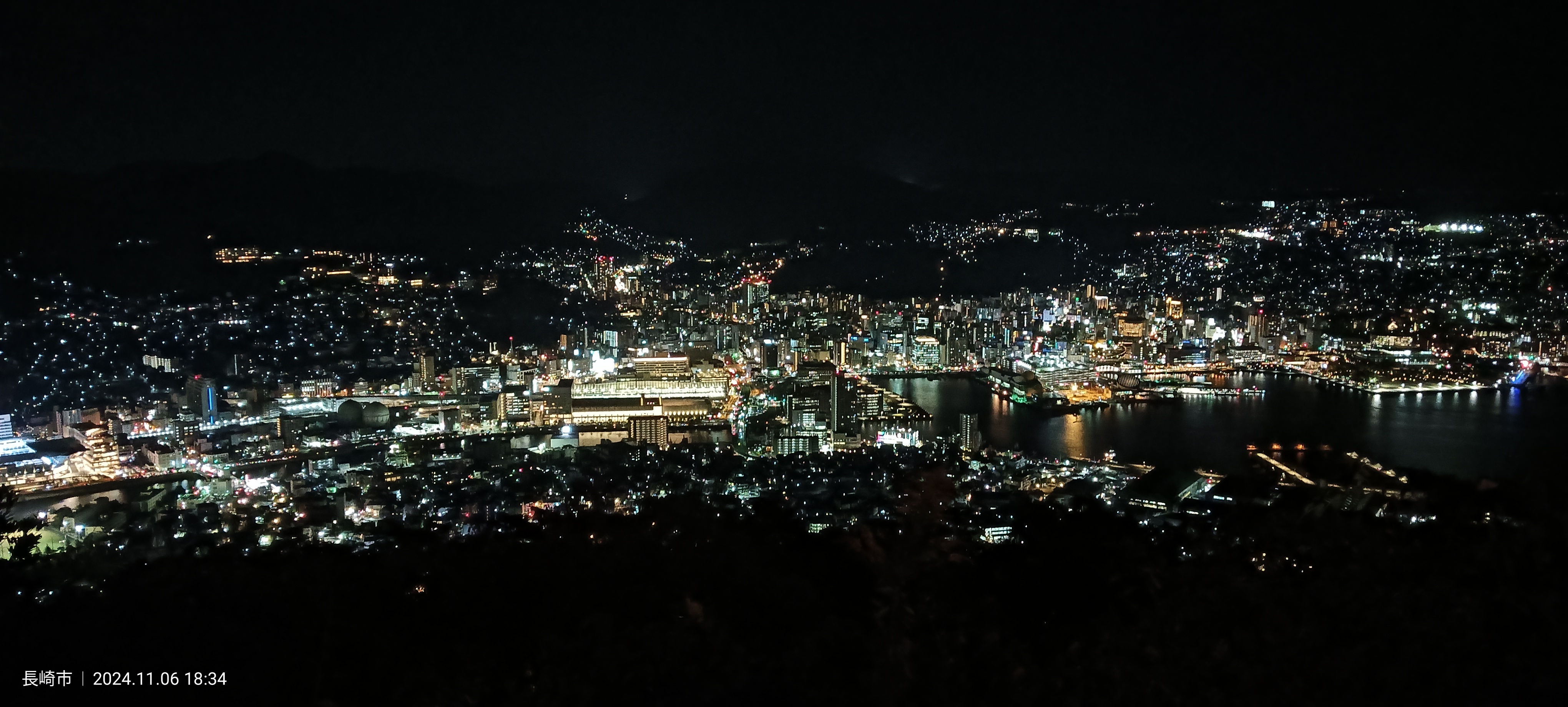
Nagasaki is the city in Japan with the most layers per square kilometre. In a relatively small space it holds the memory of the second atomic bomb, four centuries of commercial history with Europe and Asia, a Chinatown that has been in the same place since the seventeenth century, and what is probably the best night view in all of Japan from Mt. Inasa.
I went to Nagasaki for work in November 2024. I arrived with a packed schedule and left feeling I needed at least one more day. This guide is based on what I managed to see across those two days.
Getting there
Nagasaki is at the western tip of Kyushu. From Tokyo, the fastest route is to fly to Nagasaki (about 2 hours) or to Fukuoka and continue by train. From Fukuoka/Hakata, the Kamome limited express reaches Nagasaki in just over 1 hour 20 minutes since the opening of the Nishi Kyushu Shinkansen in 2022.
From Osaka, the most efficient combination is the shinkansen to Hakata then the Kamome: around 4 hours total.
The JR Pass covers the Kamome leg between Hakata and Nagasaki.
The Peace Park and Atomic Bomb Museum
On 9 August 1945, at 11:02 in the morning, a plutonium bomb exploded 500 metres above the Urakami neighbourhood of Nagasaki. Between 60,000 and 80,000 people died instantly. The city was destroyed in a radius of several kilometres.
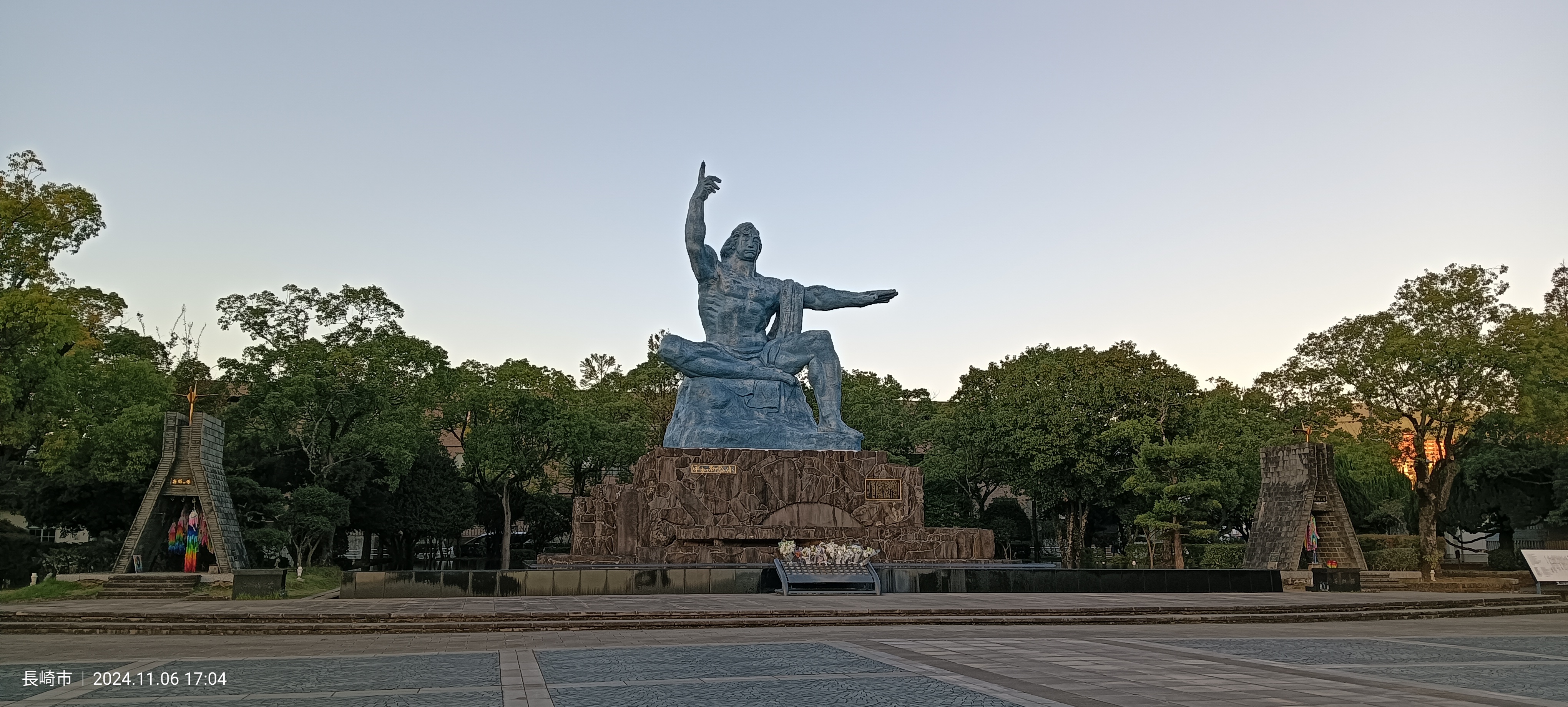
Peace Park (平和公園) was built over part of the hypocentre area. The Peace Statue, created by sculptor Seibo Kitamura, has its right arm pointing upward in reference to the nuclear threat and its left arm extended horizontally toward peace. It is large, restrained and not theatrical.
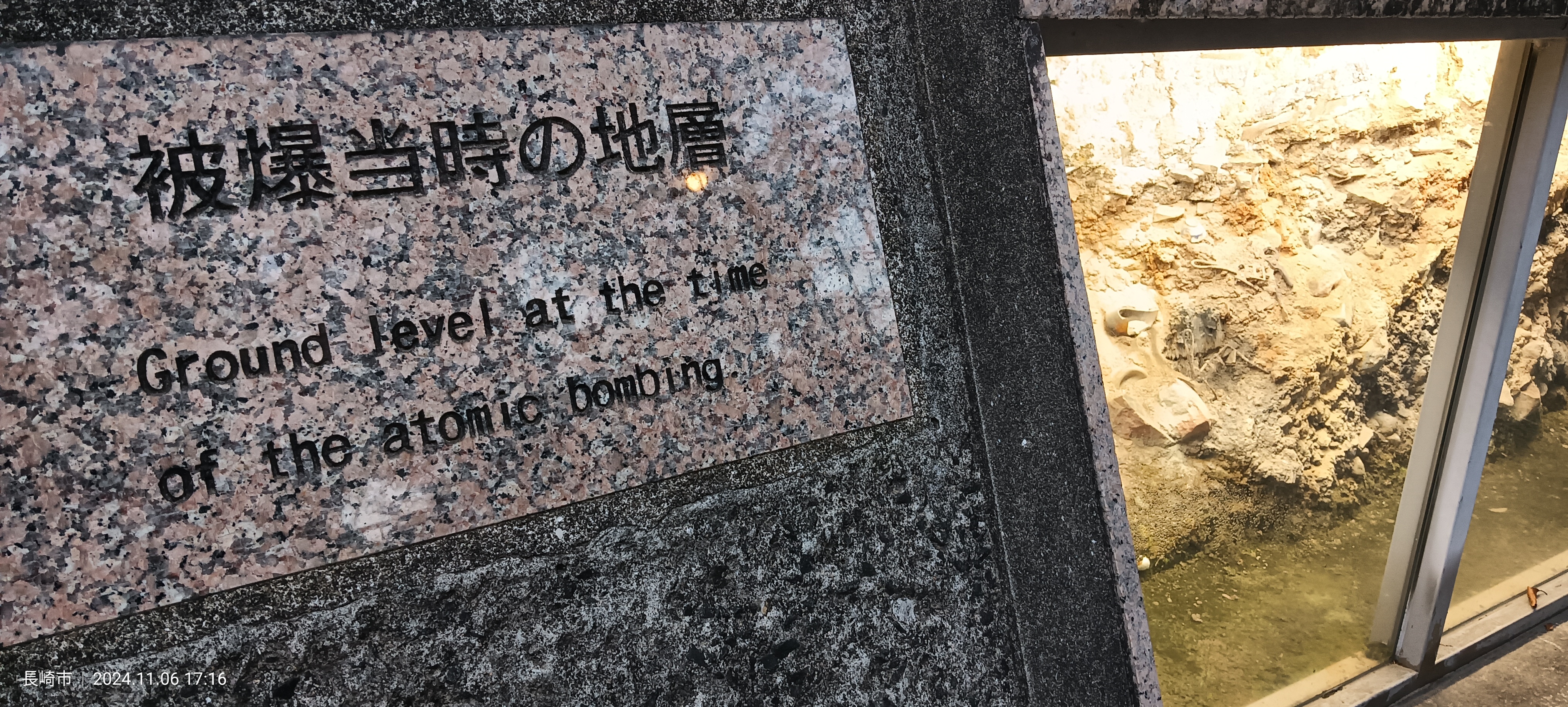
A few minutes from the park is the Nagasaki Atomic Bomb Museum (長崎原爆資料館). Unlike the Hiroshima Peace Memorial Museum, which tends to draw more international visitors, Nagasaki’s museum is more intimate and, in a certain way, harder to move through. The sections on physical effects and survivor (hibakusha) testimonies require time and willingness.
Entry costs ¥200 for adults. Most panels have English explanations. It is worth allowing at least ninety minutes.
Mt. Inasa: Japan’s best night view
Mt. Inasa (稲佐山, 333 metres) has one of the most spectacular night viewpoints in Japan, alongside those of Hakodate and Kobe. From the top you can see the entire city, the harbour, the illuminated shipyard cranes and the hills surrounding the bay on all sides. In November, on a clear night, it is extraordinary.
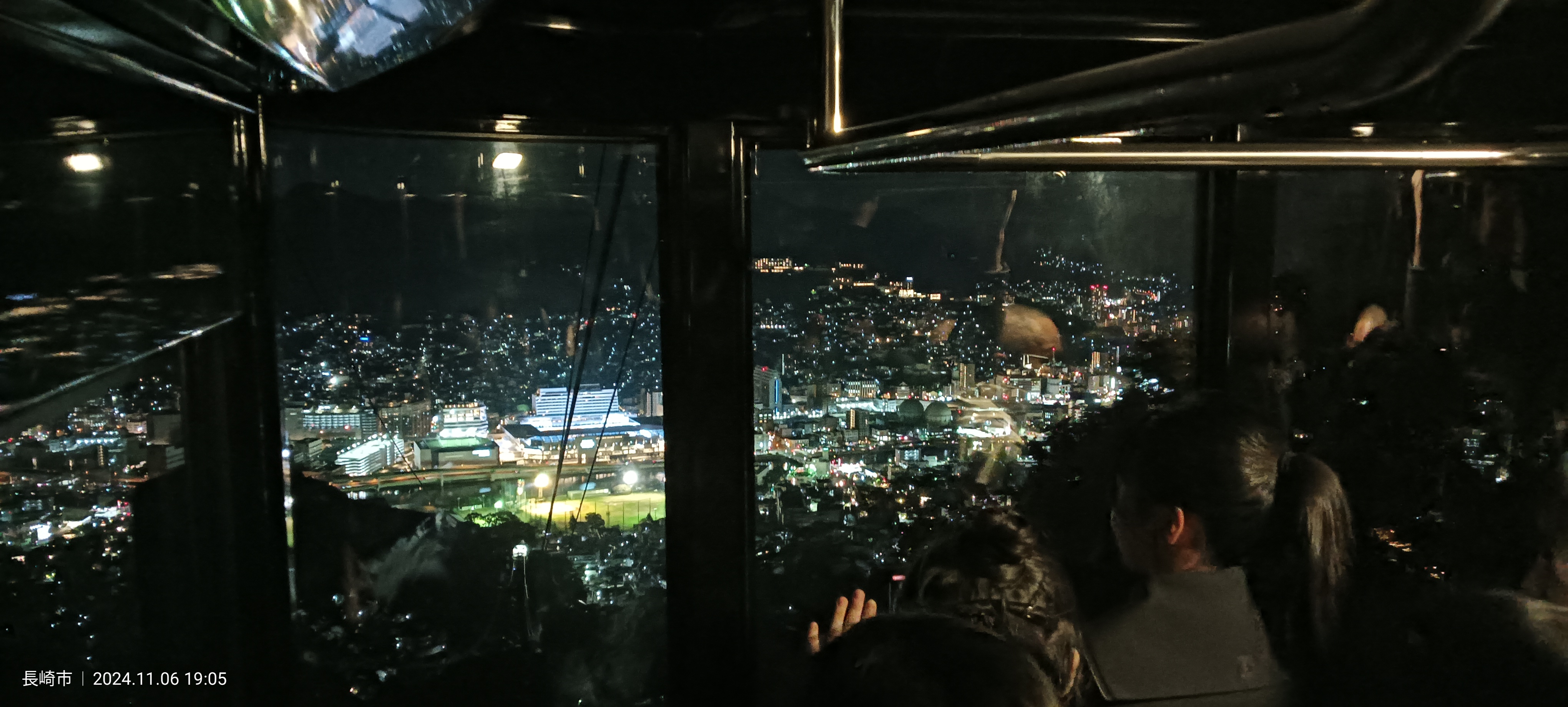
You go up by ropeway from Fuchi station. The journey takes around five minutes. There are buses from Nagasaki central station.
The best approach is to go up before dark to catch the change in light and stay until the night is fully settled. The queue to come down by ropeway can be long around 20:00, but the view is worth it.
Ropeway hours: 9:00 to 22:00 (last ascent at 21:30). Price: ¥1,250 return.
Meganebashi: the Spectacles Bridge
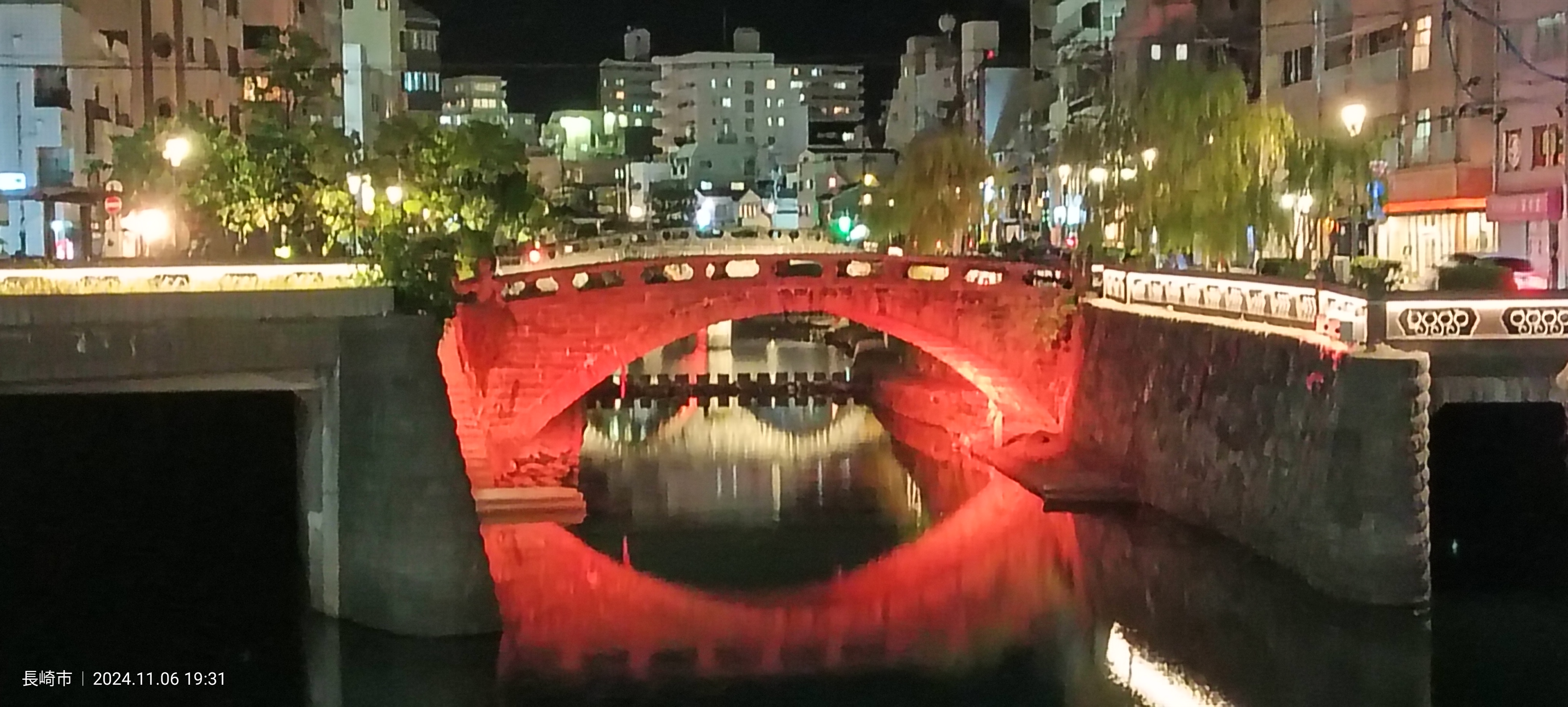
Meganebashi (眼鏡橋, literally “spectacles bridge”) is the oldest stone bridge in Japan, built in 1634 by a Chinese monk. The name comes from the bridge arch and its reflection in the Nakashima River forming the outline of a pair of glasses.
At night, with the red illumination, the image is even more striking. It is a few minutes’ walk from Chinatown and an easy stop to combine with the return from Mt. Inasa.
Chinatown (Shinchi)
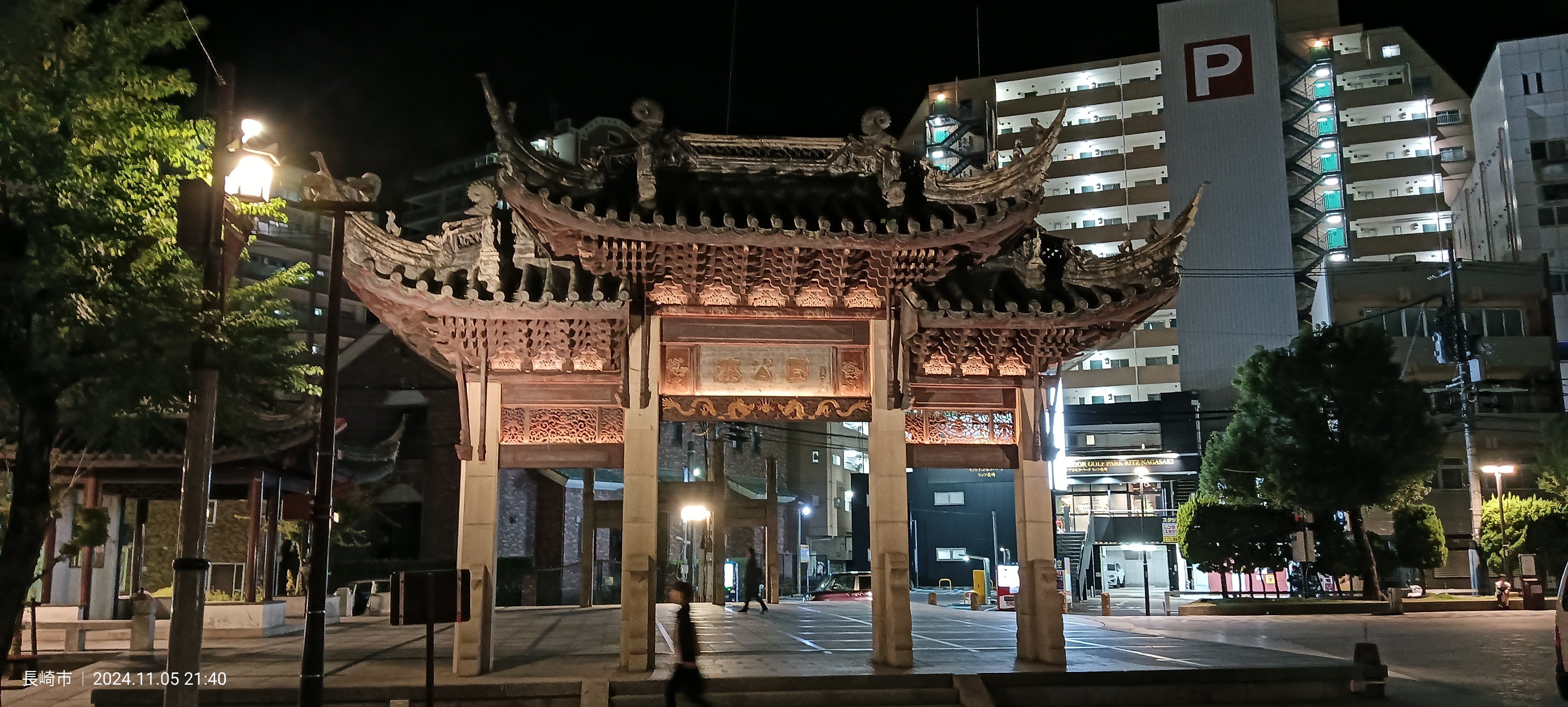
Nagasaki’s Chinatown, Shinchi Chinatown (新地中華街), has been in the same place since the seventeenth century. It is one of Japan’s three historic Chinatowns, alongside Yokohama and Kobe, and probably the one that has retained the most character.
It is not large: a few blocks of restaurants, food shops and street stalls. The local speciality is champon (ちゃんぽん), the dish that defines Nagasaki’s cuisine.
Champon: Nagasaki’s signature dish
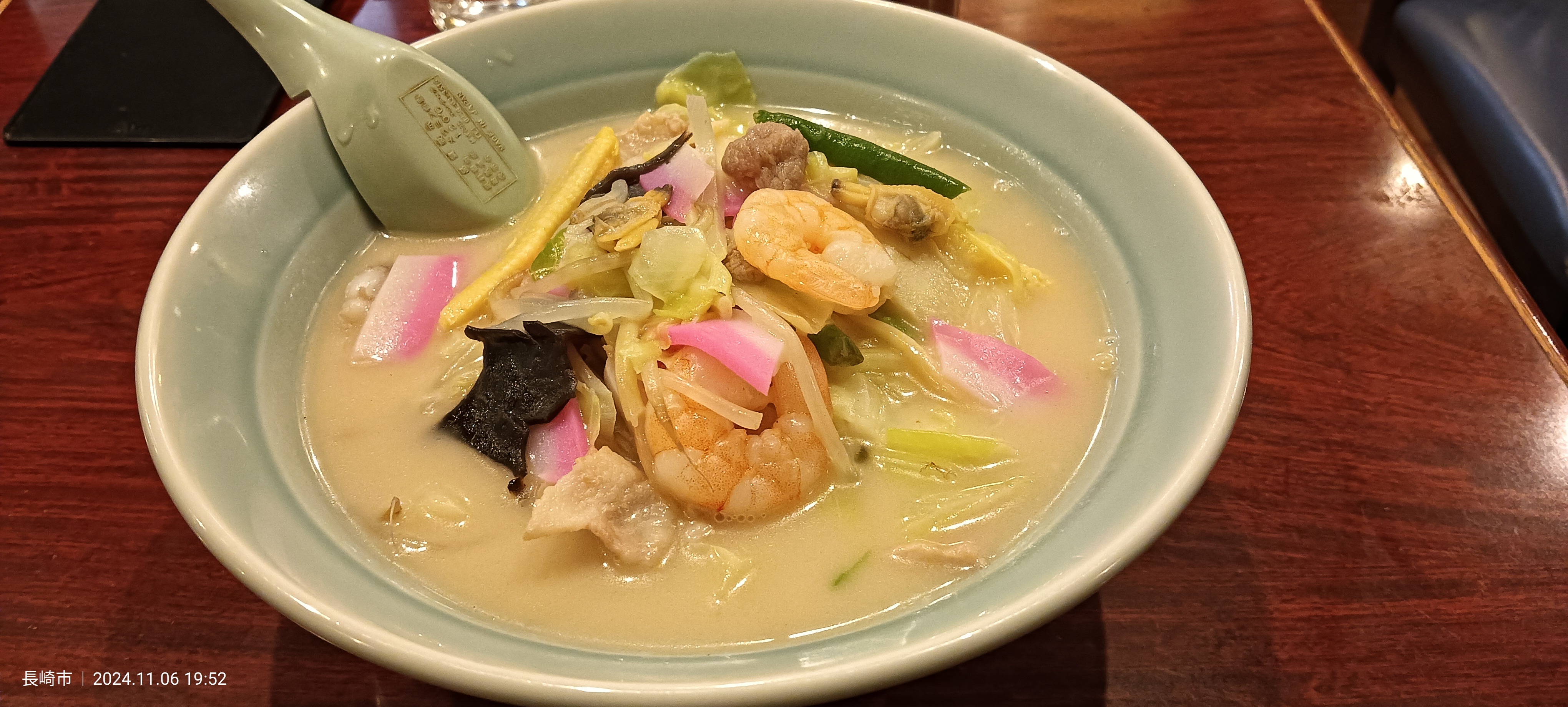
Champon is a bowl of noodles in pork and chicken broth with prawns, clams, squid, kamaboko (pink fish cake), cabbage, carrots, bean sprouts and other vegetables. It is substantial, flavourful and completely different from ramen.
Its origin is Chinese: in the late nineteenth century, a Chinese restaurateur named Chen Ping-shun invented the dish to feed the Chinese students living in Nagasaki. It spread through the city and today it is impossible to separate Nagasaki from champon.
The best place to eat it is Shikairō (四海楼) in the Ōura neighbourhood, which claims to be where it was invented. The queue is long, but the original restaurant has been there since 1899.
Other places worth seeing
Sofukuji Temple (崇福寺): one of the most important Chinese temples in Japan, founded in 1629. The architecture is entirely Chinese with no visible Japanese influence. Entry: ¥300.
Dejima (出島): the former Dutch trading post where the Netherlands maintained commercial relations with Japan during the period of isolation (1641–1853). Reconstructed and now a museum. It puts into context why Nagasaki has the history it does.
Glover Garden (グラバー園): a hillside garden with nineteenth-century residences of foreign merchants, overlooking the harbour. The best known is the house of Thomas Blake Glover, a Scottish businessman who played a significant role in Japan’s industrialisation.
Getting around the city
Nagasaki has a tram network (路面電車) that covers most of the main sights. The price is fixed: ¥140 per journey. You pay on exit with coins or Suica. It is the most convenient and affordable way to move around.
From the central station, the tram reaches Chinatown, the Peace Park and the Glover Garden area. For Mt. Inasa, there is a bus.
How much time do you need
A day and a half or two days is enough to see the main sights comfortably: morning at the Peace Park and Atomic Bomb Museum, afternoon in Chinatown and at Meganebashi, Mt. Inasa at dusk. A second day for Dejima, Sofukuji and Glover Garden.
If you only have one day from Fukuoka (around three hours of travel each way), it is possible but you will have to choose. The Peace Park plus Mt. Inasa at night is the combination that makes the biggest impression.
Nagasaki works well as a stop within a wider Kyushu itinerary alongside Beppu, or as an extension to a longer 10-day Japan itinerary.
Prices and hours based on November 2024 visit, verified 2026. Check ropeway hours before heading up.
Related reading
If you found this useful, these guides go well with it:
Related calculators
About the author
Editorial entity
Yen & Zen is written by a Spanish-Japanese couple based in Kanagawa Prefecture, in the Tokyo metropolitan area. We have been in Japan since 2010. The site is a hobby project covering practical calculators and articles about life and travel in Japan, with verified figures and citations to official sources. We are not lawyers, accountants, or licensed advisors; articles here are based on observation, personal experience, and published official rules — not on professional consultation.