Izu Kogen with kids: Shaboten Park and the volcano that looks fake
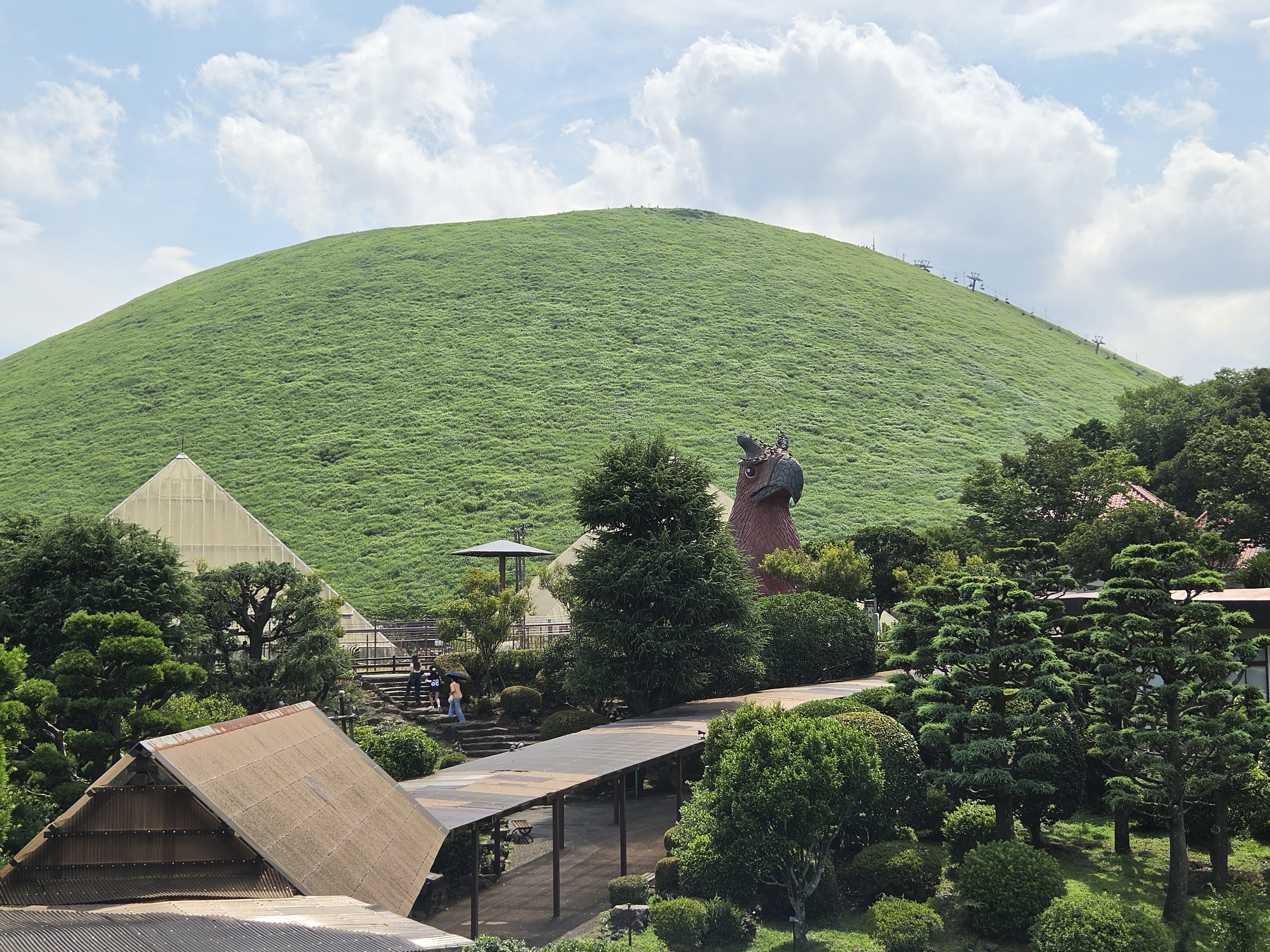
Izu Kogen (伊豆高原) is a highland area in the central part of the Izu Peninsula, in Shizuoka, about 90 minutes from Yokohama by train. It is not as well known as Hakone, nor does it have the hot springs of Atami, but it has something the others do not have in quite the same way: space, green hills and an animal park with capybaras that eat from your hand.
I went in July 2026 with all three kids, right in the middle of summer holidays. It was hot, but the park has plenty of shade and the animals are active regardless. The youngest has been telling people for months that he touched a capybara. He is right: it is a good memory.
Izu Shaboten Park (伊豆シャボテン動物公園)
Shaboten Park is the centrepiece of a day in Izu Kogen. The name comes from shaboten, the Japanese pronunciation of “cactus”, because the park started as a cactus garden in 1959 and gradually added animals over the decades. Today it combines a petting zoo with one of the largest cactus and succulent gardens in Japan.
It sits right at the foot of Omuroyama (大室山), a 580-metre volcanic cone with the most perfectly round shape I have ever seen on a volcano. From inside the park the view is slightly absurd: it looks like a backdrop.
Admission: ¥2,800 adults, ¥1,400 children (4–15), under 3 free. Discounts for online booking.
The capybaras
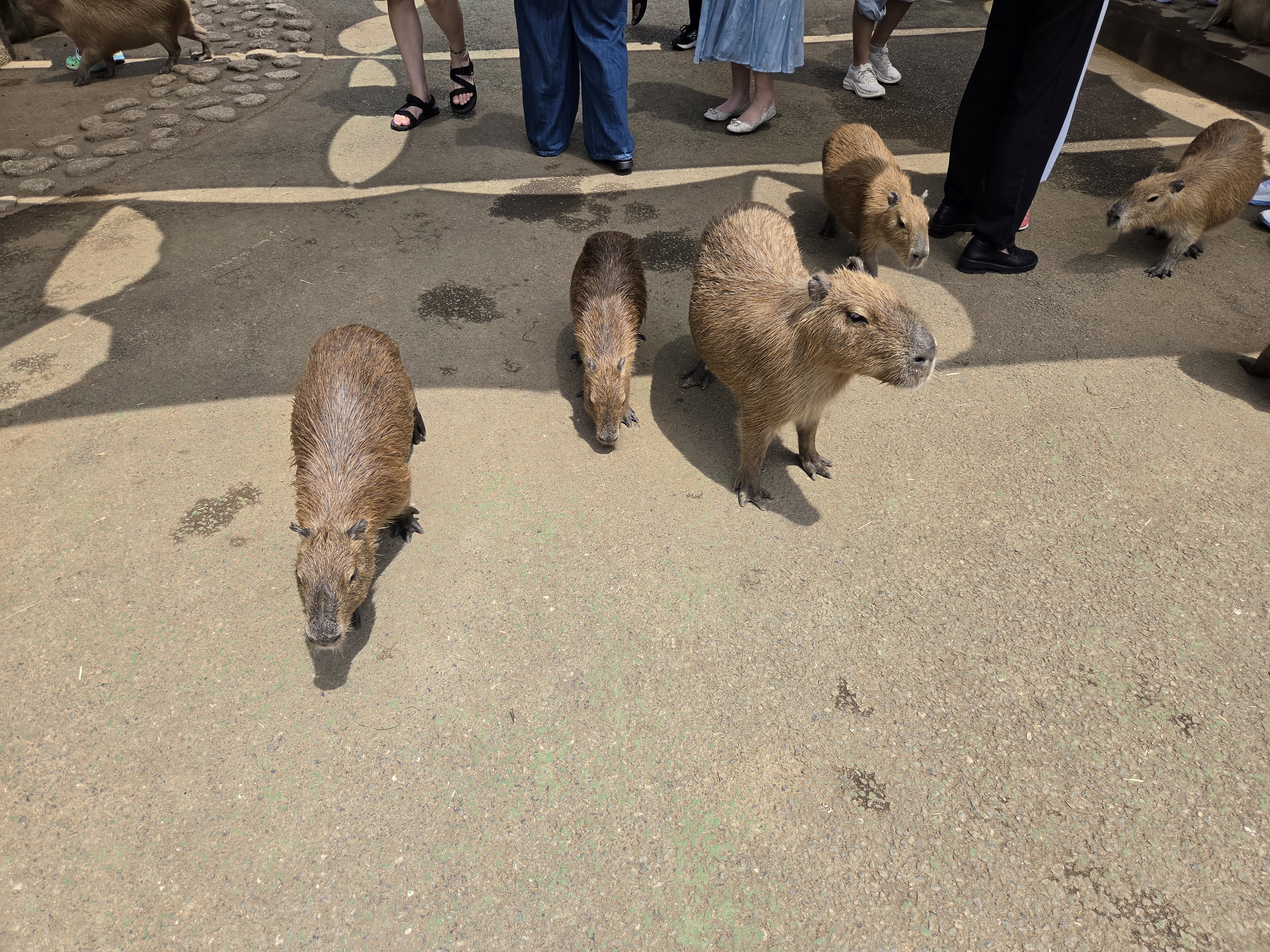
Shaboten Park is where capybaras became famous in Japan. The park started putting them in onsen baths in winter in 1982, and the images of capybaras soaking in thermal water became an iconic sight that has since been replicated at zoos across the country.
In summer there are no onsen baths, but the capybaras are still the main attraction. There is an area where they walk freely among visitors, and you can buy grass to feed them.
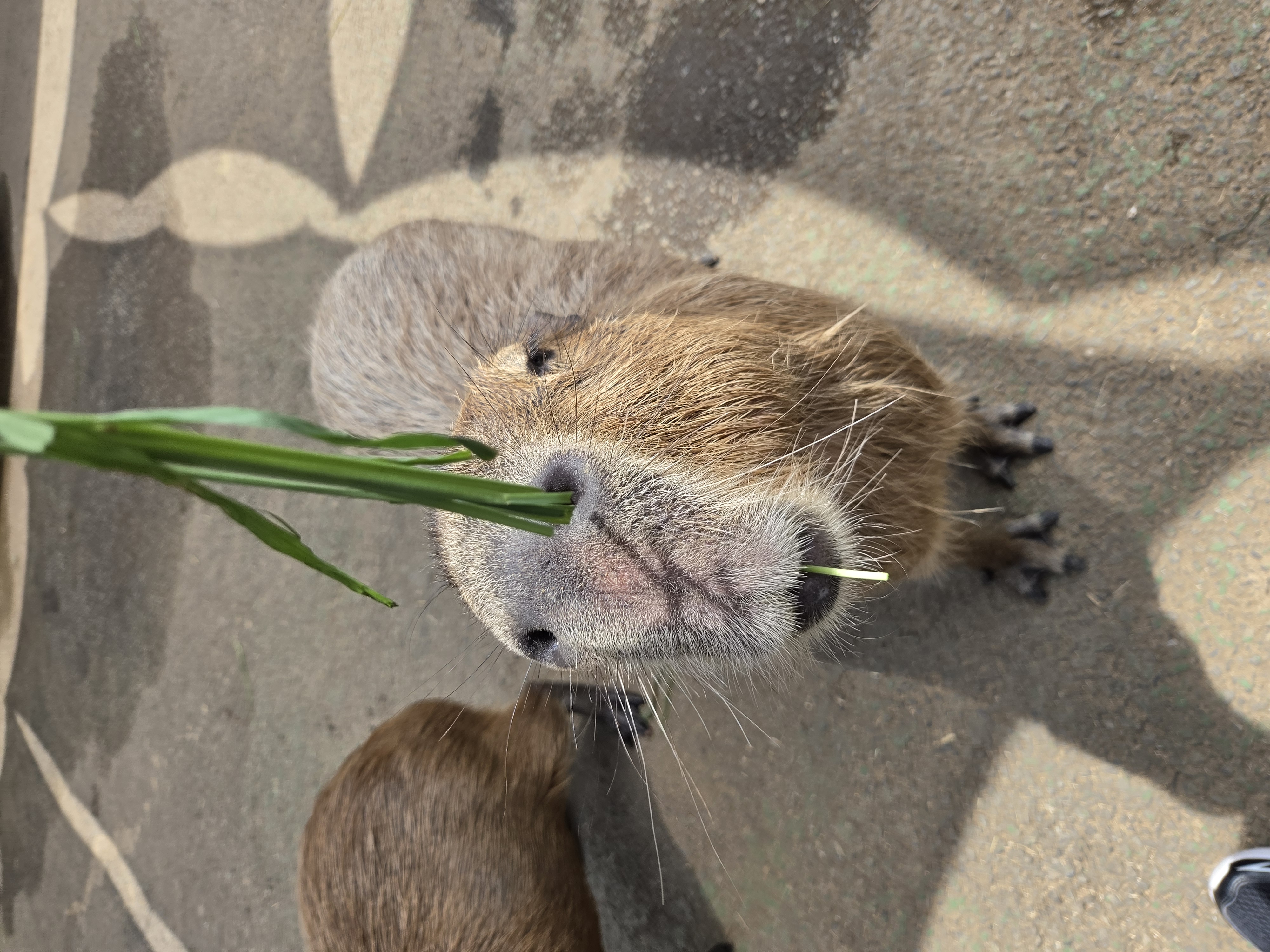
They approach without hesitation, eat slowly and wear a permanent expression of absolute calm. For children it is one of those moments that works better than anything on a screen. The grass is sold in small bags for ¥100 near the contact area.
The cactus garden and the world garden
The park has several themed sections of cacti and succulent plants organised by geographic origin. The American section has replicas of pre-Columbian sculptures among the cacti: an Olmec head, an Aztec sun stone, a pyramid.
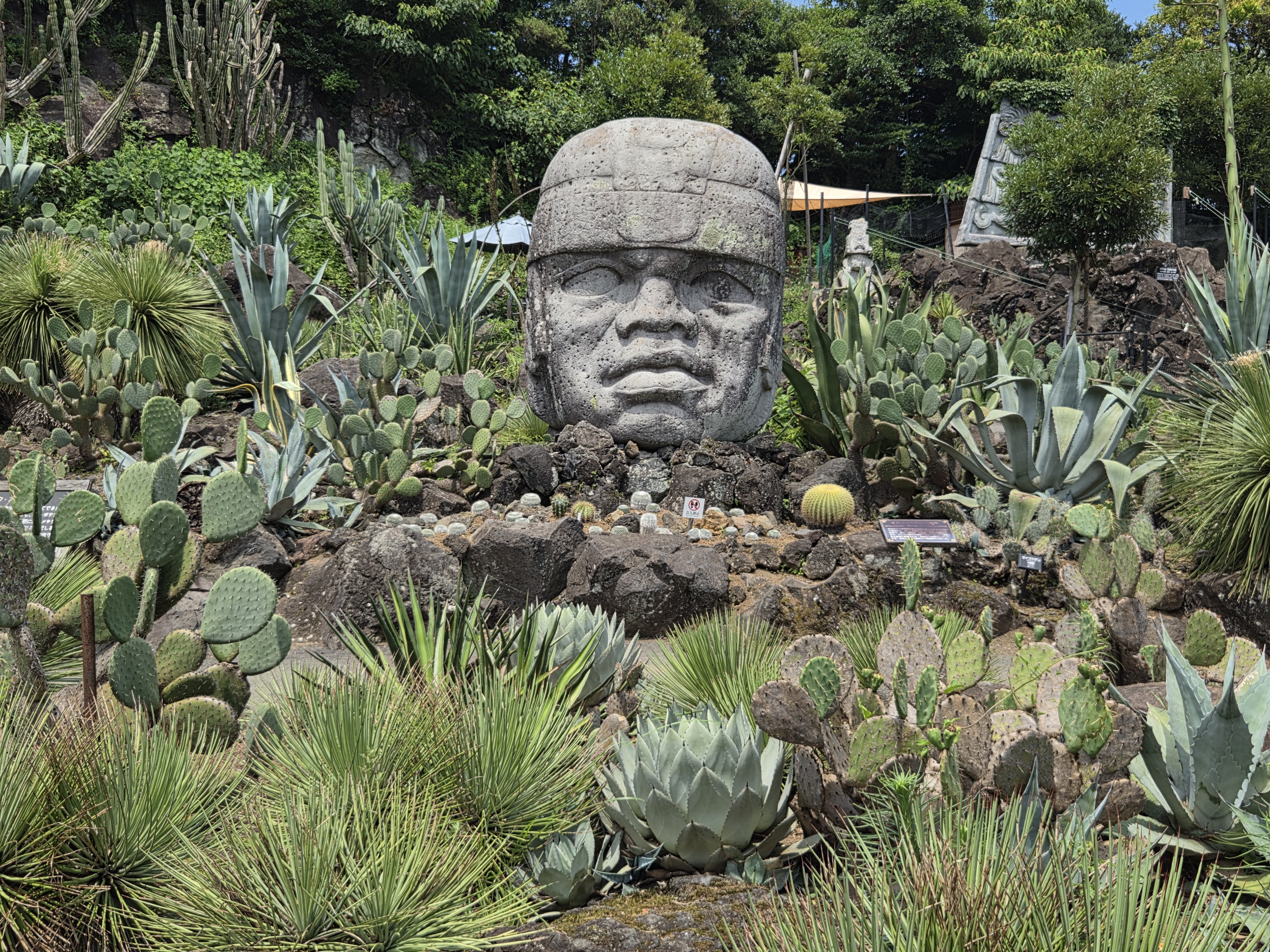
It is kitsch with conviction, which is what makes it work. Children do not know what an Olmec head is, but they do know it is enormous and it is sitting in the middle of a garden full of spiky plants, which is enough.
Flamingos, owls and a free-roaming peacock
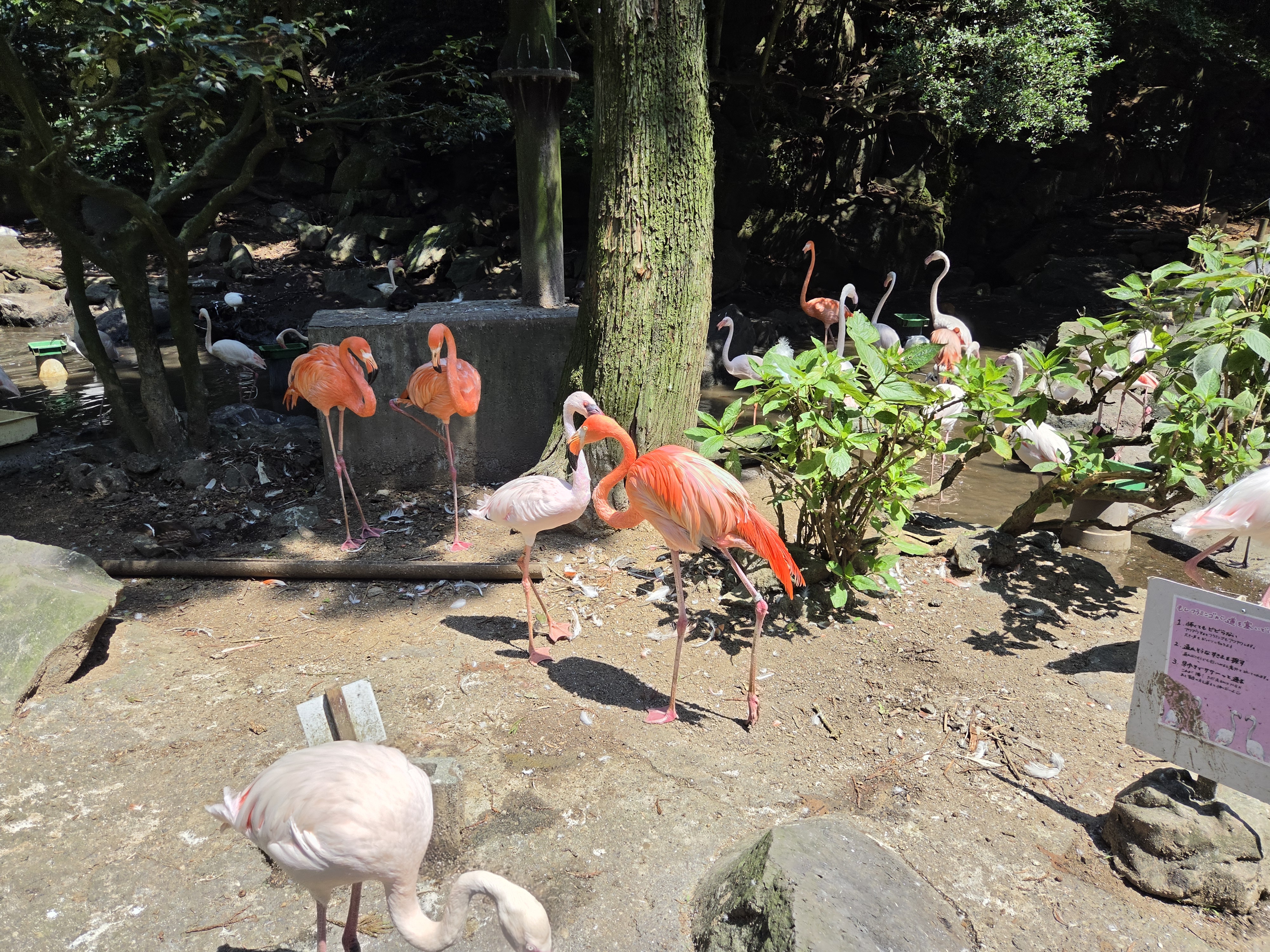
The park has several bird areas. The flamingos are in an open pond with shallow water where you can watch them feed and move around.
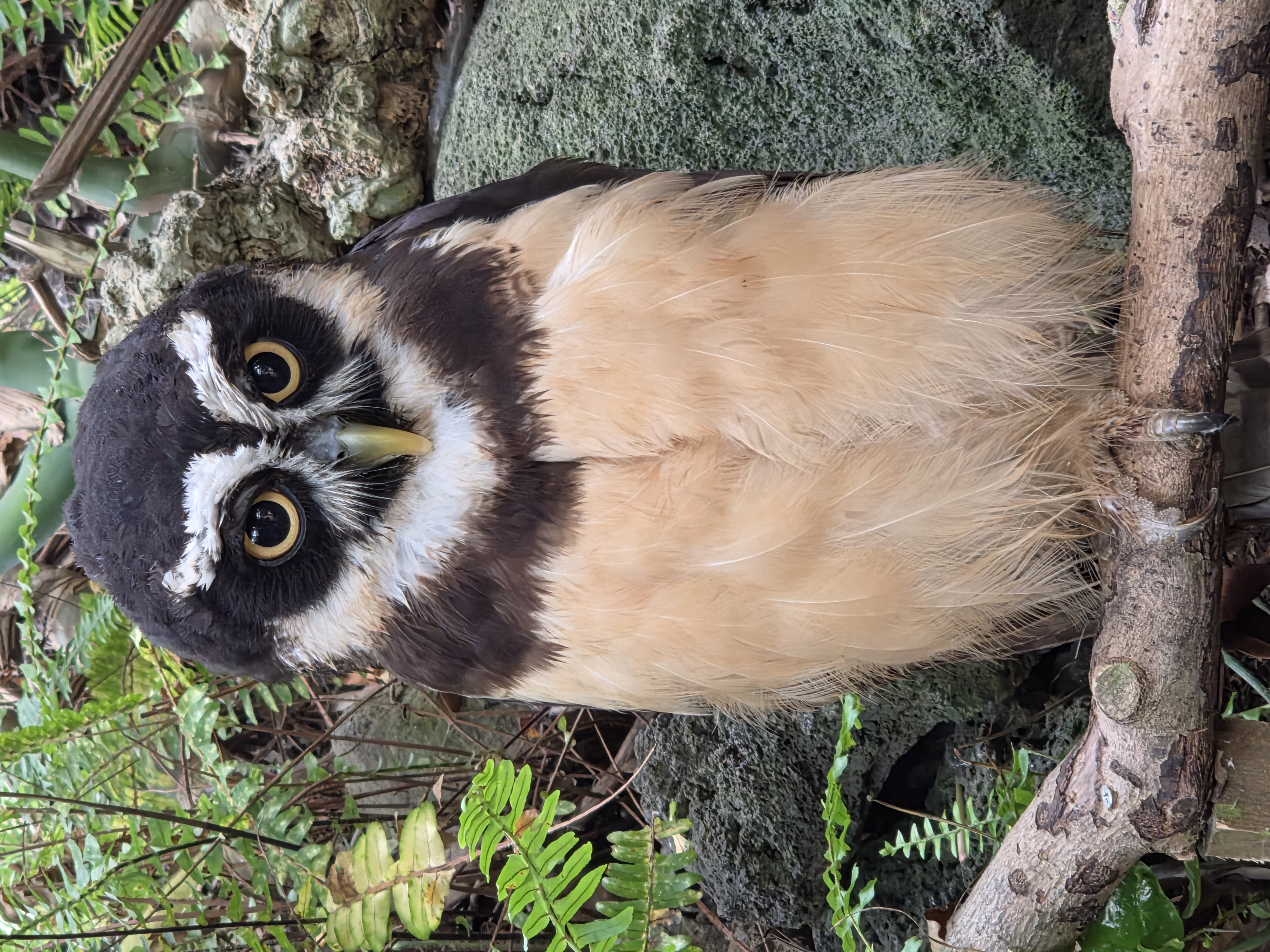
There is an owl area in a shaded section where the birds perch on low branches very close to visitors. The one that draws the most attention is a spectacled owl (メガネフクロウ) with large orange-yellow eyes.
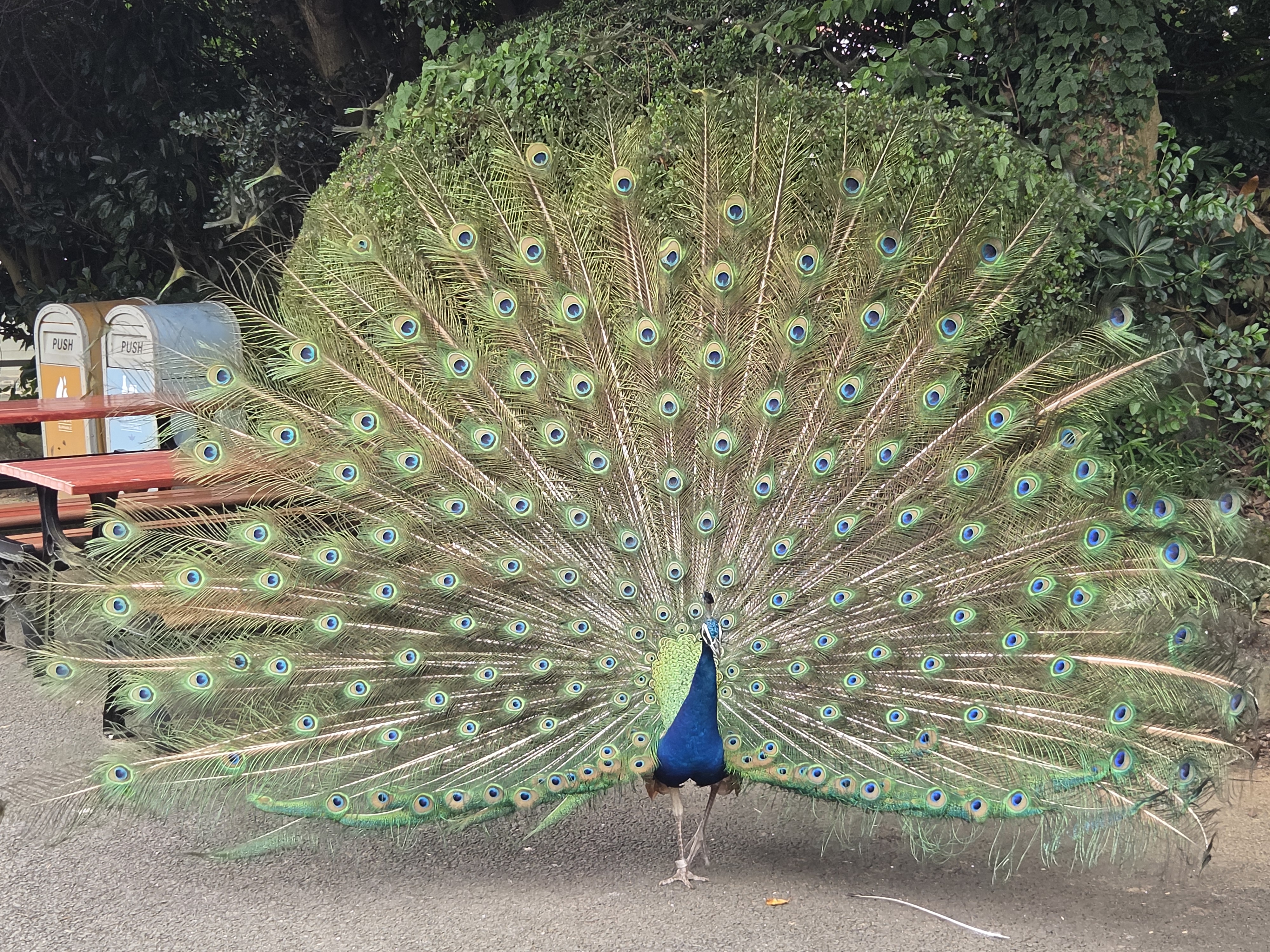
The most unexpected thing in the park is the peacock. There are peacocks that roam freely along the park’s paths. Summer is display season, and the males fan out their full tail without warning. Coming across a peacock with its tail fully open at arm’s length is one of those things that is hard to forget, especially with a small child at your side asking whether it is real.
Omuroyama
Next to the park is Omuroyama (大室山), reached by chairlift from the base. The volcano is 580 metres high and has a crater at the top that you can walk around in about 20 to 30 minutes. Grass covers it completely, giving it that perfectly rounded and slightly unreal shape.
The chairlift costs ¥800 for adults and ¥400 for children. Views from the top, with the Izu coast and sea below, are excellent on a clear day. The walk around the crater is flat and circular. It works well as an addition to the park day, though the chairlift can be daunting for very young children.
Getting there
From Yokohama or Tokyo: take a JR Tokaido Line train to Atami (around 50 minutes from Yokohama, 35 minutes from Tokyo by shinkansen), then the Izu-Kyuko Line to Izu-Kogen station (伊豆高原), another 30 to 35 minutes. The JR Pass covers the journey to Atami but not the Izu-Kyuko Line.
From Izu-Kogen station to the park is about 15 minutes by taxi or local bus. With children and bags, the taxi is more comfortable (approximately ¥1,000 to ¥1,500).
By car from Yokohama: around 90 to 100 minutes via the Odawara-Atsugi motorway and the Izu coastal route. There is parking at the park.
How much time do you need
The park takes 3 to 4 hours with children at a relaxed pace. If you add Omuroyama, allow half a day more. With the journey from Yokohama, a full day is the sensible plan.
In July and August the park opens until 17:00. Arriving at 10:00 gives enough time to see everything and go up Omuroyama before heading back.
Reference prices July 2026. Check opening hours on the park website before visiting, particularly outside peak season.
Related calculators
About the author
Editorial entity
Yen & Zen is written by a Spanish-Japanese couple based in Kanagawa Prefecture, in the Tokyo metropolitan area. We have been in Japan since 2010. The site is a hobby project covering practical calculators and articles about life and travel in Japan, with verified figures and citations to official sources. We are not lawyers, accountants, or licensed advisors; articles here are based on observation, personal experience, and published official rules — not on professional consultation.