Osaka: a practical guide to Japan's city of food and contrasts
I went to Osaka with my wife, her sister and her sister’s husband on a package deal. Flights and hotel, 3 days, 2 nights. One of those trips you plan without too much in advance and that turns out better than expected. Osaka has a reputation for being the city of food, directness, and uncomplicated people. That reputation is fairly well earned.
Osaka is not Tokyo
Worth stating upfront. Osaka is Japan’s third city by population, has its own character and is not a smaller version of the capital. The Japanese spoken in Osaka (kansai-ben) sounds different; the local sense of humour is different, more open, more direct and more willing to be silly if it gets a laugh, and the attitude toward visitors is noticeably warm.
The expression kuidaore (食い倒れ) is used in Osaka to describe someone who goes broke from eating too much. It’s a local joke, but it says something real about the city’s food culture.
Dotonbori and Namba
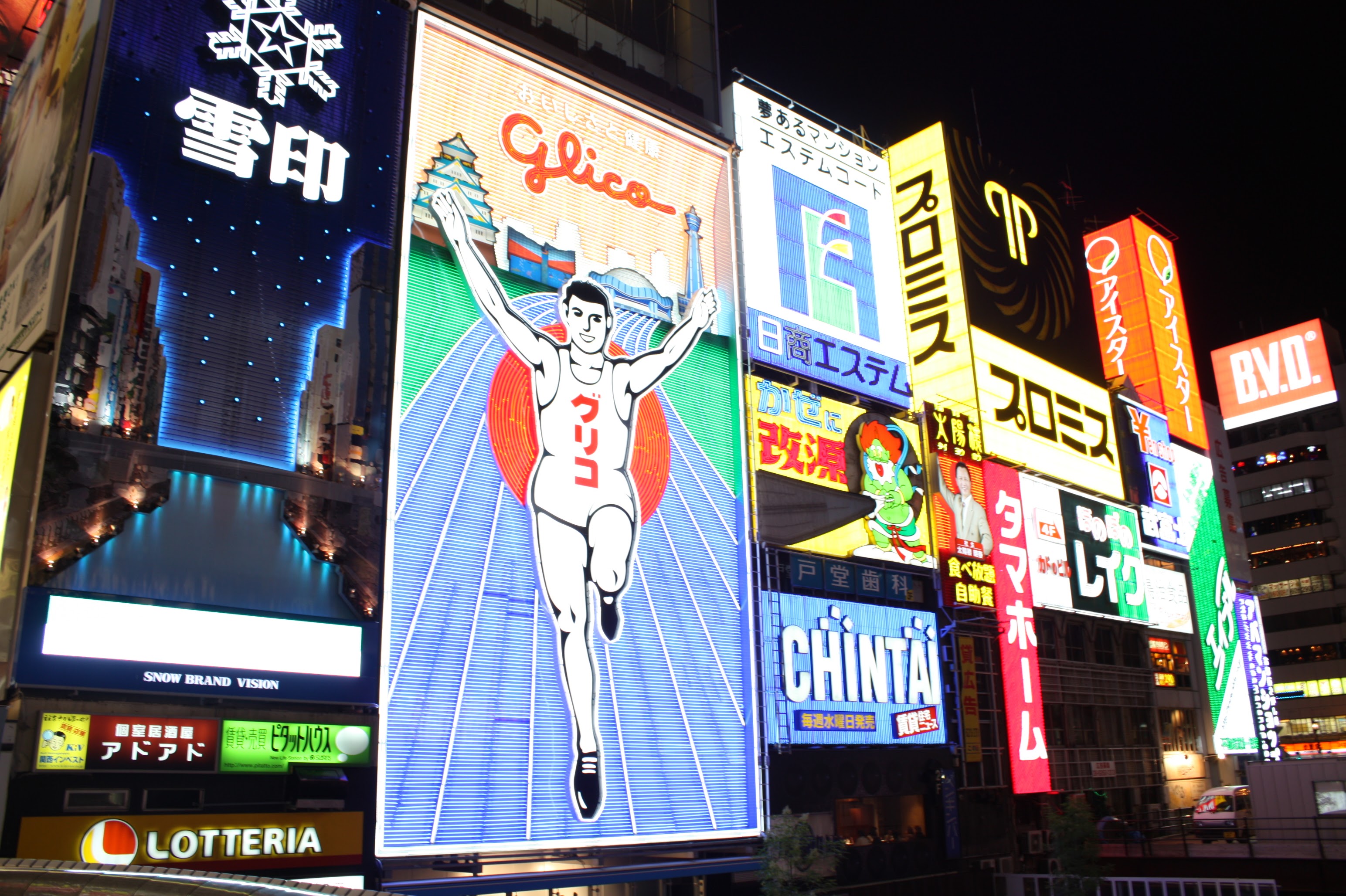
Dotonbori (道頓堀) is the canal and the street that runs alongside it. It’s the most photographed area in Osaka. The illuminated Glico Runner sign has been the city’s emblem for decades, though today it’s surrounded by global brand advertising, all kinds of restaurants and a concentration of tourists that in peak season can be overwhelming.
At night it’s especially vivid: reflections of neon lights on the canal water, the bridges, the constant movement. During the day it’s more manageable.
Dōguyasuji (道具屋筋), the kitchenware street, is a few minutes’ walk away: knives, moulds, plastic food display models (sampuru), professional kitchen tools. One of those alleys with no real equivalent in other Japanese cities.
Namba (難波) is the commercial and entertainment district that encompasses Dotonbori. Here you’ll find Namba Parks (with rooftop gardens that make for good photos), Den Den Town (Osaka’s Akihabara, for electronics and manga), and a density of restaurants per square metre that’s hard to beat.
Osaka Castle
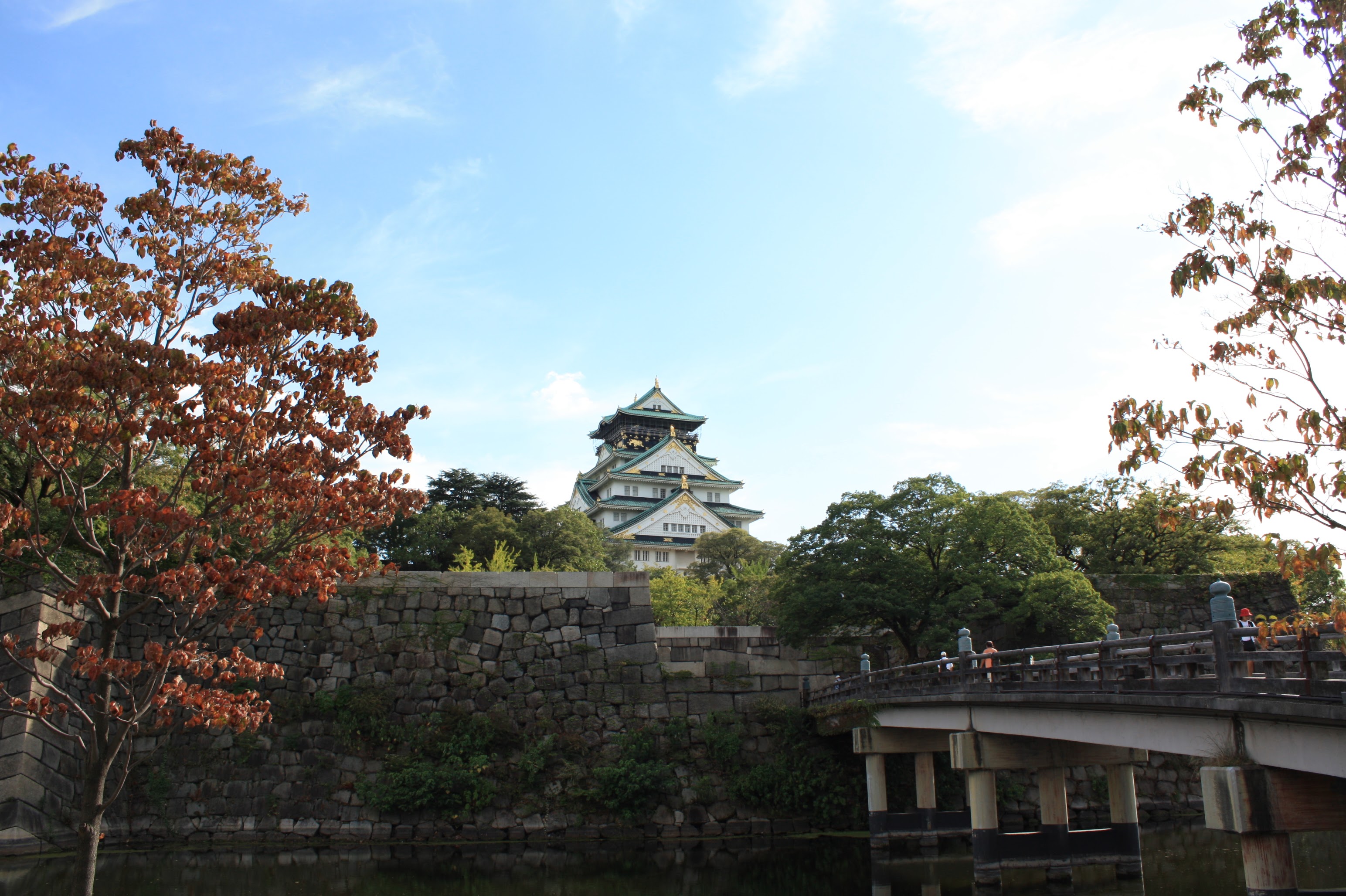
Osaka Castle (大阪城, Osaka-jō) was built by Toyotomi Hideyoshi in the sixteenth century and is one of the country’s most recognisable castles. The main tower you see today is a 1931 concrete reconstruction (the original was destroyed multiple times in wars and conflicts), but the outer grounds with their stone walls and moats are authentic and impressively large.
The moats and the park surrounding the castle were what I enjoyed most. The building itself can be entered (it’s a museum), but the exterior has more value than the interior: the walls, the bridges, the tower reflected in the water.
Entry costs ¥600. In spring the park is one of Osaka’s best spots for cherry blossom. Use the cherry blossom timing calculator to check whether your dates fall within the bloom window.
The food: what you have to try
Osaka and food are inseparable. Three things to eat without fail:
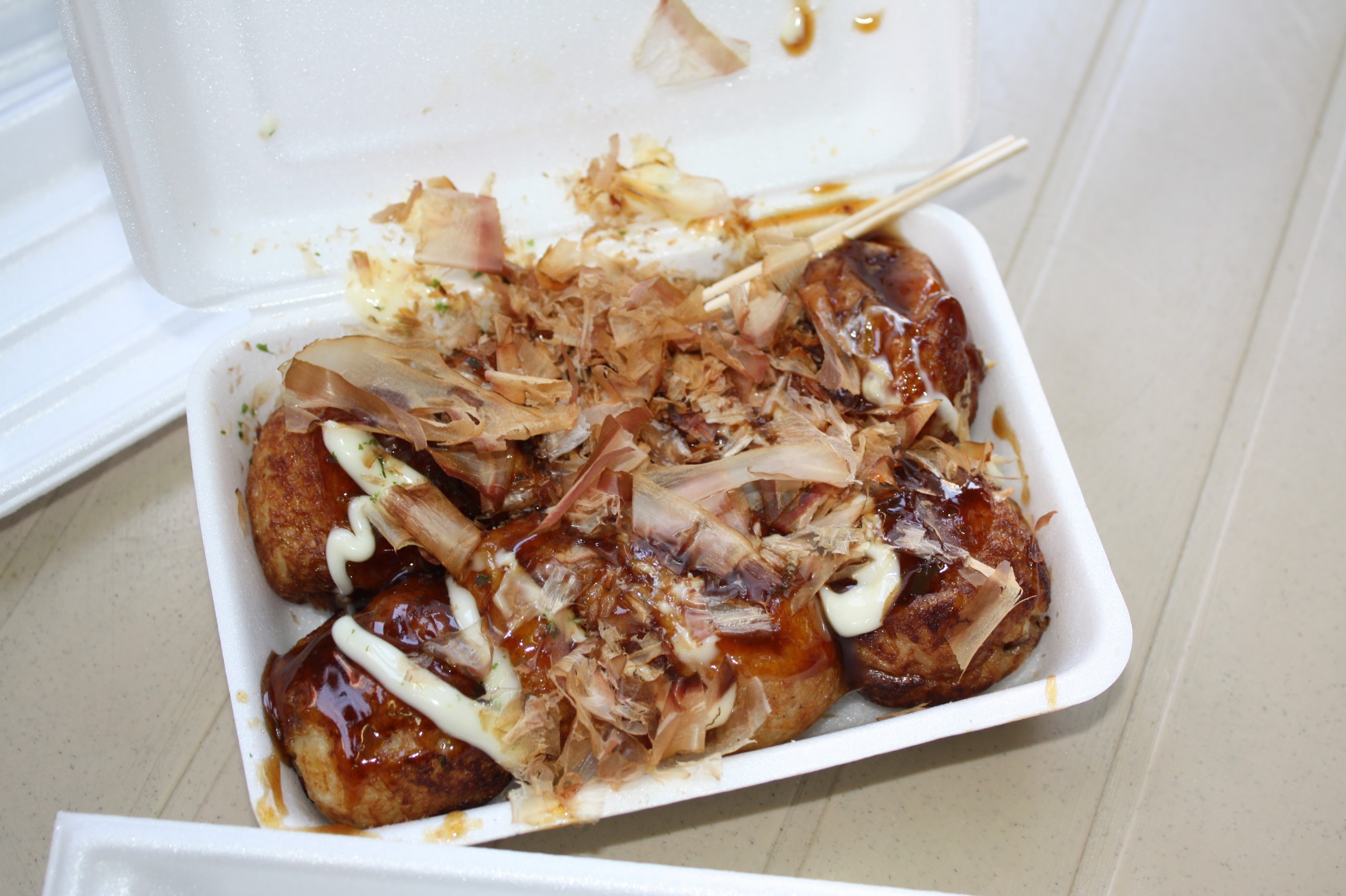
Takoyaki (たこ焼き): batter balls with chunks of octopus inside, crispy outside and almost liquid inside when fresh. Eaten on the street and at Kuromon Market stalls. There are chains across Japan but the standard in Osaka is usually higher.
Okonomiyaki (お好み焼き): Osaka’s “cook it your way” savoury pancake. Batter, cabbage, meat or seafood, a specific sauce and Japanese mayonnaise. The Osaka version differs from Hiroshima’s (in Osaka everything goes mixed into the batter, not in layers). Look for a restaurant where you make it on the griddle at your table.
Kushikatsu (串カツ): breaded and deep-fried skewers of all kinds of ingredients. The most characteristic dish in Shinsekai. Fundamental rule: don’t double-dip in the communal sauce after you’ve bitten a skewer. They will remind you with signs in every restaurant.
Shinsekai and Tsutenkaku
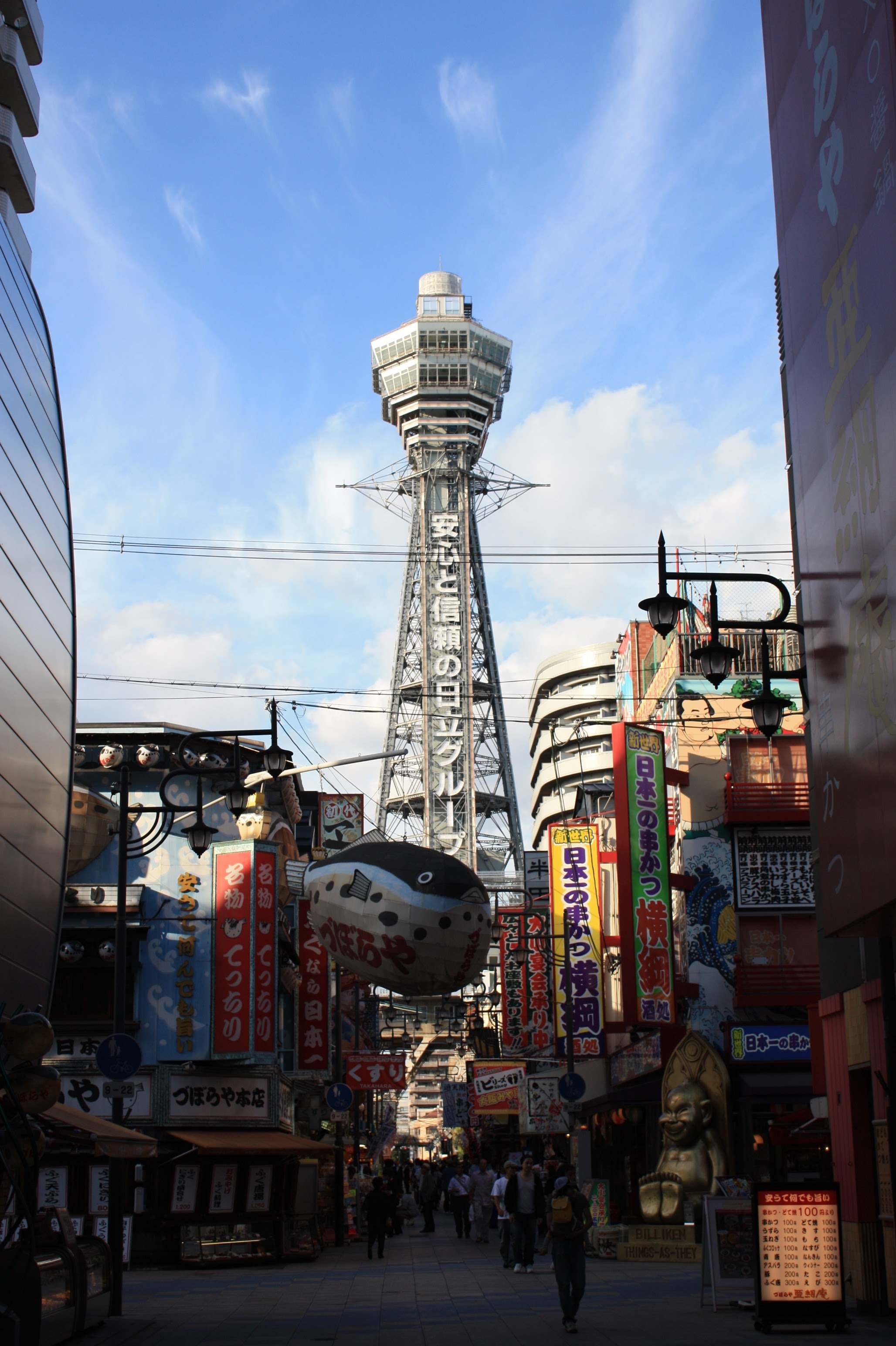
Shinsekai (新世界, literally “new world”) is a neighbourhood with a history: built in the early twentieth century as an entertainment district, it declined for decades and today is going through a partial revival between tourism and the businesses that have been there all along.
Tsutenkaku (通天閣), the 103-metre tower that dominates the neighbourhood, is the symbol of that older, more working-class Osaka. The original dated from 1912; the current one from 1956. You can go up (¥800), but the main value of the area is walking through the kushikatsu streets, the cheap beer bars, and an aesthetic that mixes nostalgia and kitsch without apologising for either.
Shinsekai is not Osaka at its most attractive, but it is Osaka at its most honest.
Jiyūken: Osaka’s curry restaurant
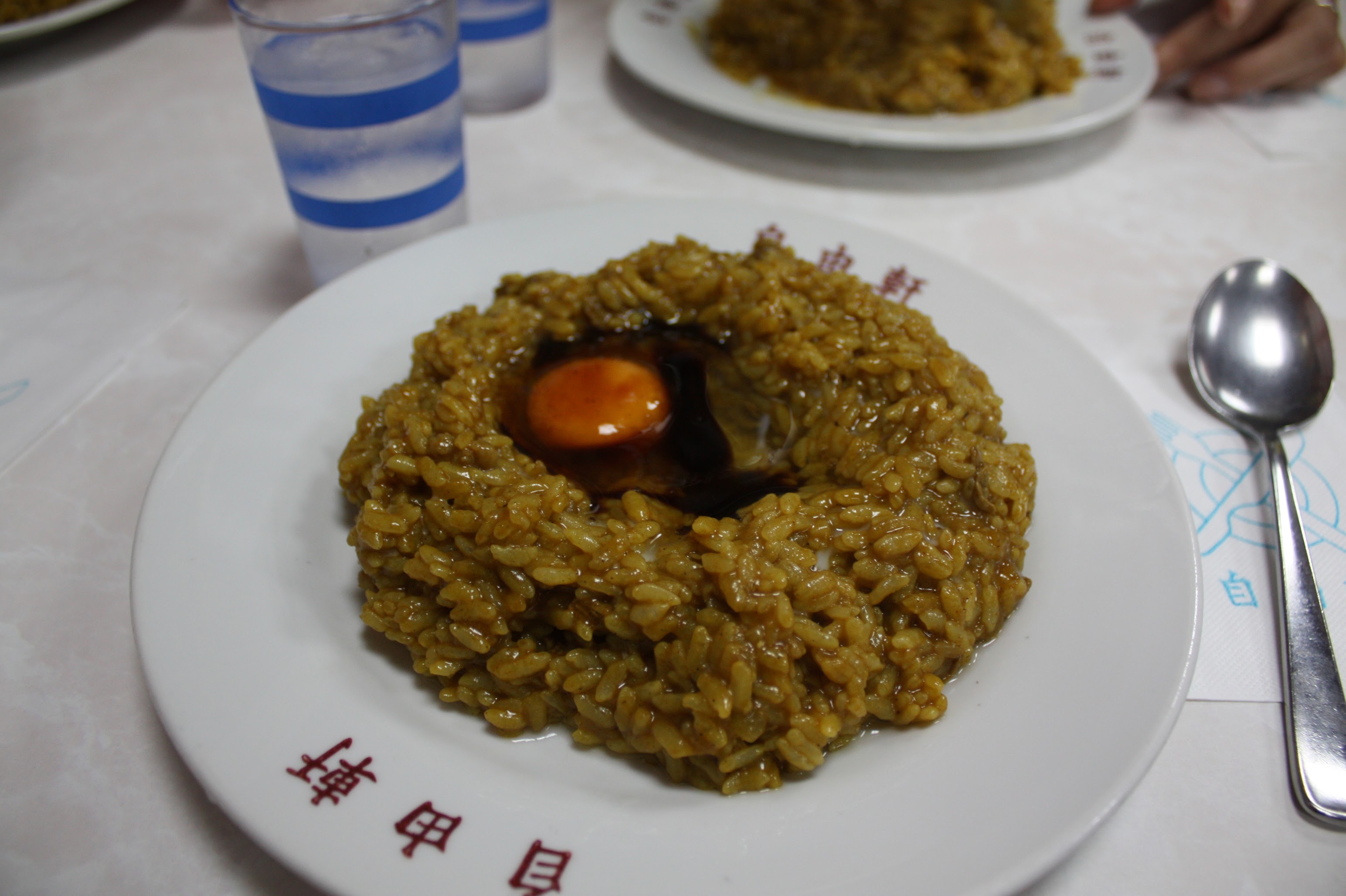
One of the stops I enjoyed most was Jiyūken (自由軒), in Namba. It’s one of Osaka’s oldest restaurants, open since 1910, and famous for their special curry: rice mixed directly into the curry sauce (the opposite of how curry is usually served in Japan, with rice and sauce separately), topped with a raw egg in the centre.
It’s unusual, it’s filling, and it has the flavour of something that has been on the same recipe for over a century. Don’t expect a designed space. It’s a no-frills canteen, no pretensions, usually with a queue. Worth waiting.
USJ: Universal Studios Japan
Universal Studios Japan is in Osaka and is one of the most visited theme parks in Asia. It has Harry Potter, Nintendo World, and several Hollywood IP blocks. It’s expensive (tickets from ¥9,800, with an additional Express Pass to skip long queues) and very crowded in peak season.
We went for one day during the trip. It’s a well-executed park with very high production values. Nintendo World in particular is genuinely spectacular. If you’re travelling with children or fans of Nintendo or Harry Potter, it makes a lot of sense. If you’re looking for Japanese culture, it’s the least “Osaka” of all the options the city has.
I’m planning a dedicated article on USJ with more detail.
Getting to Osaka
From Tokyo by Shinkansen: Tokyo to Osaka on the Nozomi takes around 2h30. The JR Pass (if you have one) covers the Hikari and Kodama but not the Nozomi. Without a pass, a one-way ticket costs around ¥14,720. If you’re building a broader itinerary and want to make stops near Tokyo before heading west, Nikko makes an excellent day trip.
From Kansai Airport (KIX): The Haruka Limited Express reaches Tennoji in 30 minutes and Shin-Osaka in 50 minutes. The Nankai Railway goes directly to Namba (around 40 minutes). Itami Airport (ITM), closer to the city centre, handles domestic flights from Tokyo. The flight from Haneda or Narita takes an hour, plus transfers.
Getting around Osaka
The city has an efficient metro. The most useful lines for visitors are the Midosuji (north-south, connecting Shin-Osaka, Namba and the Namba area airport) and the Chuo (east-west, passing the castle). The Osaka Amazing Pass includes unlimited metro and bus travel plus free entry to various attractions. Good value if you’re visiting several sites in a day.
The IC card (ICOCA or Suica) works on all public transport in Osaka.
If you’re arriving or departing with heavy luggage, especially if you’re also stopping in Kyoto or Tokyo, takuhaibin is worth considering. Sending a suitcase from your Osaka hotel to the next destination costs less than you’d expect and avoids dragging bags through metro connections.
FAQ
How many days do you need? Three days covers the main areas: Dotonbori/Namba, the castle, Shinsekai, plus a day trip to Nara, which is 15-40 minutes away by train. For a relaxed Osaka plus USJ, 4-5 days.
Is Osaka or Kyoto a better base? From Osaka you can reach Kyoto in 15 minutes on the Shinkansen and 30 minutes on the Kintetsu. From Kyoto to Osaka the same. Both are good bases for the Kansai region. Osaka is cheaper for accommodation and has more nightlife; Kyoto has a quieter historical atmosphere.
Which neighbourhood to stay in? Namba or Shinsaibashi are the most central and best connected for visitors. Shin-Osaka makes sense if you’re arriving by Shinkansen and in a hurry. Beyond those three, any neighbourhood with direct metro access works well.
Is street food safe? Completely. Hygiene standards in Japan are high even at street stalls. Eat without worry.
Osaka is one of those cities that doesn’t convince through photos alone. You need to be in the street, eat standing up, hear the kansai-ben, and understand that Japanese friendliness here has a different tone: more spontaneous, more immediate. Three days give you a lot if you use them well.
Prices as of 2026. Check current opening hours and entry fees before your trip.
Related reading
If you found this useful, these guides go well with it:
Related calculators
- 円 Japan trip budget Daily costs by city and travel style, in USD, EUR, GBP, AUD, MXN.
- 桜 Cherry blossom timing by city Enter your travel dates and city. Find out if you'll catch the cherry blossom peak.
- 荷 Takuhaibin luggage forwarding cost Estimate the cost of forwarding your luggage between hotels and cities in Japan.
About the author
Editorial entity
Yen & Zen is written by a Spanish-Japanese couple based in Kanagawa Prefecture, in the Tokyo metropolitan area. We have been in Japan since 2010. The site is a hobby project covering practical calculators and articles about life and travel in Japan, with verified figures and citations to official sources. We are not lawyers, accountants, or licensed advisors; articles here are based on observation, personal experience, and published official rules — not on professional consultation.